The short answer
You need a new chimney liner when the existing flue is cracked, missing, or wrong for your appliance. This often happens after a switch from oil to gas. FirstChoice inspects the flue with a camera, cleans it, and installs a correctly sized liner, cap and appliance connection following the NFPA 211 standard.
A chimney liner is the protective inner wall of your flue. It carries smoke and exhaust gases up and out of the house, keeps heat away from the wood framing around the chimney, and protects the masonry from moisture and acidic condensate. Many older homes and buildings in New York have clay tile liners that have cracked with age, and some have no liner at all. FirstChoice Chimney Services installs new liners for fireplaces, wood stoves, and oil and gas appliances in New York City and nearby neighborhoods. Every liner is sized to the appliance it serves and fitted after a full inspection.
Signs you need it
A damaged liner rarely shows itself directly. Instead, owners notice the side effects: smoke that lingers, smells that come back after cleaning, or pieces of the chimney turning up where they shouldn't. Any of the following is a good reason to have the flue checked.
Some of these signs can also point to other problems, such as a missing chimney cap or a cracked crown. That's why we inspect before we recommend a liner.
- Smoke or a strong creosote smell in the room, especially on humid days or when the fireplace isn't in use
- Poor draft: fires that are hard to start, smoke that rolls out of the fireplace opening, or an appliance that backdrafts
- Flakes of clay tile, mortar or brick collecting in the firebox or at the base of the chimney
- White staining on the outside brick or inside the firebox, a sign that moisture is moving through the masonry
- Water in the firebox, or rust on the damper after rain
- A recent or planned switch from oil to gas, or a new furnace, boiler or stove connected to the chimney
What's included
Every installation is matched to the appliance and the flue it serves. A standard liner job includes the following.
If we find damage that a liner won't fix, such as loose bricks, a cracked crown or failing flashing, we show you photos and explain your options before any extra work starts.
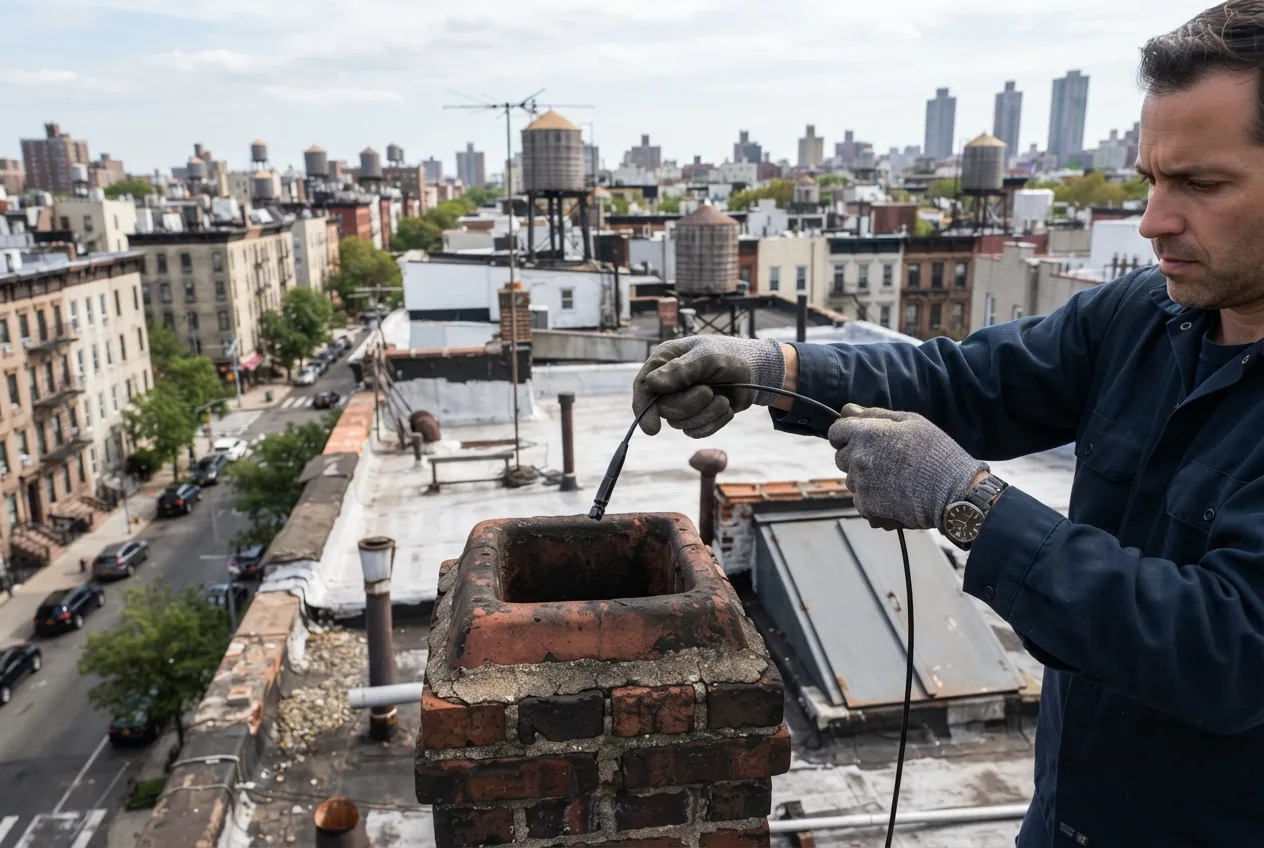
- A camera inspection of the existing flue to document cracks, gaps and blockages
- Cleaning the flue to remove creosote, soot and loose debris before installation
- Measuring the flue and matching the liner diameter to the appliance's venting requirements
- Removing broken tile or obstructions where needed so the liner can pass
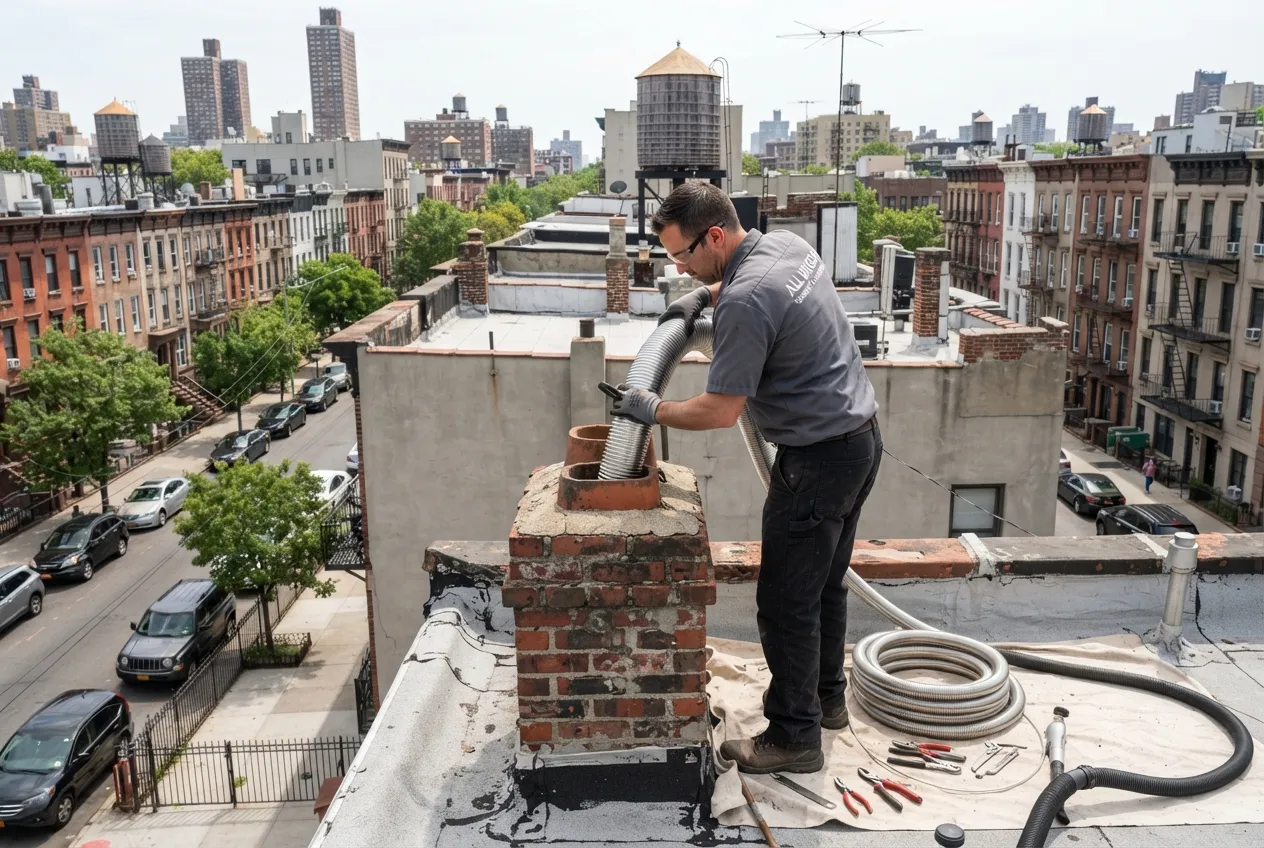
- Installing the liner from the roof down, with a top plate, chimney cap and a proper connection at the appliance
- Insulating around the liner where the chimney and liner type call for it
- Sealing the connection points and checking draft once the appliance is running
- Photos and a written summary of the work and the chimney's condition
How our crew works in your home and on the roof
Inside, the crew lays drop cloths from your door to the fireplace or appliance and covers nearby furniture. We seal off the fireplace opening or appliance connection and run HEPA vacuums while we clean, so soot stays in the flue and out of your living space. Rotary brushes on flexible rods scrape creosote and loose tile from the flue walls. A camera then lets us check the flue before the new liner goes in.
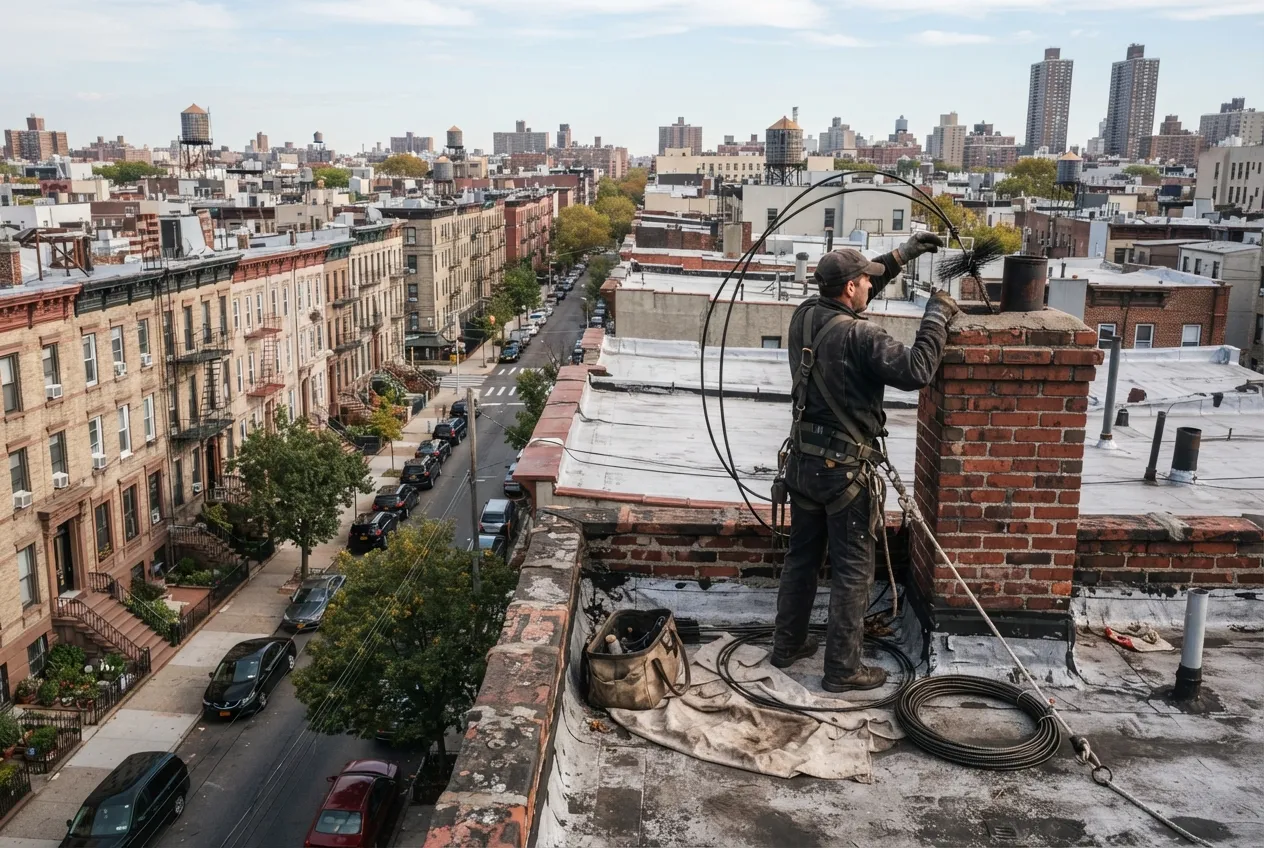
On the roof, technicians use ladders and fall protection, take care around shingles and flashing, and work from the top of the chimney to feed the liner down. In row houses and multi-family buildings with limited roof access, we plan the route ahead of time with you or the building's super. When the work is done, we clean up both areas and show you the finished cap and connection.
Time for your annual chimney check?
The standard we follow
Our certified technicians follow the NFPA 211 standard, which calls for chimneys, fireplaces and vents to be inspected once a year. Chimney professionals use three inspection levels. Level 1 applies when nothing about the system has changed. Level 2 applies when the system changes, such as a new appliance or a switch of fuel, or when the home is sold. Level 3 is used when a hidden hazard can only be reached by opening part of the chimney or building.
Relining usually follows a change to the system, so we typically perform a Level 2 inspection, including a camera review, before installing. This matters in New York City in particular. When a building converts its boiler from oil to gas, the chimney has to be evaluated as part of the work. A new liner is often needed because gas exhaust produces acidic condensate that can corrode a masonry flue.
What affects the price
We quote each job after seeing the chimney, because no two flues are the same. These are the main factors.
You get a written estimate before work begins. We walk you through each item so you know what you're paying for.
- Chimney height and roof access, including roof pitch, building height, and whether the roof can be reached from inside
- Fuel type and appliance, since wood, oil and gas each call for different liner materials and sizes
- Flue size and condition, including offsets, bends, and how much broken tile has to come out
- How much creosote or soot buildup has to be cleaned first
- Whether a camera inspection, insulation, a new cap or masonry repair is needed
How a visit works
First, we schedule an inspection at a time that works for you. The technician looks over the appliance, inspects the flue with a camera, and explains what the footage shows. If a liner is the right fix, you receive a written estimate that lists the liner type and size.
On installation day, the crew sets up protection inside, cleans the flue, installs the liner from the roof, and then connects and tests the appliance. Many single-flue jobs in private homes are finished in one visit. Larger buildings or flues with bends may take longer, and we tell you that up front.
If the chimney serves your heating system, keep in mind that New York City's heat season runs from October 1 through May 31. Booking relining work before fall, or planning the timing with your building, helps you avoid a gap in heat.
Chimney Liner Installation by city
- Chimney Liner Installation in SoHoLocal service & repairs
- Chimney Liner Installation in Little ItalyLocal service & repairs
- Chimney Liner Installation in Hudson SquareLocal service & repairs
- Chimney Liner Installation in Greenwich VillageLocal service & repairs
- Chimney Liner Installation in West VillageLocal service & repairs
- Chimney Liner Installation in TribecaLocal service & repairs
- Chimney Liner Installation in Civic CenterLocal service & repairs
- Chimney Liner Installation in East VillageLocal service & repairs
- Chimney Liner Installation in ChinatownLocal service & repairs
- Chimney Liner Installation in Two BridgesLocal service & repairs
- Chimney Liner Installation in GramercyLocal service & repairs
- Chimney Liner Installation in Lower East SideLocal service & repairs