The short answer
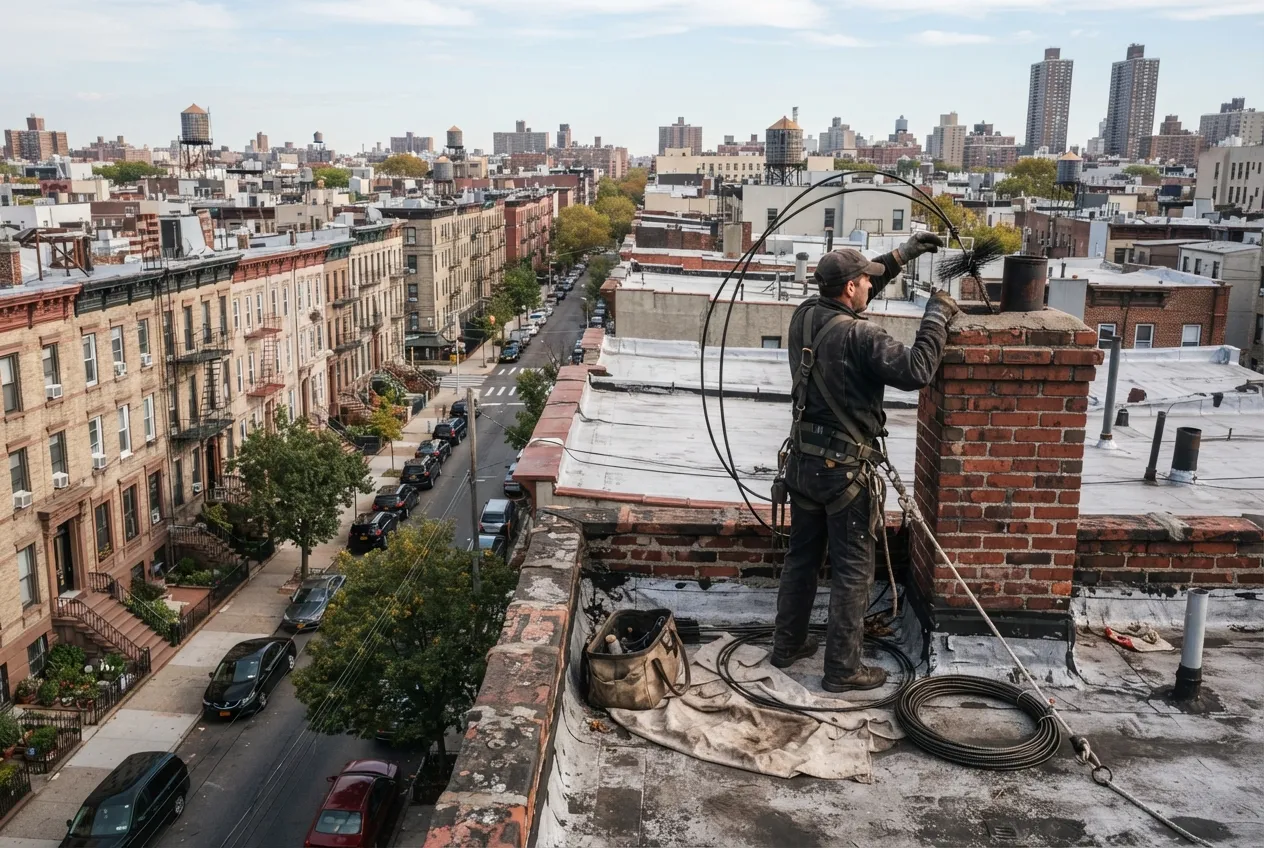
Many older Chinatown chimneys have cracked clay tile or no liner at all, and they often need a new liner when a boiler, water heater or fireplace insert changes. We inspect the flue first, then install a liner sized to the appliance and fuel, usually from the roof down.
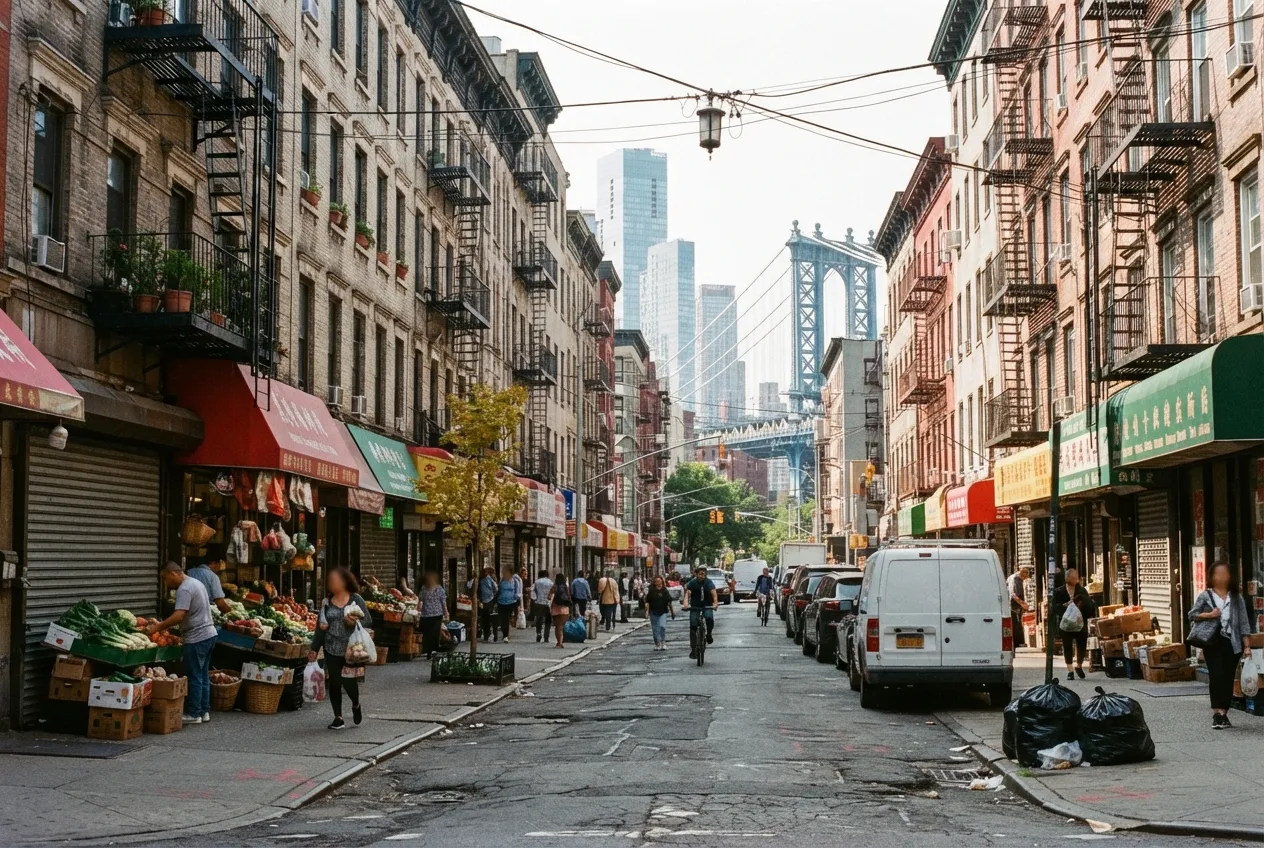
Many buildings in Chinatown are older masonry structures: pre-war walk-ups, mixed-use buildings with shops on the ground floor and apartments above, and some rowhouses. Many of their chimneys were built long before today's boilers, water heaters and fireplace inserts. A chimney liner is the protective channel inside the flue that carries exhaust up and out without letting heat, gases or moisture reach the surrounding brick. FirstChoice Chimney Services installs chimney liners in Chinatown from our Manhattan office, about a mile to the north. We also serve Two Bridges, the Lower East Side, Tribeca, Civic Center and SoHo.
Why Older Chinatown Chimneys Often Need a New Liner
Original masonry flues were usually lined with clay tile, and some were not lined at all. Over the decades, tiles crack, mortar joints wear out, and the flue may end up the wrong size for the appliance now connected to it. A damaged or oversized flue can let heat and combustion gases into the brick and nearby walls. It may also draft poorly.
Changing fuels makes this more urgent. When a New York City building converts its boiler from oil to gas, the chimney has to be evaluated as part of the work, and a new liner is often needed. Gas exhaust produces acidic condensate, and that moisture can corrode a masonry flue from the inside.
Common signs that a liner needs attention include:
- Pieces of tile or brick collecting at the base of the chimney or in the cleanout
- White staining or damp spots on walls next to the chimney
- Crumbling or flaking brick near the top of the chimney
- A boiler or water heater conversion, or a new appliance on an old flue
- Smoke or exhaust odors in the home when the appliance runs
How We Choose the Right Liner
Every liner job starts with an inspection. The NFPA 211 standard calls for chimneys to be inspected once a year and describes three inspection levels. A Level 2 inspection, which includes a camera view inside the flue, applies when the system changes, such as a new appliance or a switch of fuel, or when a home is sold. If a hidden problem can only be reached by opening part of the chimney or building, that is a Level 3 inspection.
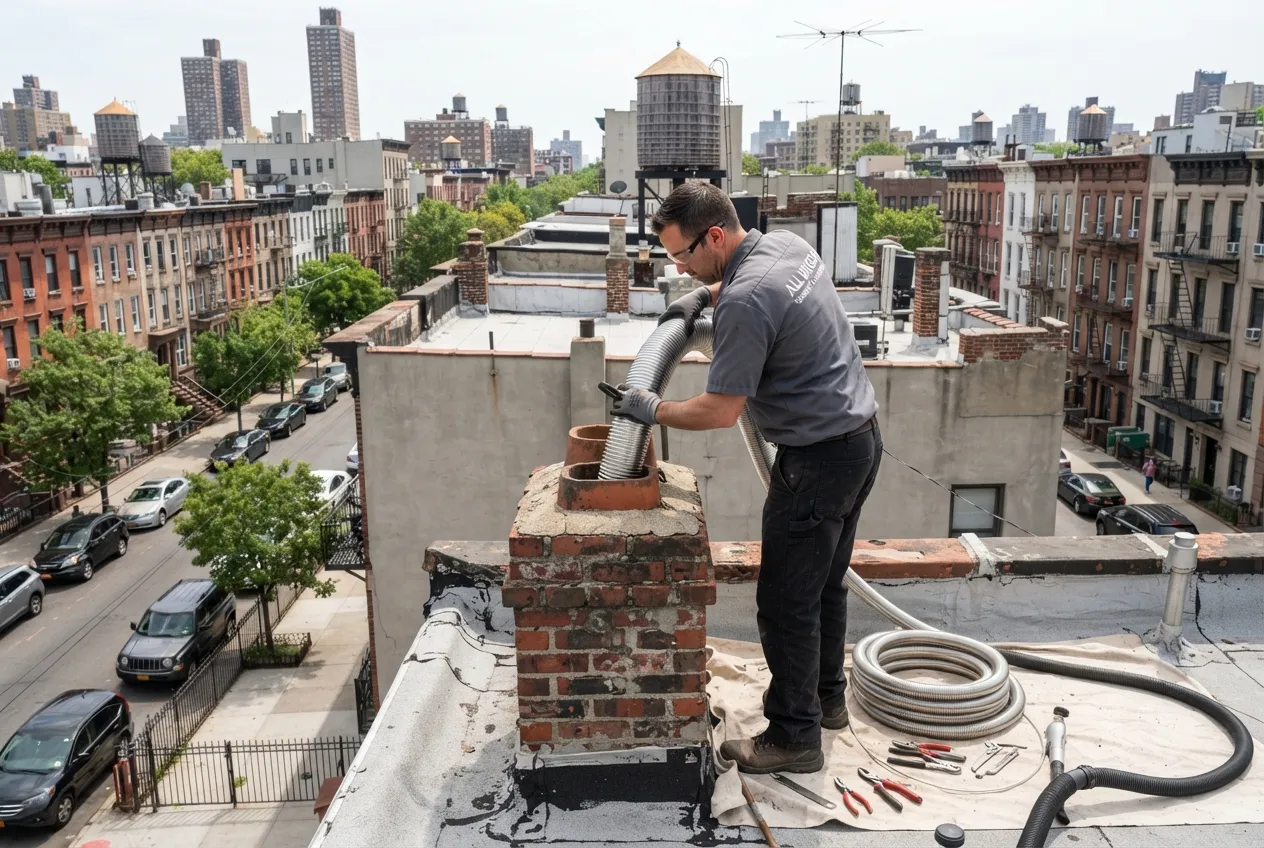
Our certified technicians then match the liner to the appliance, the fuel, and the shape and condition of the flue. Common options include:
- Stainless steel liners, rigid or flexible, for gas, oil and many wood-burning appliances
- Aluminum liners, only where the appliance manufacturer allows them for certain gas appliances
- Cast-in-place liners, a poured mortar lining that can also help reinforce aging masonry
- Replacement clay tile, usually only practical during a chimney rebuild
Getting the Size Right
Sizing matters as much as material. If a liner is too large, exhaust can cool and condense before it leaves the chimney. If it is too small, it can restrict draft and push exhaust back into the home. We size each liner to the appliance specifications and the height of the chimney.
Time for your annual chimney check?
What Installation Looks Like in a Chinatown Building
Most liners are installed from the roof down. In walk-ups and mixed-use buildings, that means planning roof access, protecting stairwells and hallways, and coordinating with the owner or super and any ground-floor businesses. We cover the floor at the appliance end and keep the work area contained.
A typical installation includes cleaning the flue, removing broken tile or debris, lowering and connecting the liner, insulating it where the design calls for it, and sealing the top with a top plate and cap. We then connect the appliance at the bottom, check the draft and connections, and walk you through what we did.
Timing matters in apartment buildings. New York City's heat season runs from October 1 through May 31, and owners must keep apartments heated to the city's minimum temperatures during that time. Many owners schedule liner work or boiler conversions for late spring or summer. If a flue fails mid-season, we can discuss ways to keep heating downtime short.
Liners for Fireplaces and Inserts
Not every liner job involves a boiler. If you have a fireplace in a rowhouse or a top-floor apartment, or you plan to add a wood or gas insert, the flue may need a liner sized for that unit. Inserts often vent poorly into a large original flue, so a full-height stainless steel liner sized to the insert is the usual solution.
More services in Chinatown
- Chimney Sweep in ChinatownLocal service & repairs
- Chimney Inspection in ChinatownLocal service & repairs
- Chimney Repair in ChinatownLocal service & repairs
- Air Duct Cleaning in ChinatownLocal service & repairs