The short answer
A chimney cap and chase cover keep rain, animals and debris out of your flue and chimney chase. Water in the firebox, animal noises, white staining on the brick, or rust streaks on the siding usually mean the cap or cover needs attention. FirstChoice inspects the chimney, measures it, and installs a part sized to fit, then checks the flue while we're there.
A chimney cap and a chase cover are the parts of your chimney that face the weather every day. The cap sits over the flue opening. Its mesh screen and hood keep out rain, leaves, birds and squirrels. A chase cover is the metal top on a framed or sided chimney chase, the kind that houses a factory-built fireplace or a metal flue. When either one is missing, rusted, cracked or the wrong size, water and animals get in, and the damage usually shows up indoors first. FirstChoice Chimney Services inspects, measures, replaces and installs caps and chase covers for homes in New York and nearby neighborhoods. We also check the flue below while we're up there.
Signs you need it
Most owners don't look at the top of their chimney until something changes inside the house. These are the signs that most often point to a failed or missing cap or chase cover:
One sign on its own doesn't always mean the cap is the cause. That's why we look at the whole system before we recommend a replacement.
- Water in the firebox or around the damper after rain, or rust on the damper and fireplace doors
- White staining on the brick, outside or around the fireplace. This means water is moving through the masonry and leaving mineral salts behind
- Scratching, chirping or flapping sounds in the chimney, especially in spring when birds and raccoons look for nesting spots
- Leaves, twigs, nesting material, or debris and brick flakes landing in the firebox
- A damp, sour smoke or creosote smell that gets stronger on humid or rainy days
- Poor draft or smoke rolling back into the room. This can come from a blocked flue or from wind pushing down an open chimney
- On a chase, rust streaks running down the siding, or a sagging cover that holds standing water
What's included in a cap and chase cover visit
Every cap and chase cover visit includes the same core steps, whether or not we end up replacing a part.
Caps come in single-flue and multi-flue styles. Chase covers are usually made to the chase's exact measurements. They have a sloped surface and a drip edge so water runs off instead of pooling. We'll explain which style fits your chimney and why.
- Inspection of the existing cap, mesh and hood, and how the cap is attached
- Inspection of the chase cover for rust, holes, low spots and failed seams
- Check of the crown or chase top underneath for cracks and gaps
- Measurement of each flue and the chase top so new parts fit correctly
- Removal of nests, leaves and debris from the top of the flue
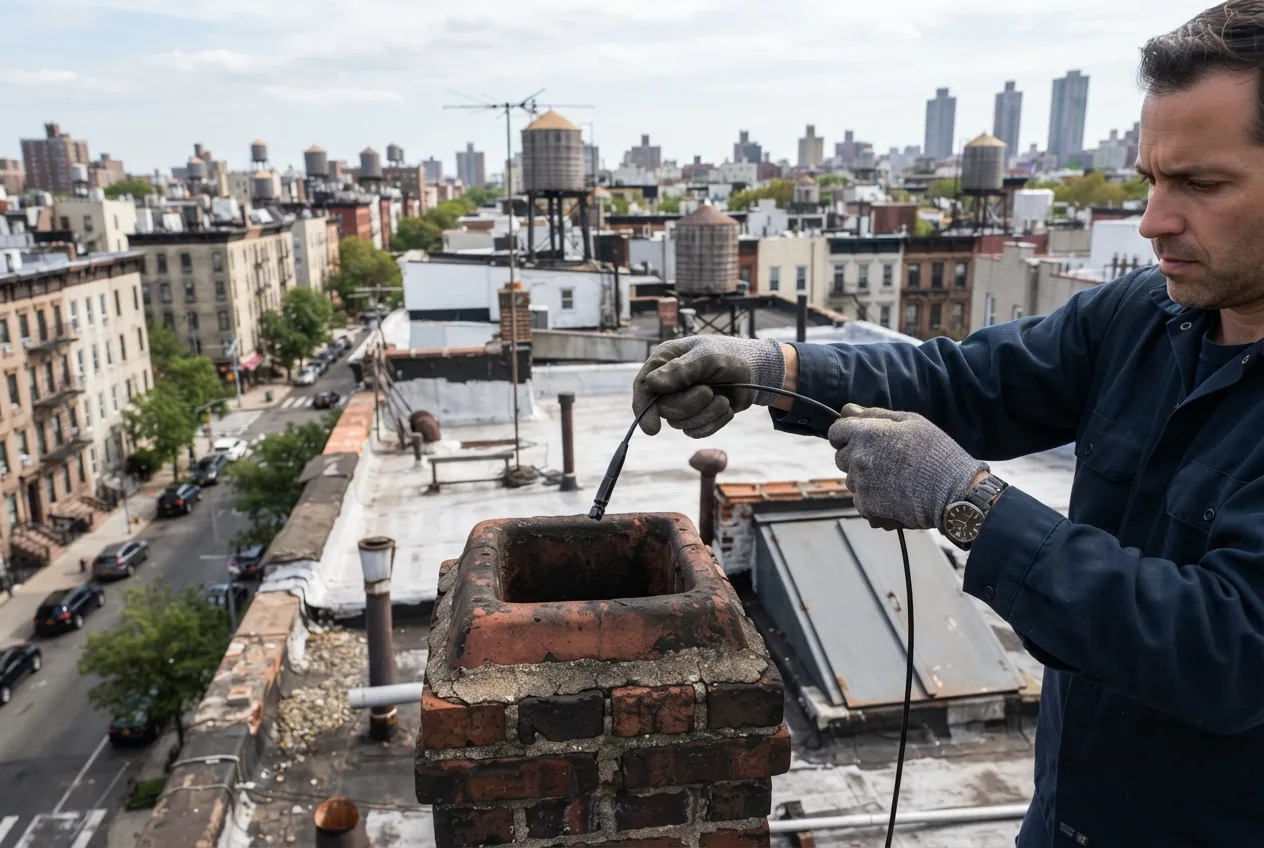
- A look down the flue, with a camera where we need a clearer view
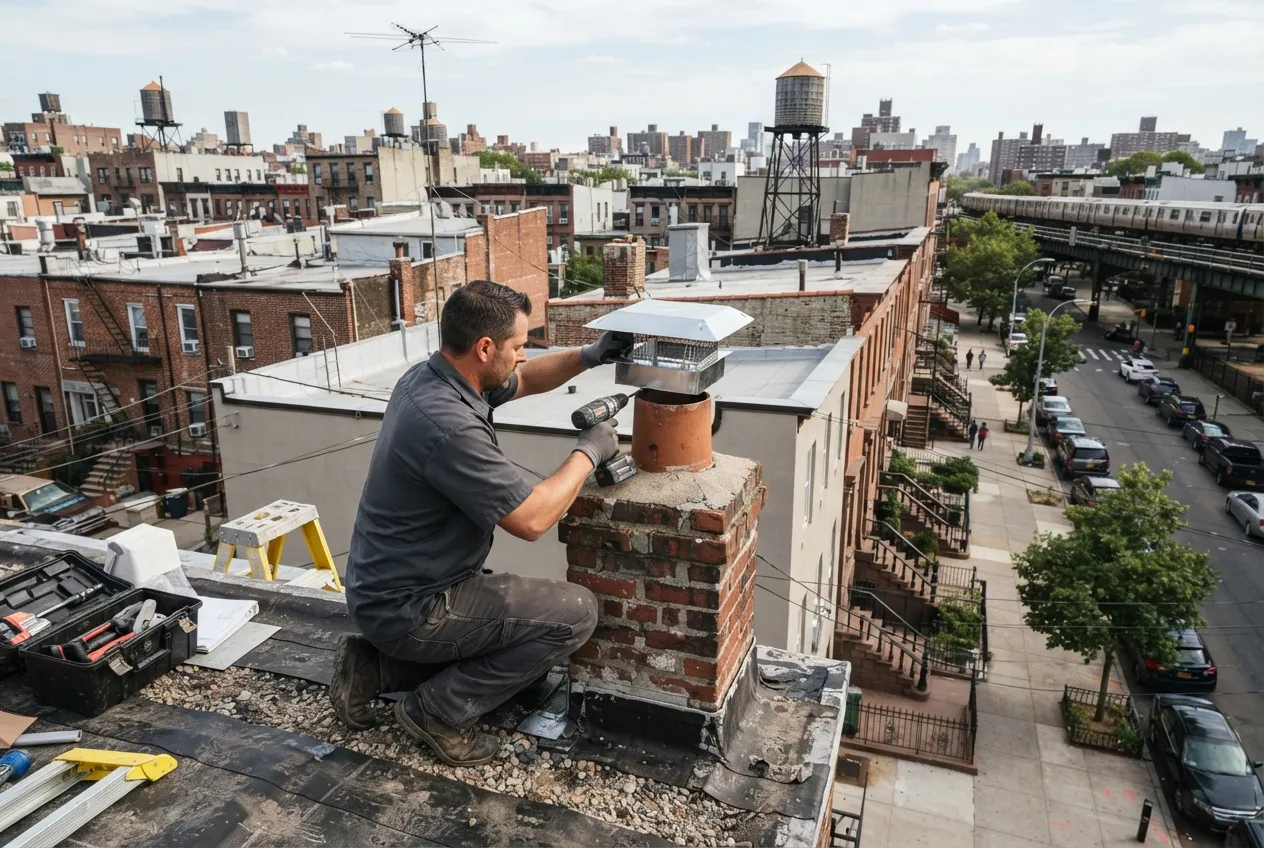
- Installation of a new cap or chase cover sized to your chimney, with sealant at the seams and fasteners
- Photos of what we found and what we installed, plus written notes on anything else that needs attention
How our crew works inside your home and on the roof
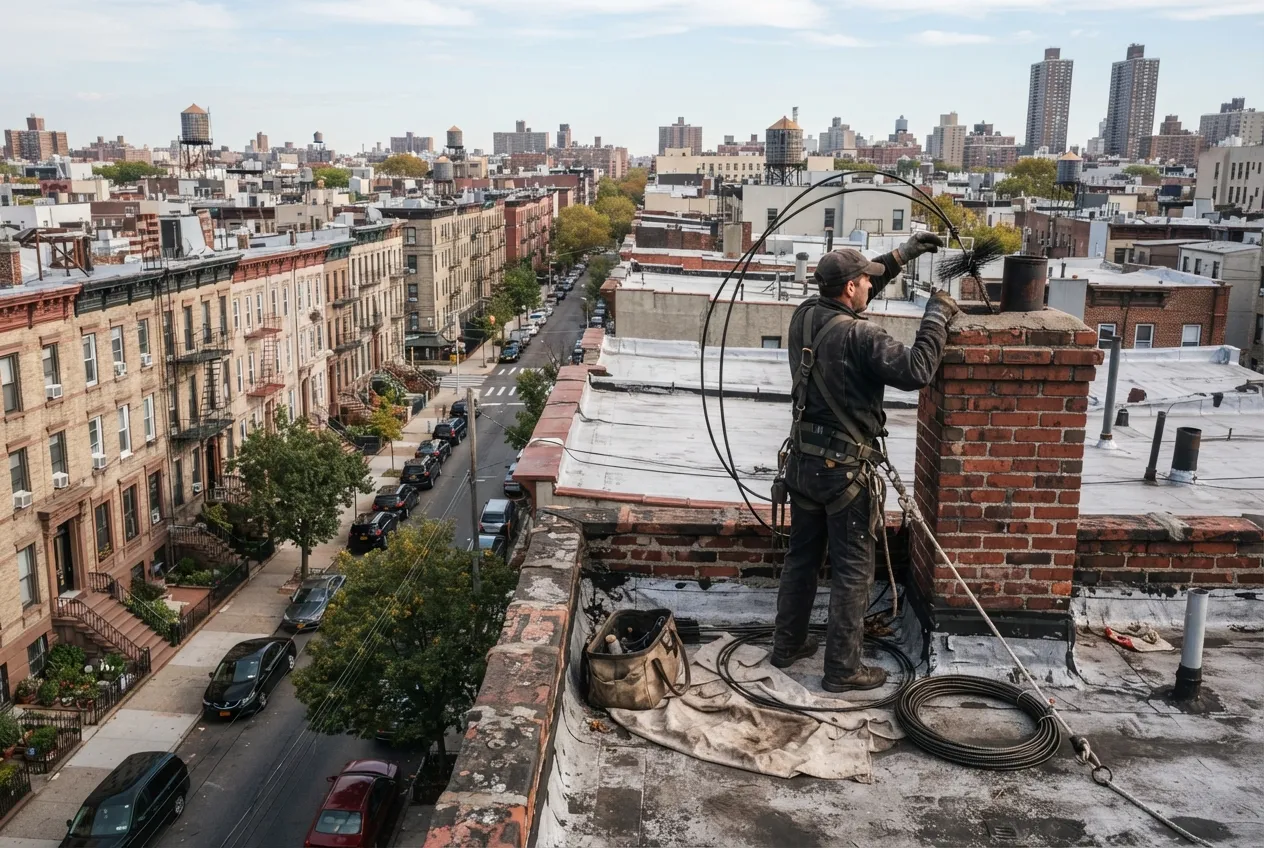
Inside, the crew lays drop cloths from the door to the fireplace and covers the hearth before opening the damper. Sometimes the flue needs a sweep or there's nesting debris to clear. In that case we use rotary brushes and run HEPA vacuums at the firebox so soot and dust stay out of the room. When we need to see the liner, joints or smoke chamber, we run a camera up the flue and show you the footage.
On the roof, we set ladders and protect the roof surface. This matters on the flat tar or membrane roofs common on city row houses, and on pitched roofs with slate or shingles. We remove the old cap or cover and clean the top of the crown or chase. Then we fasten the new part so it holds up to wind. We never seal an animal inside. We confirm the flue is clear before the cap goes on.
Time for your annual chimney check?
The standard we follow
The NFPA 211 standard calls for chimneys, fireplaces and vents to be inspected once a year. A cap or chase cover visit is a good time to do that inspection. Chimney professionals use three inspection levels. Level 1 is used when nothing about the system has changed. Level 2 is called for when the system changes, such as a new appliance or a switch of fuel, or when the home is sold. Level 3 is used when a hidden hazard has to be reached by opening part of the chimney or the building.
If your building is converting its boiler from oil to gas, the chimney has to be evaluated as part of that work. Gas exhaust produces acidic condensate that can corrode a masonry flue, so a new liner is often needed. The cap on top should also match the new setup. Our certified technicians can tell you which inspection level fits your situation.
What affects the price
We give you a price after we see the chimney, because every roof and flue is different. These are the main things that affect the cost:
We explain each item before any work starts, so you can decide what to do with the full picture in front of you.
- Chimney height and roof access, including roof pitch, roof surface, and whether we need extra ladders or access through a roof hatch
- Fuel type, since wood, oil and gas flues call for different cap styles and materials
- The number, size and condition of the flues
- The size of the chase, and whether the cover can be a standard size or must be made to measure
- How much buildup, nesting material or debris has to be removed first
- Whether a camera inspection or repairs to the crown, liner or chase framing are needed
How a visit works
Here's what to expect from the moment you reach out:
Many owners schedule this work in late summer or early fall. That way the chimney is sealed against weather and animals before the heating season starts.
- You book a time and tell us what you've noticed, such as leaks, noises, smells or a missing cap
- The crew arrives, protects the area around the fireplace, and inspects from inside and from the roof
- We show you photos or camera footage and explain your options
- With your approval, we measure, clear the top of the flue, and install the new cap or chase cover
- We clean up, check the damper and draft, and leave you with notes and photos