The short answer
A chimney inspection checks the firebox, damper, liner, crown, cap, and masonry for damage, blockages, and buildup. The NFPA 211 standard calls for an inspection once a year, and the level depends on whether anything about your chimney or home has changed.
A chimney inspection tells you whether your fireplace, wood stove, or boiler flue can safely carry smoke and exhaust out of your home. FirstChoice Chimney Services inspects chimneys across New York City and nearby neighborhoods, from townhouse fireplaces to the flues that serve oil and gas boilers. Our certified technicians check the firebox, damper, smoke chamber, flue liner, crown, cap, and exterior masonry, then explain what they found in plain terms. You get a written report with photos, so you can decide what to fix now, what to watch, and what can wait. If the chimney only needs a sweep, we'll tell you that, too.
Signs you need a chimney inspection
Most homeowners call us after they notice something off. Any of these signs is worth a closer look, even if you only light a fire a few times each winter.
You should also schedule an inspection when there are no warning signs: before the first fire of the season, after a chimney fire, when you buy or sell a home, and when you add or change a heating appliance.
- A smoky or campfire smell in the room, often stronger in humid weather or when the air conditioning runs
- Poor draft: smoke rolls into the room, fires are hard to start, or the boiler room smells of exhaust
- Debris, black flakes of creosote, or crumbs of brick and mortar in the firebox
- White, chalky staining on the brick, inside or out, which points to moisture moving through the masonry
- Scratching, chirping, or fluttering sounds from the flue that suggest birds or animals have moved in
- Water in the firebox, rust on the damper, or damp spots on nearby walls and ceilings after rain
What a chimney inspection includes
Every inspection covers the parts of the system that can be reached without tools or demolition. If we see signs of a problem we can't evaluate from the open flue, we'll recommend the next level of inspection and explain why before doing anything more.
- Firebox: cracked firebrick, loose mortar joints, and gaps at the hearth
- Damper: opens, closes, and seals as it should
- Smoke chamber and smoke shelf: creosote, debris, and rough or crumbling surfaces
- Flue liner: cracks, gaps, missing or shifted tiles, and the condition of metal liners
- Creosote and soot level, so you know whether a sweep is needed
- Visible clearances between the chimney and wood framing or trim
- Connector pipes and breeching for stoves, inserts, and boilers
- Crown, cap, and spark screen
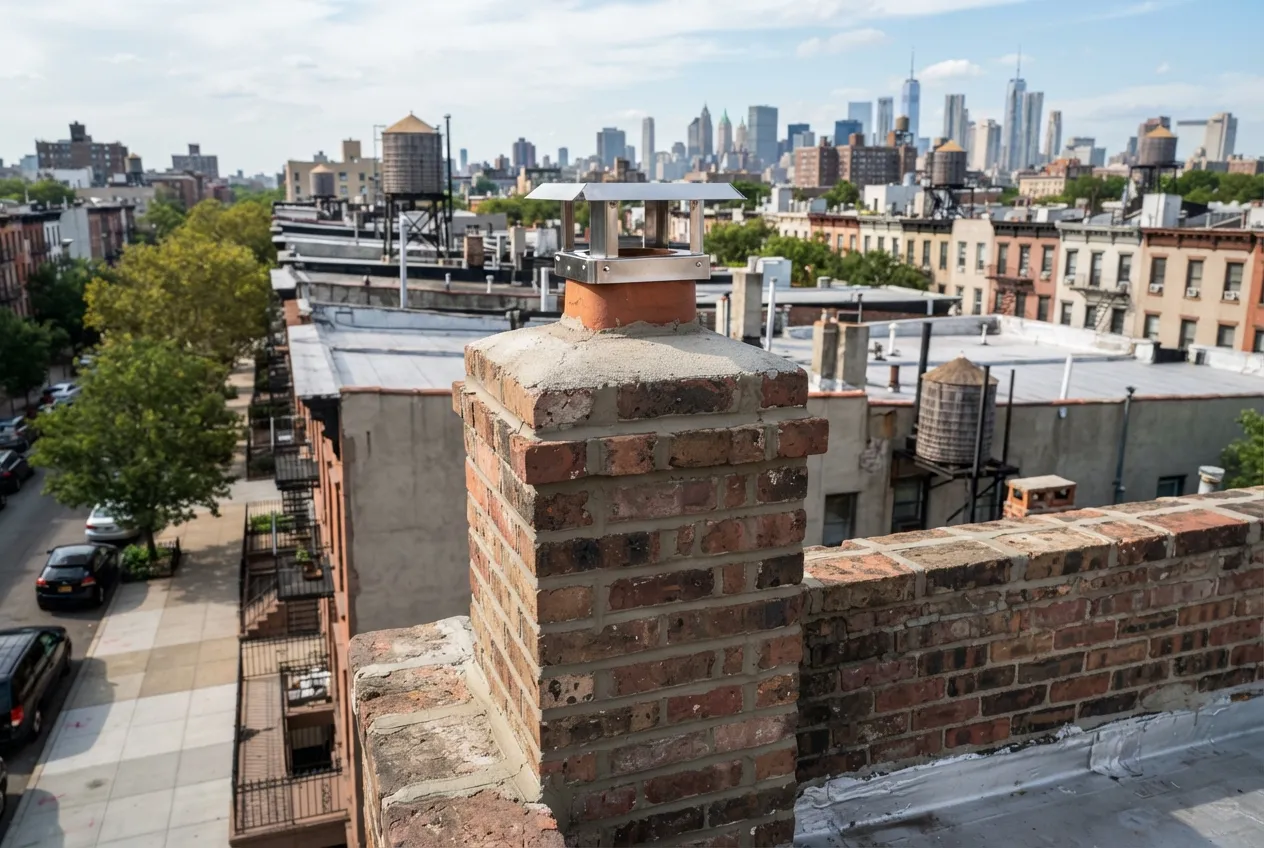
- Exterior brick and mortar, plus flashing where the chimney meets the roof
- Signs of water entry, animal nesting, and blockages
- A written report with photos and clear recommendations
How our crew works inside your home and on the roof
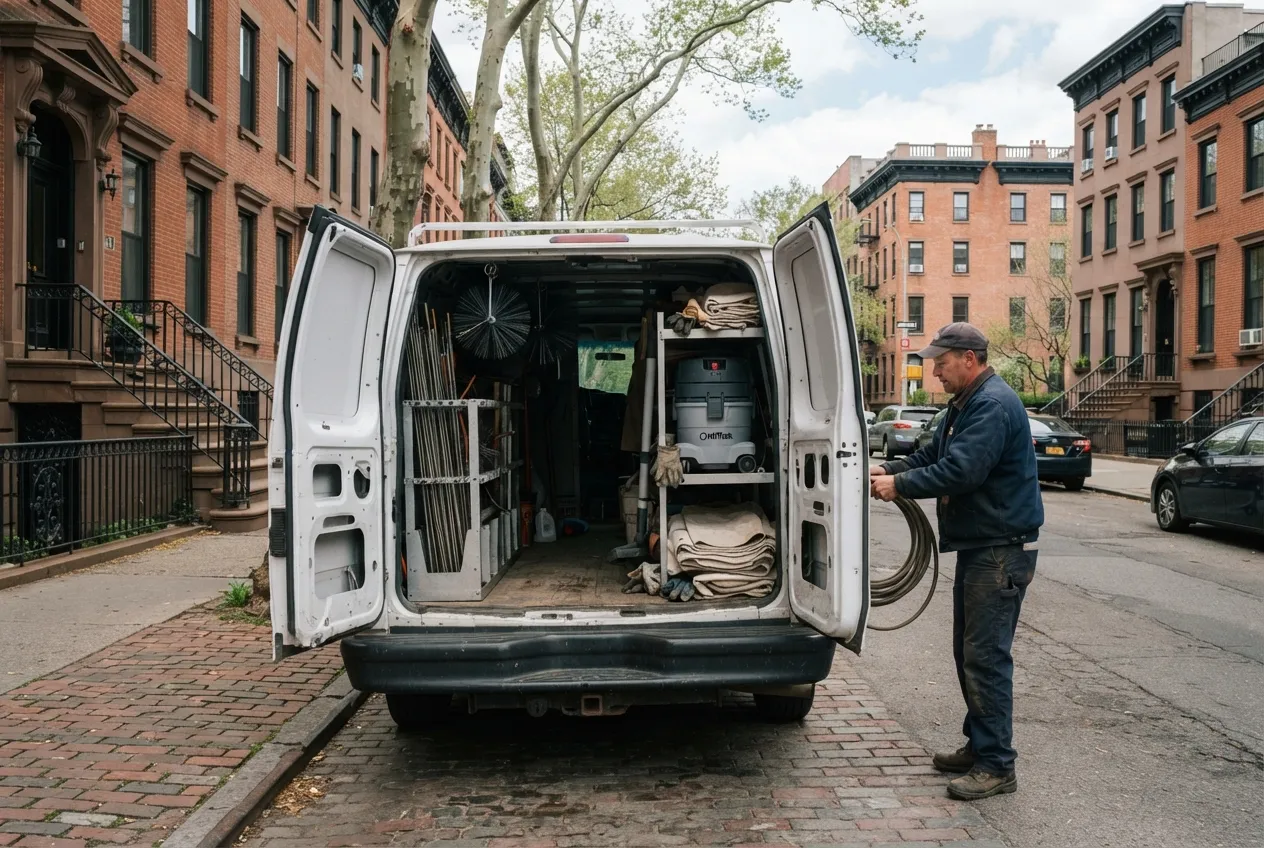
Inside, technicians lay drop cloths from the door to the fireplace and cover the hearth before opening the damper. A HEPA vacuum runs during the work to keep soot and fine dust from drifting into the room. If the flue needs cleaning before it can be inspected properly, we use rotary brushes sized to the liner, which scrub the walls without chipping or loosening tiles.
When the liner needs a closer look, we run a video camera up the flue. It shows cracks, gaps between tiles, and buildup that can't be seen from the firebox, and you're welcome to watch the screen with us.
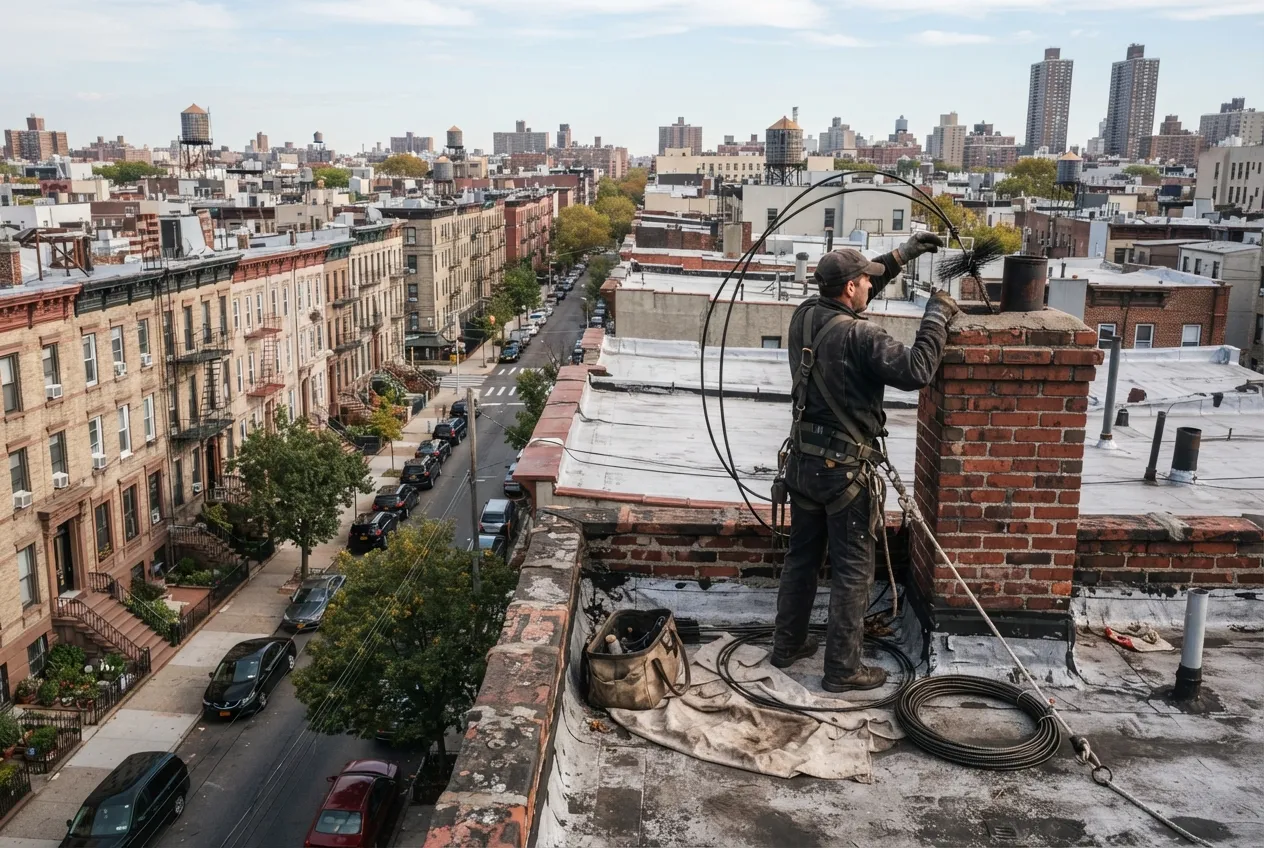
On the roof, the crew sets up ladders and safety gear, checks the crown, cap, flashing, and masonry, and looks down the flue from the top. For taller buildings or roofs with limited access, we confirm the access plan with you or your building staff before the visit. We clean up inside and out before we leave.
Time for your annual chimney check?
The standard we follow: NFPA 211 and the three inspection levels
Our inspections follow NFPA 211, the national standard for chimneys, fireplaces, and vents. It calls for these systems to be inspected once a year. Chimney professionals use three inspection levels, and we'll tell you which one fits your situation.
In New York City, converting a boiler from oil to gas means the chimney has to be evaluated as part of the work. A new liner is often needed, because gas exhaust produces acidic condensate that can corrode a masonry flue. Since the city's heat season runs from October 1 through May 31, late summer and early fall are good times to schedule, before your boiler or fireplace is in daily use.
- Level 1: when nothing has changed since the last inspection and the chimney is in regular use
- Level 2: when the system changes, such as a new appliance or a switch of fuel, or when the home is sold
- Level 3: when a hidden hazard has to be reached by opening part of the chimney or the building
What affects the price
We give you a quote once we know the details of your chimney, and we explain it before any work starts. Repairs are always quoted separately, so you can decide on them after seeing the report.
- Chimney height and how difficult the roof is to reach
- Fuel type: wood, gas, or oil, and whether the flue serves a fireplace, stove, insert, or boiler
- Flue size, shape, and condition
- How much creosote, soot, or debris has built up
- Whether a camera inspection is needed
- Whether repairs are needed
How a visit works
When you book, we ask what you burn, how often you use the chimney, and whether you've noticed any of the signs above. For apartment buildings and co-ops, we can coordinate roof access with the super or managing agent.
Before we arrive, let the fireplace or stove cool completely; ideally, don't use it for a full day beforehand. On the day of the visit, the technician walks you through the plan, protects the work area, and completes the inspection.
Afterward, we go over the findings with you, show you the photos or camera footage, and send a written report. If repairs are needed, you'll get a separate estimate and can schedule the work when it suits you.
Chimney Inspection by city
- Chimney Inspection in SoHoLocal service & repairs
- Chimney Inspection in Little ItalyLocal service & repairs
- Chimney Inspection in Hudson SquareLocal service & repairs
- Chimney Inspection in Greenwich VillageLocal service & repairs
- Chimney Inspection in West VillageLocal service & repairs
- Chimney Inspection in TribecaLocal service & repairs
- Chimney Inspection in Civic CenterLocal service & repairs
- Chimney Inspection in East VillageLocal service & repairs
- Chimney Inspection in ChinatownLocal service & repairs
- Chimney Inspection in Two BridgesLocal service & repairs
- Chimney Inspection in GramercyLocal service & repairs
- Chimney Inspection in Lower East SideLocal service & repairs