The short answer
Yes, you should have the chimney in your Two Bridges home or building inspected once a year, which is what the NFPA 211 standard calls for. A more detailed inspection is warranted when you change appliances or fuel, buy or sell the property, or suspect hidden damage.
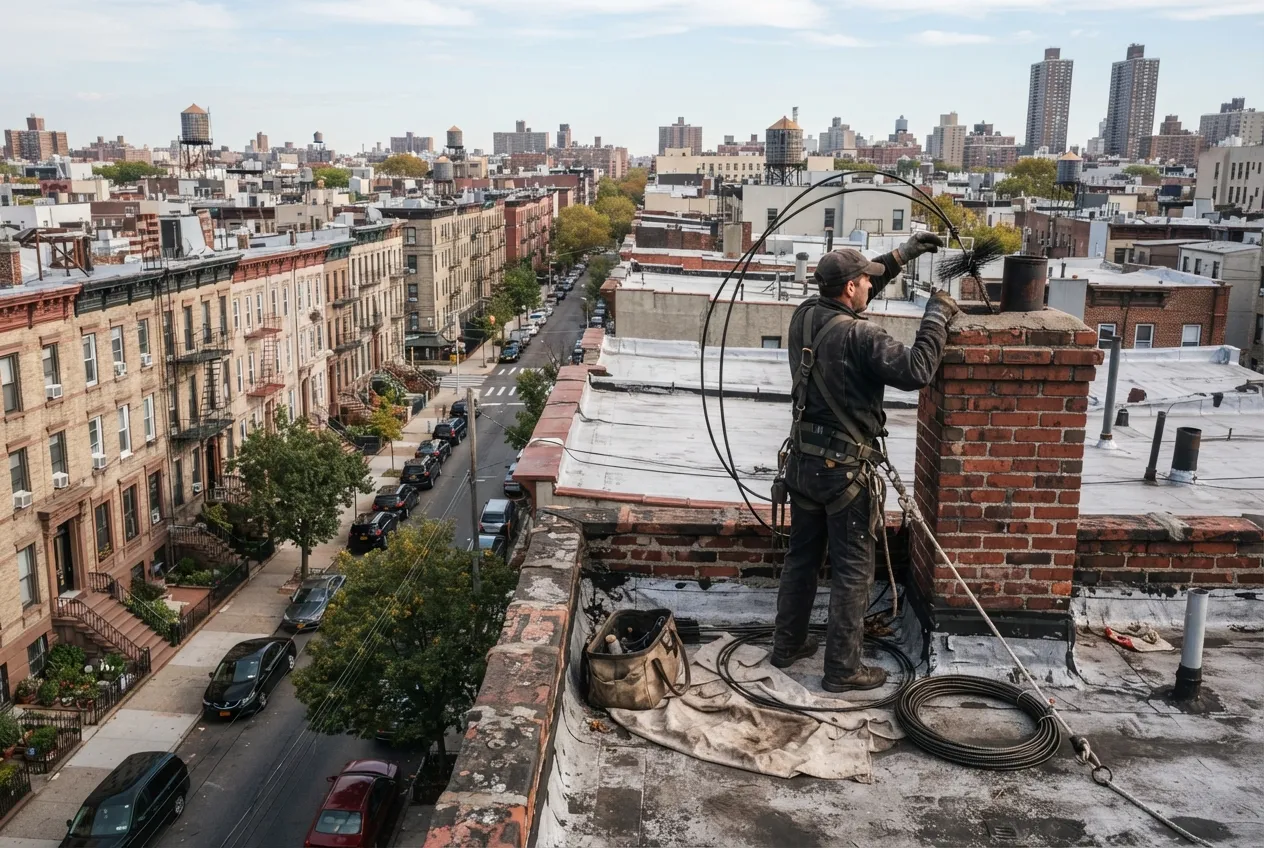
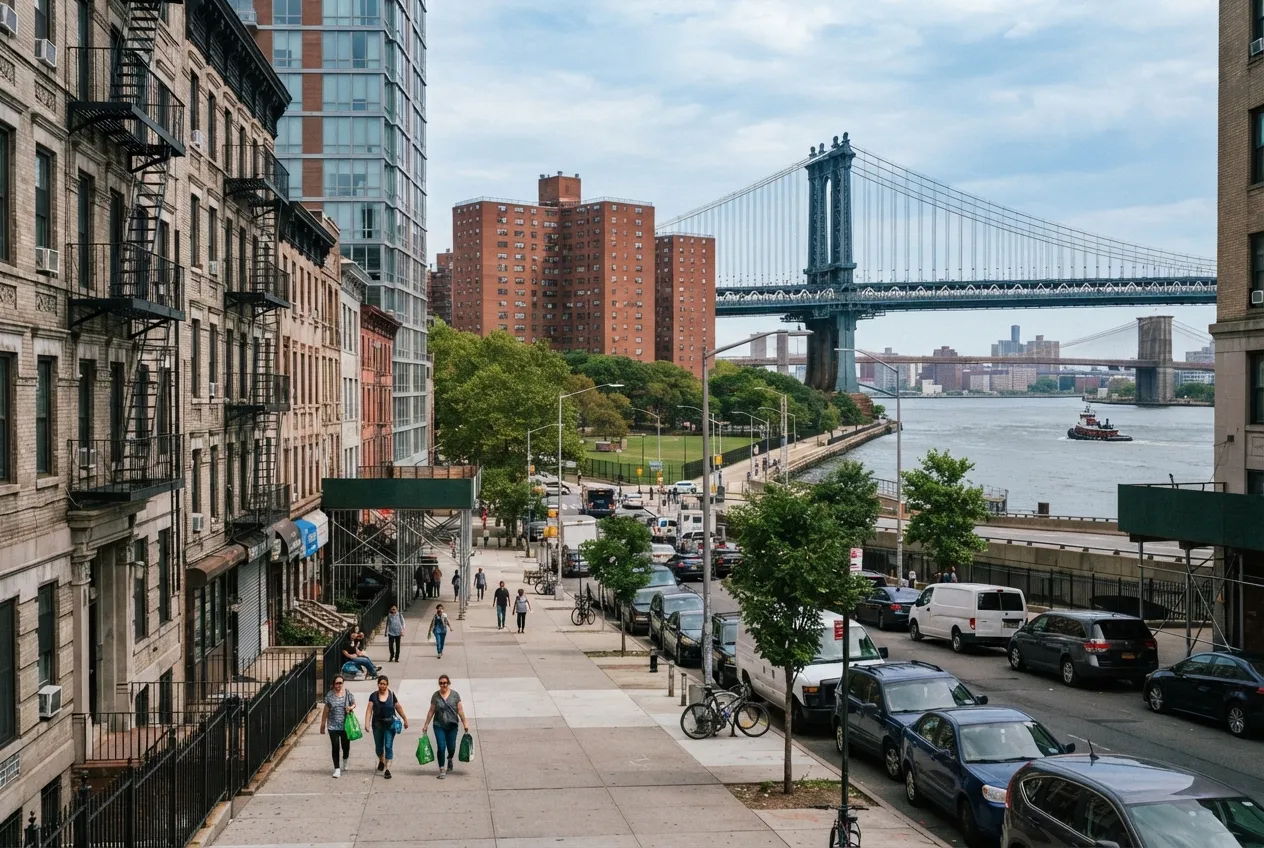
Two Bridges sits at the southeastern edge of Manhattan, about a mile south of our Manhattan office. Most homes here are in older walk-up and pre-war apartment buildings, with some rowhouses and larger multifamily buildings mixed in. Many of these buildings vent a boiler through a shared masonry chimney, and some apartments and rowhouses still have fireplaces. A chimney inspection tells you whether that flue is clear, structurally sound and suited to the appliance venting into it. Our certified technicians inspect chimneys throughout Two Bridges and in nearby Chinatown, the Lower East Side, Tribeca, Civic Center and SoHo.
Why Yearly Inspections Matter in Two Bridges Buildings
The NFPA 211 standard calls for chimneys, fireplaces and vents to be inspected once a year. That applies whether the flue serves a fireplace you use a few times each winter or a boiler that heats an entire building.
In New York City, heat season runs from October 1 through May 31, and building owners must keep apartments at the city's minimum temperatures during those months. That means a boiler chimney in Two Bridges may run almost continuously for eight months. A blocked flue, a cracked liner or loose masonry found in January is much harder to deal with than one found in late summer or early fall. Scheduling your inspection before heat season starts gives you time to make repairs without leaving tenants or your own household without heat.
The Three Inspection Levels
Chimney professionals use three levels of inspection. We recommend the level that fits your situation and explain why before we start.
- Level 1: For a chimney that has had no changes since its last inspection. We check the readily accessible parts of the chimney, the appliance connection and the flue for soot, blockages and obvious damage.
- Level 2: For when the system changes, such as a new boiler or water heater or a switch from one fuel to another, and when the property is being sold. This includes a closer look at accessible areas such as the attic and roof, along with a camera inspection of the flue's interior.
- Level 3: For when a hidden hazard has to be reached by opening part of the chimney or the building. We only recommend this when earlier findings point to a concealed problem that can't be evaluated any other way.
Oil-to-Gas Conversions and Chimney Liners
Many older buildings in Lower Manhattan have converted, or are planning to convert, their boilers from oil to gas. When a New York City building makes that switch, the chimney has to be evaluated as part of the work. A new liner is often needed because gas exhaust produces acidic condensate that can corrode a masonry flue over time.
If your building is planning a conversion, or has already converted without a liner assessment, a Level 2 inspection will show the condition of the existing flue and whether it is suited to gas exhaust. We document what we find so your boiler contractor and building management have a clear picture before work moves forward.
Time for your annual chimney check?
What We Check During a Chimney Inspection
Every chimney is different, but these are the main areas we examine on a typical inspection in Two Bridges:
- Flue interior for creosote, soot buildup, debris, nesting animals and blockages
- Liner condition, including cracks, gaps, missing sections and signs of corrosion
- The connection between the boiler, furnace or water heater and the chimney
- Firebox, damper and smoke chamber on fireplaces
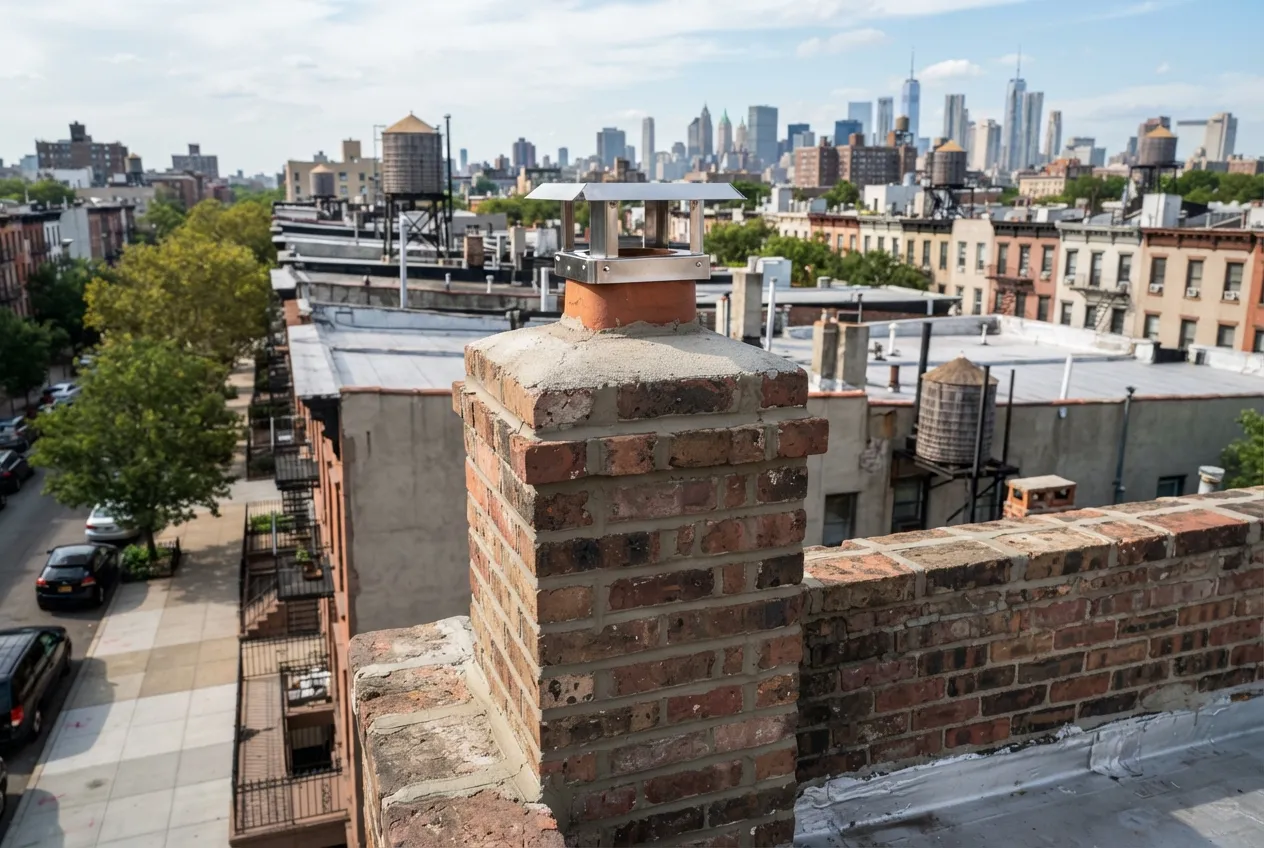
- Chimney crown, cap and exterior masonry where accessible from the roof
- Signs of water entry, such as staining, spalling brick or deteriorated mortar joints
- Clearances between the chimney and nearby combustible materials where they can be seen
After the Inspection
When we finish, we walk you through what we found, in plain language, with photos or camera footage where it helps. If the chimney is in good shape, you'll know it's ready for the season. If we find problems, we explain which issues affect safety right away and which can be planned for, so you can make decisions with the facts in hand.
For building owners and managers, we provide written findings you can keep with your maintenance records or share with a boiler contractor, buyer or board. For residents of rowhouses and apartments with fireplaces, we let you know whether the fireplace is safe to use and whether a cleaning is needed first.
More services in Two Bridges
- Chimney Sweep in Two BridgesLocal service & repairs
- Chimney Repair in Two BridgesLocal service & repairs
- Air Duct Cleaning in Two BridgesLocal service & repairs
- Chimney Liner Installation in Two BridgesLocal service & repairs