The short answer
A chimney sweep in Two Bridges removes soot, creosote and blockages from fireplace and boiler flues and includes a visual check of the chimney's condition. The NFPA 211 standard calls for a yearly inspection, so most owners book a sweep and inspection together before New York City's heat season starts on October 1.
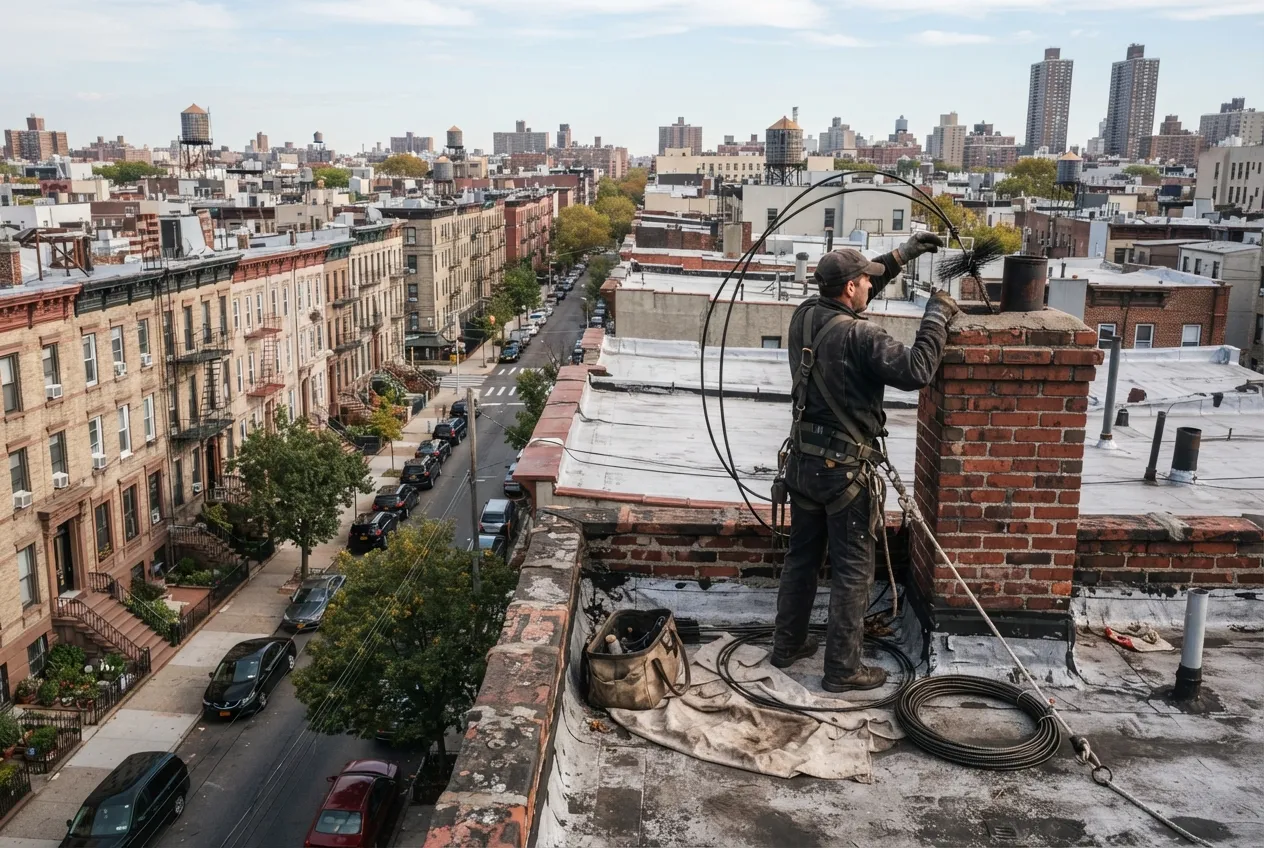
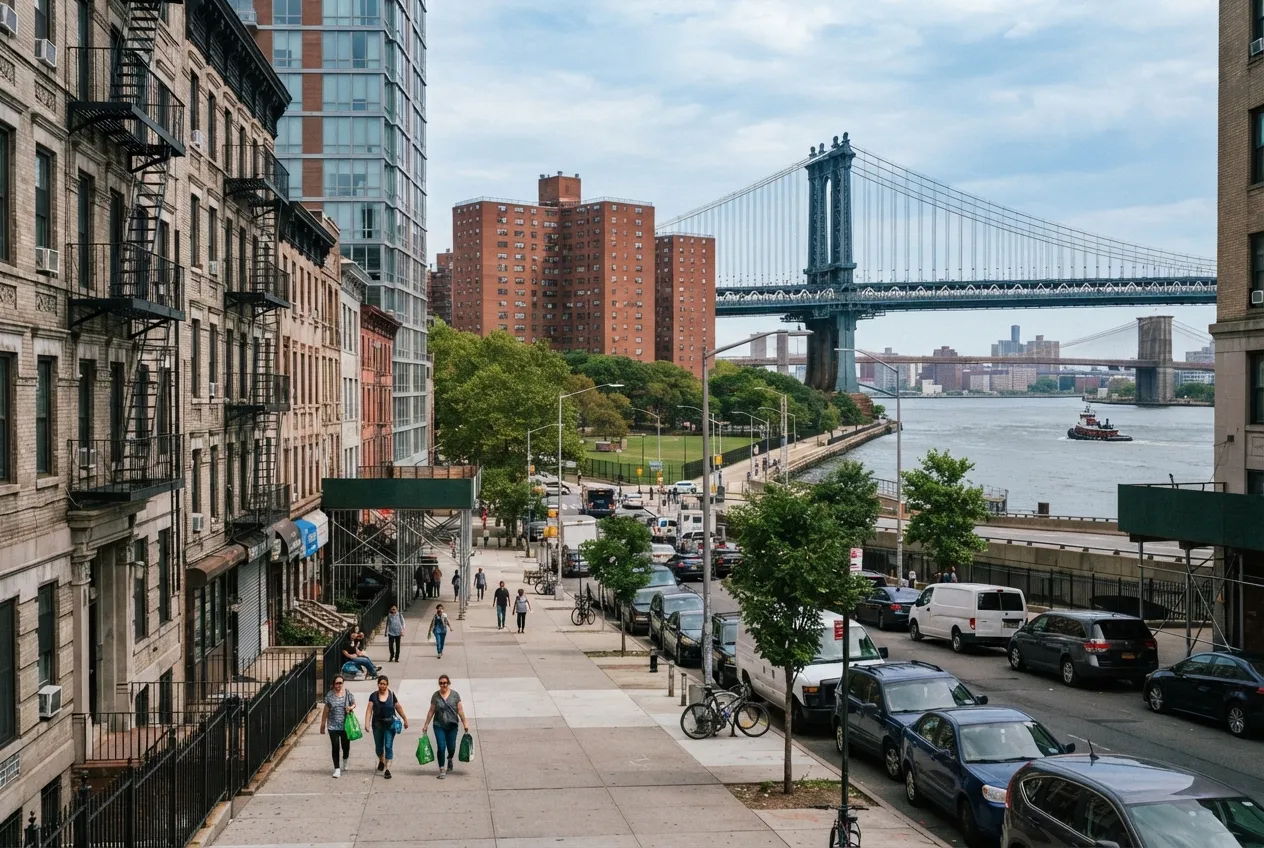
Two Bridges is about a mile south of our Manhattan office, so it's a short trip for our crews. Homes here are mostly older walk-ups, rowhouses and pre-war apartment buildings, with some newer construction. Many have a decorative or working fireplace, a shared boiler flue, or both. A chimney sweep removes the soot, creosote and debris that build up inside those flues, and it gives our certified technicians a close look at the condition of the chimney. This page explains what a sweep covers in Two Bridges, when to schedule one and what we look for in older Manhattan masonry.
What a Chimney Sweep Includes
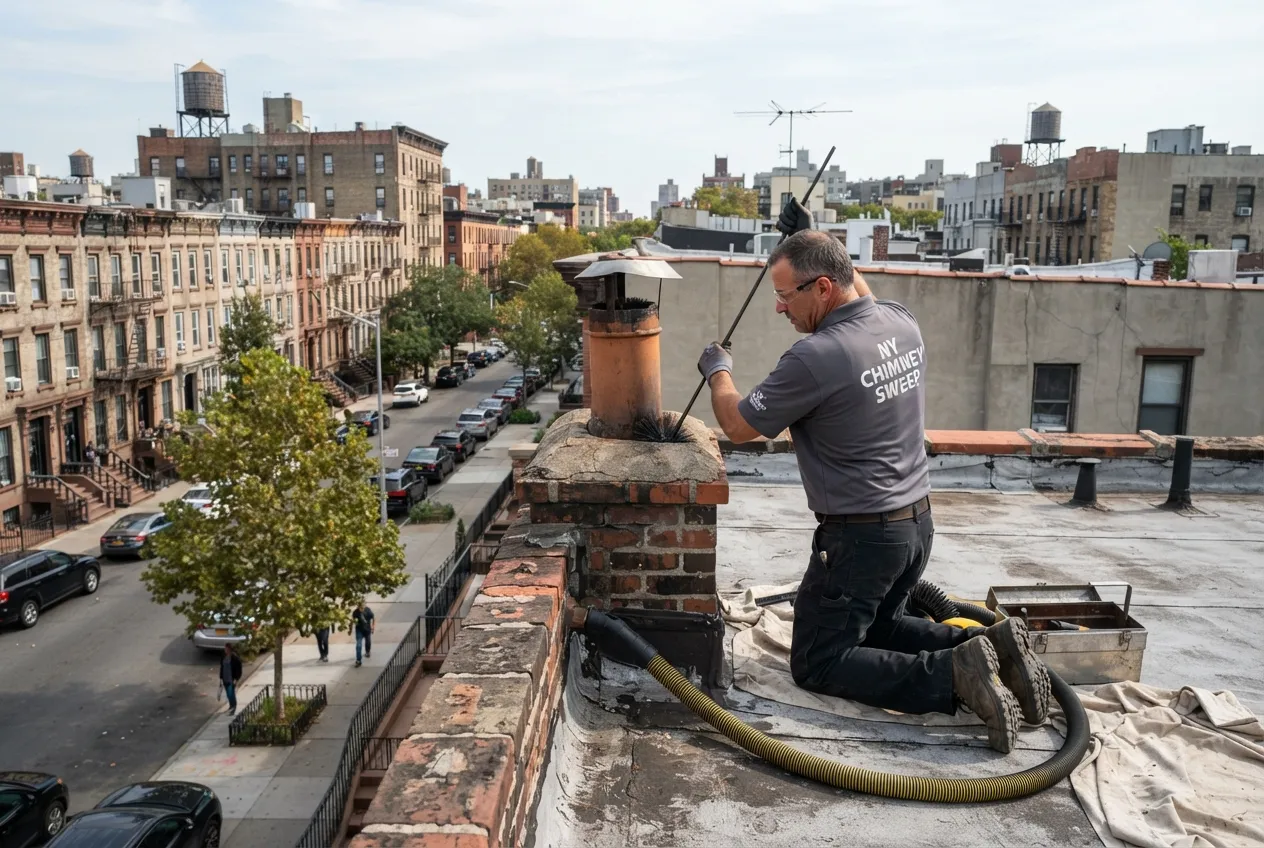
A sweep is more than running a brush up the flue. In apartment buildings and rowhouses, a technician has to protect finished floors and furniture, control dust indoors and work around tight hallways and small fireplace openings. We set up drop cloths and a vacuum system before any brushing starts.
After cleaning, the technician checks the parts of the system that can be seen without opening walls or masonry. You get a plain explanation of what we found and photos where they help.
- Brushing and vacuuming soot and creosote from the flue
- Clearing the smoke shelf, smoke chamber and firebox
- Checking that the damper opens, closes and seals
- Removing nesting material, leaves and fallen debris
- Looking for cracked flue tiles, missing mortar and liner damage
- Checking the chimney cap and crown where they can be safely reached
Fireplaces and Flues in Older Two Bridges Buildings
Many Two Bridges homes are in older masonry buildings. Over decades, those chimneys can develop crumbling mortar joints, cracked clay tiles or gaps where a liner was never installed. Some fireplaces were sealed up years ago and later reopened. Others were built mainly as decorative features. Before you light a fire in a fireplace that hasn't been used in a while, have it swept and inspected so you know whether it's safe to use.
In multi-unit buildings, one chimney may serve several units, or a single stack may hold separate flues side by side. A blockage or crack in one flue can affect neighbors. That's why we pay attention to how the flues are laid out and where each one exhausts, not just to the opening in your living room.
Timing a Sweep Around Heat Season
New York City's heat season runs from October 1 through May 31. During those months building owners must keep apartments heated to the city's minimum temperatures, so the boiler and its chimney are working almost nonstop. Problems found in the middle of winter are harder to fix without disrupting tenants.
For that reason, late summer and early fall are a practical time to book a sweep in Two Bridges. Spring, right after heat season ends, also works well. The flue is cool, the season's buildup is fresh, and there is time to plan any repairs before the next October.
Time for your annual chimney check?
Oil-to-Gas Conversions and Chimney Liners
Some buildings in the area have converted, or plan to convert, their boilers from oil to gas. When a New York City building makes that switch, the chimney has to be evaluated as part of the work. A new liner is often needed. Gas exhaust produces acidic condensate, and over time that condensate can corrode an unlined or poorly lined masonry flue.
If your building has converted or is planning to, a sweep and inspection is a sensible first step. Removing years of oil soot lets the technician see the true condition of the flue walls and judge whether the existing liner is suitable.
Inspection Levels and What Happens Next
The NFPA 211 standard calls for chimneys, fireplaces and vents to be inspected once a year. Chimney professionals use three levels. Level 1 applies when nothing about the system has changed. Level 2 applies when the system changes, such as a new appliance or a switch of fuel, or when the home is sold. Level 3 is used when a hidden hazard can only be reached by opening part of the chimney or building.
Most routine sweeps in Two Bridges come with a Level 1 inspection. If you are buying or selling a unit, or your building has changed its heating equipment, ask about a Level 2 inspection. We serve nearby Chinatown, the Lower East Side, Tribeca, Civic Center and SoHo as well.
More services in Two Bridges
- Chimney Inspection in Two BridgesLocal service & repairs
- Chimney Repair in Two BridgesLocal service & repairs
- Air Duct Cleaning in Two BridgesLocal service & repairs
- Chimney Liner Installation in Two BridgesLocal service & repairs