The short answer
Chimney waterproofing means sealing the places water enters a masonry chimney, usually the crown, flashing and cap, and then treating the brick with a vapor-permeable water repellent. If you see white staining on the brick, flaking masonry or water in the firebox, the chimney is taking on moisture and should be inspected before the damage spreads.
Water does more damage to a masonry chimney than fire does. Brick and mortar are porous, so rain and melting snow soak in. In a New York winter that moisture freezes and expands, which loosens mortar and pops the face off bricks a little more each season. Chimney waterproofing from FirstChoice Chimney Services starts by finding where water is actually getting in, whether that is the crown, the flashing, a missing cap or the brick itself. Our certified technicians correct those entry points first, then apply a breathable water repellent to the exposed masonry. We work on houses, townhouses and small buildings across New York and nearby neighborhoods.
Signs you need it
Most homeowners notice a moisture problem from inside the house before they see anything on the roof. Water that gets into the chimney drains down through the masonry and the flue and shows up in the firebox, on nearby walls or as a smell. Any one of these signs is worth a closer look:
- White, chalky staining on the outside brick or on chimney brick in the attic. This is efflorescence, the mineral salts left behind as water moves through the masonry and evaporates.
- Water, wet ash or a puddle in the firebox after rain or snowmelt.
- Brick flakes, crumbled mortar or rust flakes from the damper collecting in the firebox.
- A strong smoke or creosote smell that gets worse on humid or rainy days, because moisture reacts with deposits in the flue.
- Bricks on the outside with chipped, flaking or broken faces, also called spalling.
- Water stains, peeling paint or soft drywall on the ceiling or walls next to the chimney.
What is included
Applying a repellent to brick that still has an open crack or a lifted piece of flashing does not stop the leak. That is why each waterproofing job covers the whole path water can take, not just the face of the chimney.
- Inspection of the accessible chimney, inside and out, with a camera run through the flue to look for water damage, cracked tiles or a deteriorated liner.
- Check of the chimney crown for cracks, gaps and poor slope.
- Check of the flashing where the chimney meets the roof.
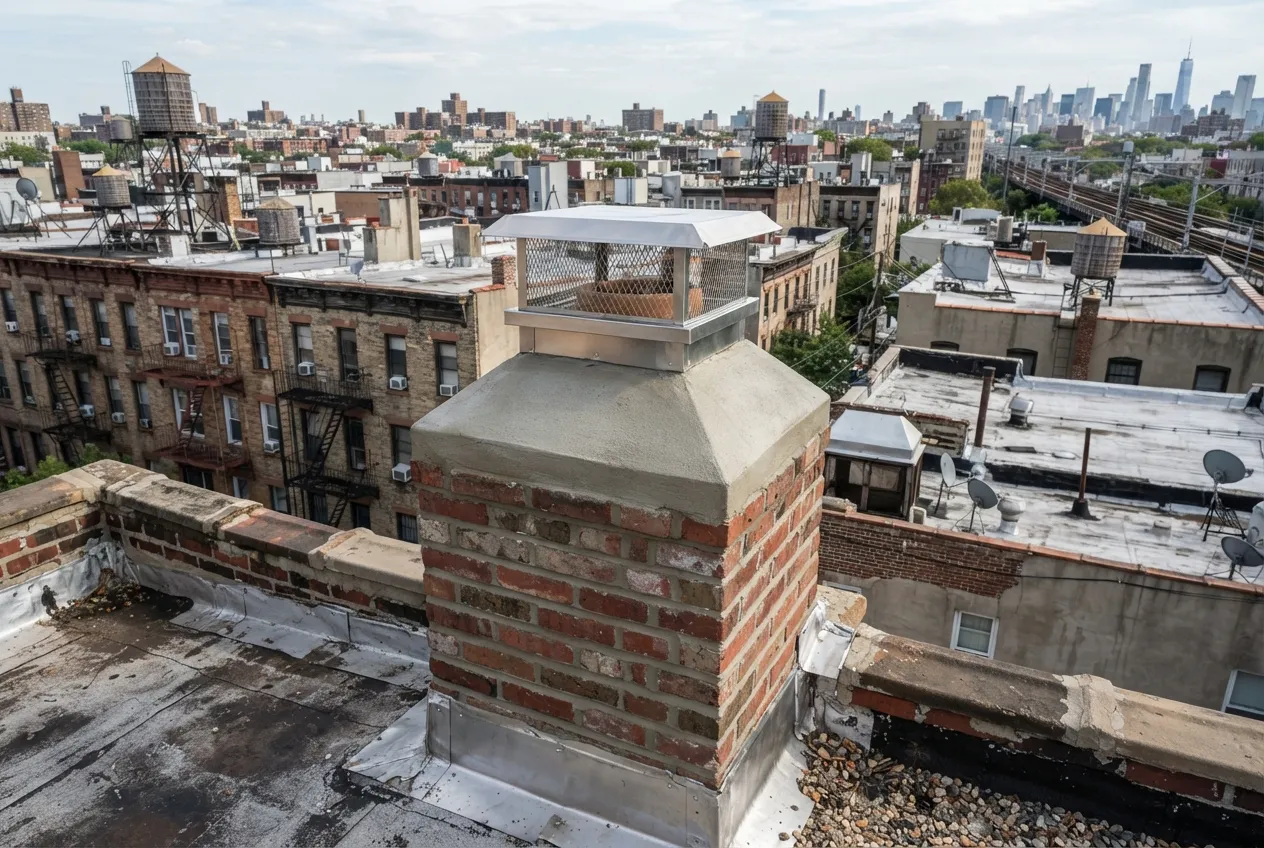
- Check of the chimney cap and screen, or a recommendation for one if the flue is open to rain.
- Assessment of mortar joints, with any repointing needs noted before treatment.
- Cleaning loose debris, moss and dirt off the masonry so the repellent can soak in evenly.
- Sealing hairline cracks in the crown where a sealant is the right fix.
- Applying a vapor-permeable water repellent to exposed brick and mortar, which sheds liquid water while letting trapped moisture escape as vapor.
- Written notes and photos showing what we found and what we treated.
How we work inside your home and on the roof
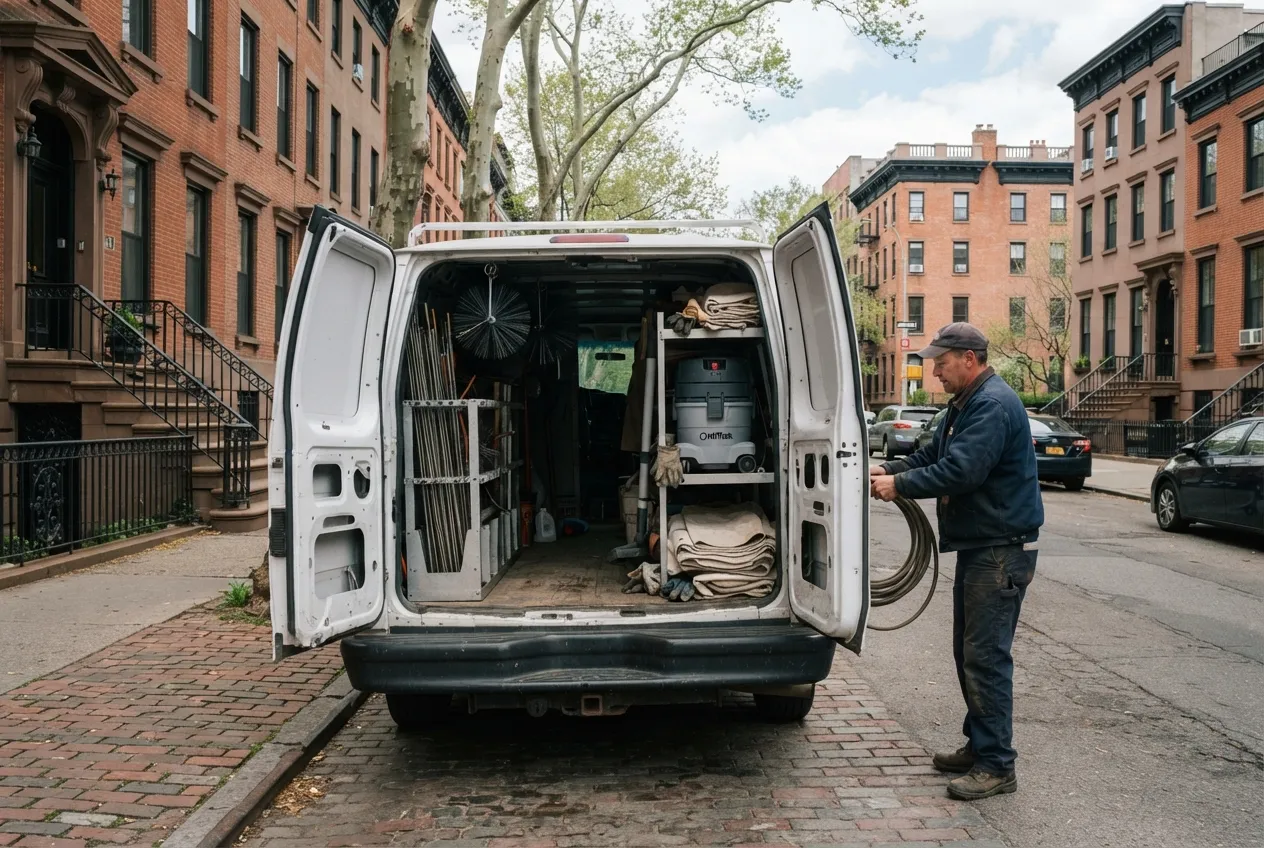
Inside, the crew lays drop cloths from the door to the fireplace and covers the hearth before opening anything. If the flue needs sweeping before the inspection, we use rotary brushes with a HEPA vacuum running at the firebox so soot stays out of the room. A camera lets us see the full length of the flue and spot moisture damage that cannot be seen from the hearth.
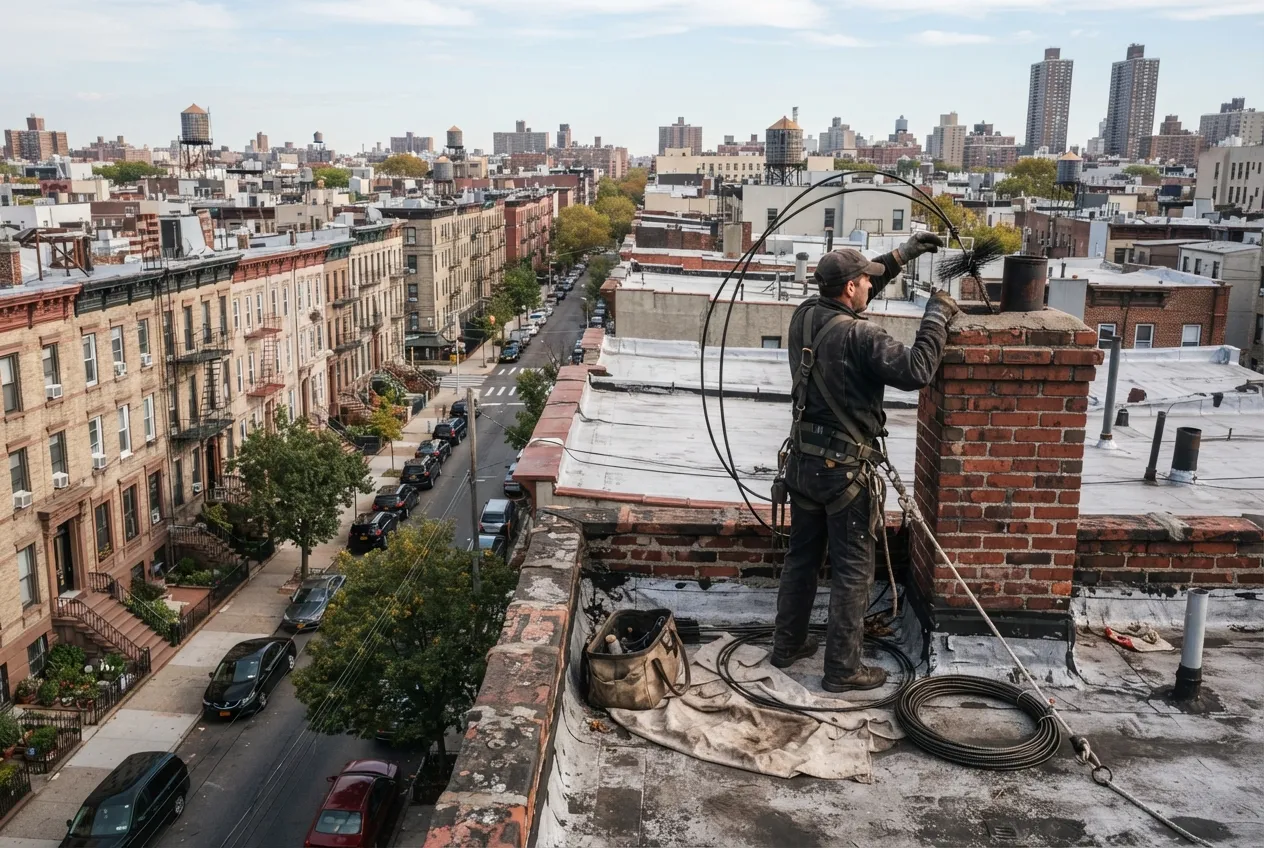
On the roof, we set ladders carefully, use fall protection and step only where the roofing can carry the weight. Before treatment we cover nearby windows, siding, skylights and roofing so the repellent stays on the masonry. Repellent is applied with a low-pressure sprayer and brush, in dry weather and above-freezing temperatures, on brick that has had time to dry out. If rain is coming, we reschedule rather than seal moisture into the brick.
Time for your annual chimney check?
The standard we follow
The NFPA 211 standard calls for chimneys, fireplaces and vents to be inspected once a year. Chimney professionals use three inspection levels. Level 1 applies when nothing has changed. Level 2 applies when the system changes, such as a new appliance or a switch of fuel, or when the home is sold. Level 3 applies when a hidden hazard has to be reached by opening part of the chimney or building. Most waterproofing visits begin with a Level 1 or Level 2 inspection, and we tell you if anything points to the need for more.
Fuel matters too. When a New York City building converts its boiler from oil to gas, the chimney has to be evaluated as part of the work. A new liner is often needed because gas exhaust produces acidic condensate that can corrode a masonry flue. If we see that kind of damage while checking for water entry, we will point it out.
What affects the price
We give you a clear quote after we have seen the chimney. The main factors are:
- Chimney height, roof pitch and how hard the roof is to reach safely.
- The amount of exposed masonry to be treated.
- Fuel type and whether the flue needs sweeping before inspection.
- Flue size and condition, including any liner damage.
- How much buildup, moss or staining has to be cleaned off first.
- Whether a camera inspection is needed and whether crown, flashing, cap or mortar repairs are required before the repellent goes on.
How a visit works
You schedule a time, and we ask a few questions about where you have seen water, stains or damage. On the day of the visit the crew protects the room, inspects the chimney inside and out, and shows you what we find with photos. We explain which repairs, if any, need to happen before waterproofing and what each one involves. Once you approve the work, small fixes and the repellent application can often be done the same day if the weather and the brick are dry. Larger repairs are scheduled first, and treatment follows once the masonry has dried. Before we leave, we clean the work area and go over the notes with you. Many owners book waterproofing in spring or early fall, so the chimney is ready before heat season, which in New York City runs from October 1 through May 31.