The short answer
East Village chimneys should be inspected once a year, as the NFPA 211 standard calls for, and ideally before heat season begins on October 1. FirstChoice Chimney Services performs Level 1, 2 and 3 inspections for rowhouses, brownstones and pre-war buildings in 10003 and 10009, with a written report and photos after every visit.
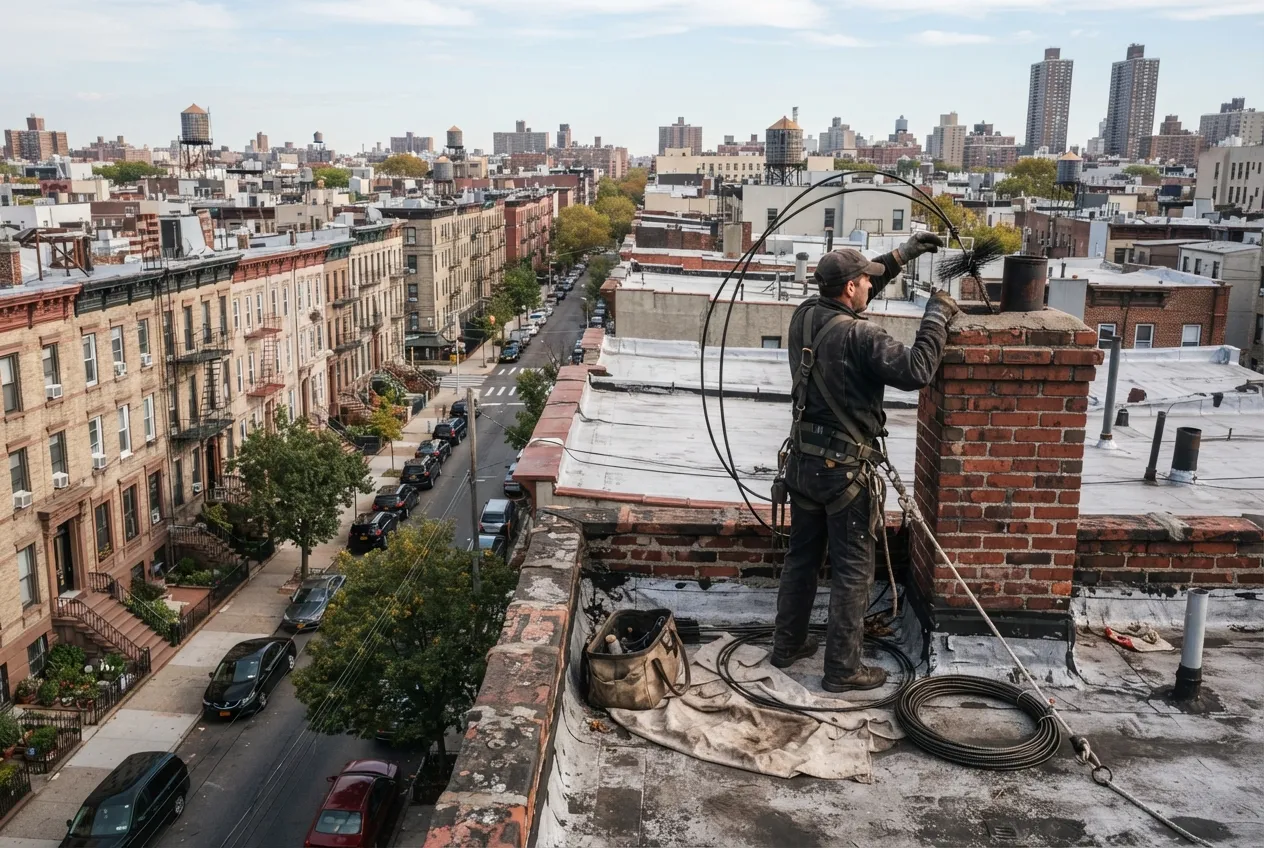
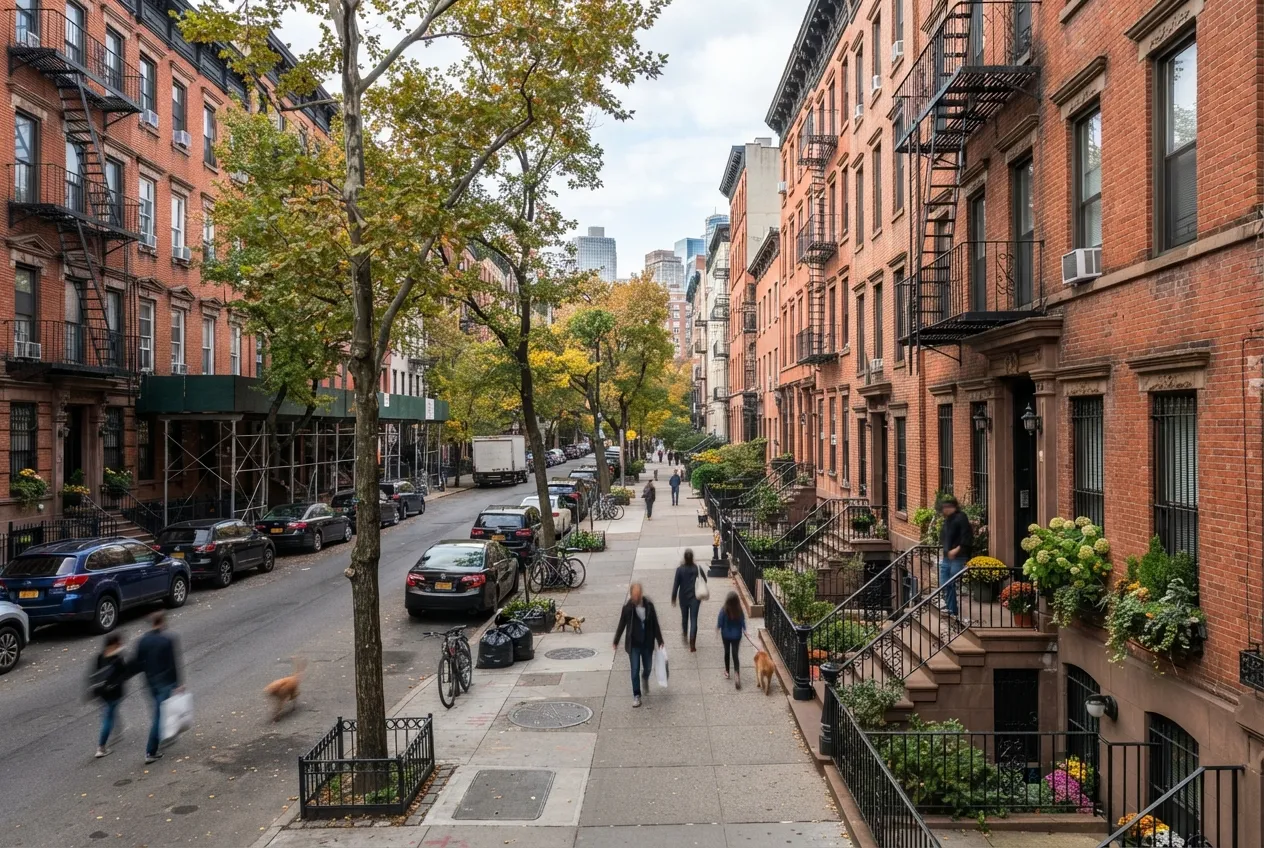
Chimneys in the East Village work hard. Many of the neighborhood's walk-ups, rowhouses, brownstones and pre-war apartment buildings still vent boilers, water heaters and, in some units, working fireplaces through masonry flues that have been in place for generations. FirstChoice Chimney Services inspects chimneys and vents for homeowners, co-op boards and building owners in ZIP codes 10003 and 10009. Our office is about a mile west in Manhattan, so scheduling a visit before or during heat season is straightforward. Below is what an inspection covers, which level you likely need, and what happens afterward.
Why Yearly Inspection Matters in the East Village
The NFPA 211 standard calls for chimneys, fireplaces and vents to be inspected once a year. That applies whether you burn wood a few times each winter or your chimney carries boiler exhaust every day. In older masonry, mortar joints erode, flue tiles crack, and debris from deteriorating brick or nesting birds can block the flue without anyone noticing from inside the apartment. Warning signs like smoke backing into a room, a strong odor near the fireplace, or bits of tile and mortar in the firebox are reasons not to wait for the yearly visit.
Timing matters here. New York City's heat season runs from October 1 through May 31, and building owners must keep apartments at the city's minimum temperatures during that period. A chimney problem found in January can mean shutting down a boiler at the worst possible time. An inspection in late summer or early fall gives you room to make repairs before tenants and neighbors are depending on the heat.
Which Inspection Level Do You Need?
Chimney professionals use three levels of inspection. We'll recommend the one that fits your situation and explain why before any work starts.
Buyers and sellers of East Village co-ops, condos and townhouses should plan for a Level 2 inspection as part of the sale, so both sides know the condition of the chimney before closing.
- Level 1: For chimneys in regular use where nothing about the system has changed. We check the readily accessible parts of the chimney, flue and connections.
- Level 2: When the system changes, such as a new boiler or water heater or a switch from oil to gas, or when the home is being sold. This typically includes a video scan of the flue interior.
- Level 3: When a suspected hidden hazard can only be reached by opening part of the chimney or the building, for example after a chimney fire or serious structural damage.
Oil-to-Gas Conversions and Flue Liners
Many older buildings in the neighborhood have converted, or are planning to convert, their boilers from oil to gas. In New York City, the chimney has to be evaluated as part of that work. A new liner is often needed, because gas exhaust produces acidic condensate that can corrode a masonry flue over time.
If your building is considering a conversion, an inspection early in the planning stage helps you understand the condition of the flue and whether relining is likely to be part of the project, so it doesn't come as a surprise halfway through.
Time for your annual chimney check?
What Our Technicians Check
Our certified technicians examine the full venting path, not just the fireplace opening. Typical items include:
After the visit, you get a plain-language written report with photos of anything that needs attention and our recommendation for next steps. If cleaning or repair is needed, we'll explain the options, and you decide what to do.
- Flue liner condition, including cracks, gaps, spalling or missing sections
- Creosote and soot buildup in wood-burning flues
- Blockages from debris, nests or fallen masonry
- Smoke chamber, damper and firebox in working fireplaces
- Connector pipes from boilers and water heaters
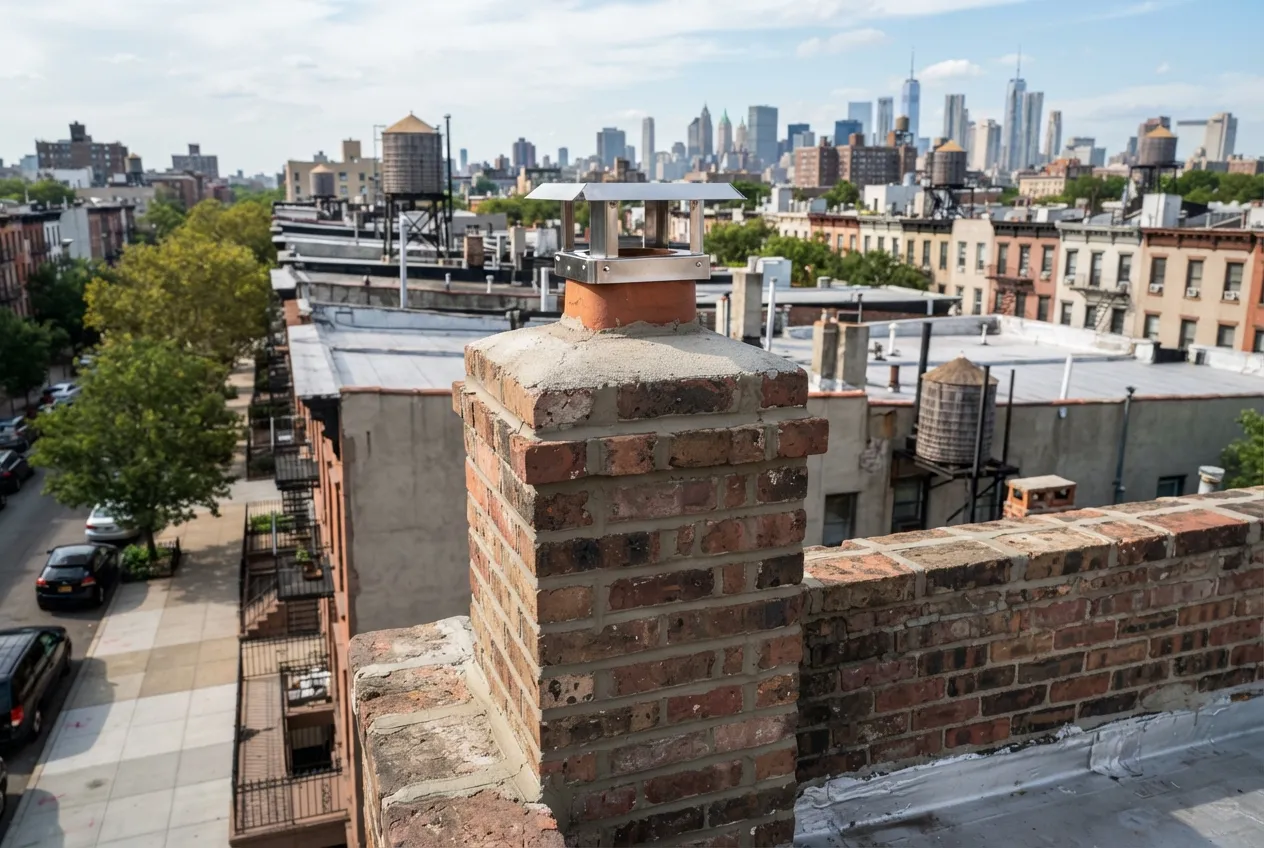
- Chimney crown, cap, and exterior brick and mortar where accessible from the roof
- Clearances to nearby combustible materials
Serving the East Village and Nearby Neighborhoods
We inspect chimneys throughout the East Village and in neighboring Lower East Side, Gramercy, Greenwich Village, SoHo and Little Italy. In apartment buildings, we're used to coordinating roof access with supers and managing agents, and we work to keep disruption to residents to a minimum.
If you own a unit with a working fireplace in a larger building, check with your board or managing agent about who handles the flue. We can work with either the owner or the building.
More services in East Village
- Chimney Sweep in East VillageLocal service & repairs
- Chimney Repair in East VillageLocal service & repairs
- Air Duct Cleaning in East VillageLocal service & repairs
- Chimney Liner Installation in East VillageLocal service & repairs