The short answer
FirstChoice Chimney Services repairs chimneys in East Village homes and buildings. We handle crowns, mortar joints, brick, flashing, caps, flue liners and fireplace components. We also evaluate chimneys and replace liners when a boiler is converted from oil to gas.
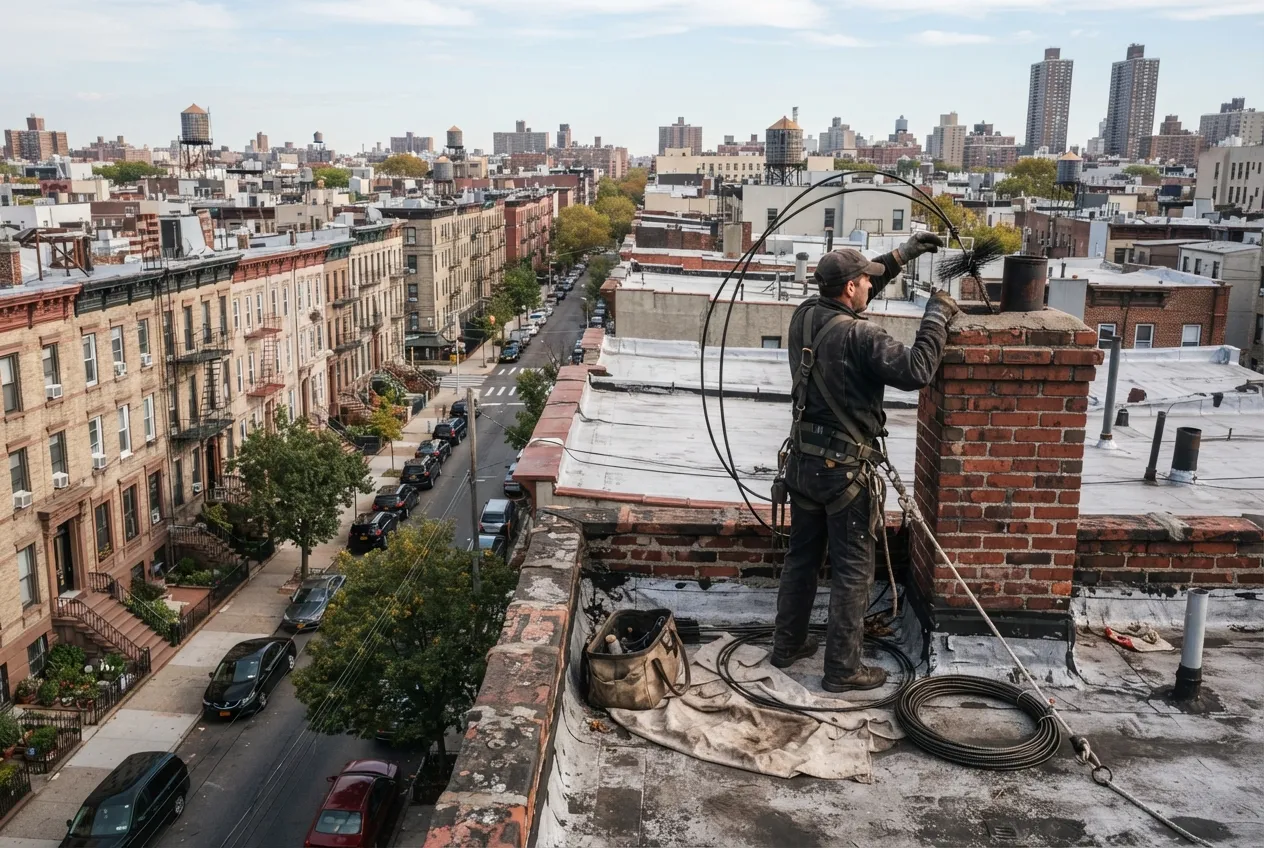
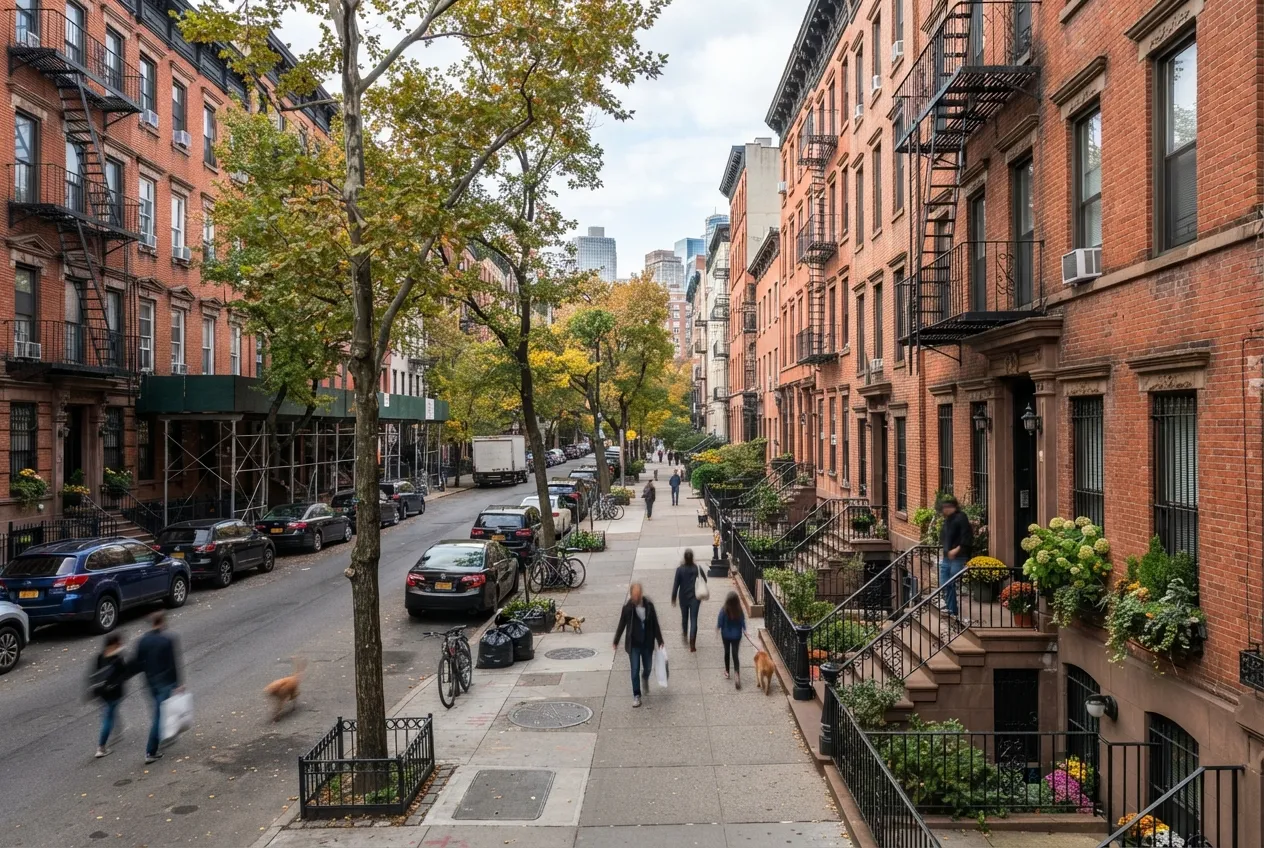
Chimneys in the East Village take a lot of wear. Many sit on top of four- and five-story masonry buildings, exposed to wind, rain and repeated freezing and thawing. Many also vent boilers that have been replaced or converted to a different fuel over the years. FirstChoice Chimney Services repairs chimneys in East Village rowhouses, brownstones and pre-war apartment buildings in ZIP codes 10003 and 10009. Our office is about a mile west in Manhattan. Our certified technicians assess the damage, explain what they find in plain terms, and make repairs that suit the way your building is actually used.
What chimney repair looks like in East Village buildings
Most housing in the East Village is attached masonry: rowhouses, brownstones and pre-war walk-up apartment buildings. Chimneys often run up inside a wall shared with the building next door and end on a flat roof. Because of that, a chimney problem often shows up far from where it starts. You might see a damp stain on a top-floor ceiling, loose mortar on the roof, or flaking masonry inside a fireplace several floors down.
Many older buildings have several flues inside one chimney stack. One may serve the boiler or water heater, and others may serve fireplaces that are still in use, rarely used or sealed off. Before we recommend any repair, we work out which flue serves which appliance and which ones are active. That way you pay for work that matters and don't miss a hazard in a flue you didn't know was still connected.
Common chimney repairs we handle
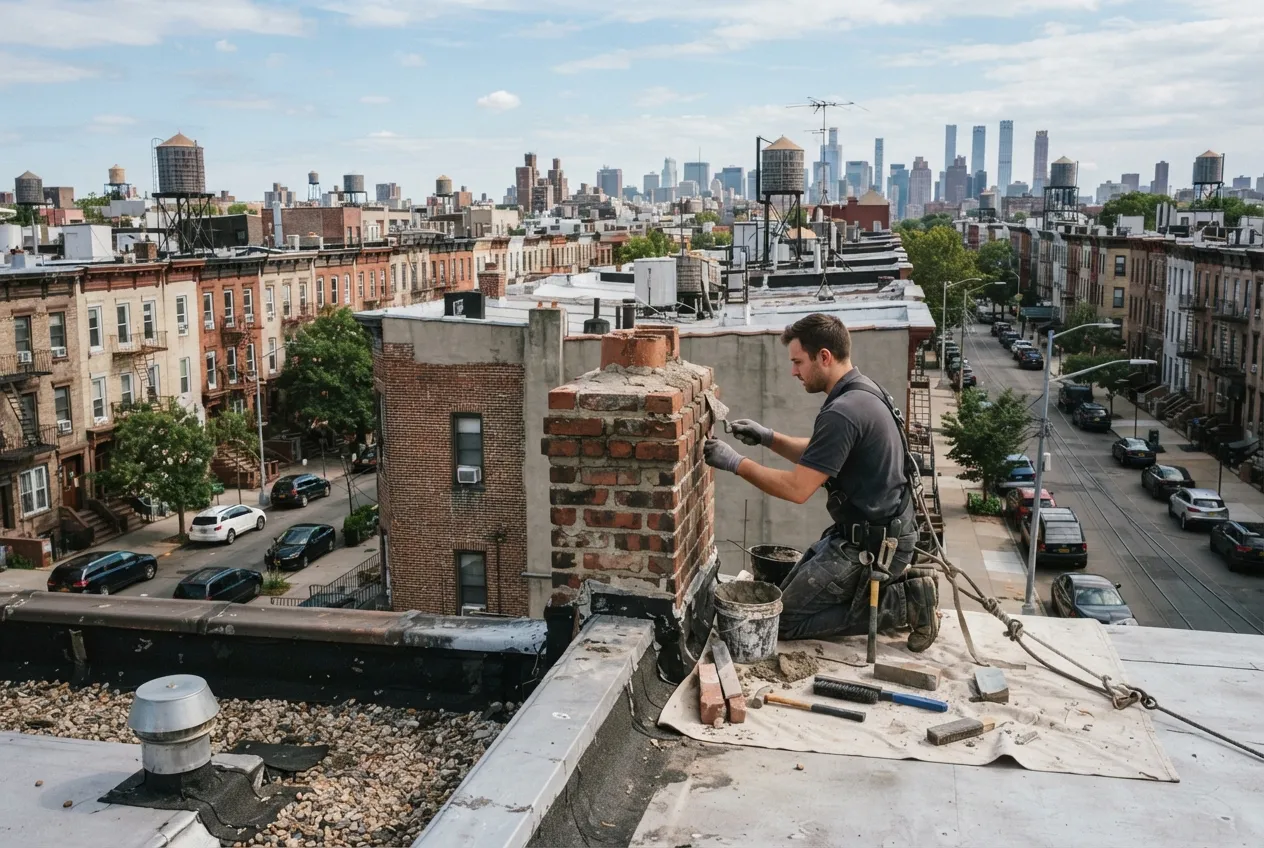
Rooftop chimneys in this part of Manhattan get little shelter from weather, so water damage is the most common problem we see. These are the repairs we perform most often:
- Crown repair or rebuild, when the concrete or mortar cap at the top of the chimney cracks and lets water into the masonry
- Repointing, which means replacing eroded mortar joints so water and exhaust stay where they belong
- Replacing spalled or broken brick on exposed rooftop stacks
- Flashing repair where the chimney meets the roof, a frequent source of leaks on flat roofs
- Chimney caps and screens to keep out rain, birds and debris
- Flue liner repair or replacement when clay tiles are cracked or a new appliance needs a properly sized flue
- Damper, firebox and firebrick repairs for working fireplaces
Oil-to-gas conversions and chimney liners
Many East Village buildings have switched or are planning to switch their boilers from oil to gas. When a New York City building makes this conversion, the chimney has to be evaluated as part of the work. A new liner is often needed. Gas exhaust produces acidic condensate, and that condensate can corrode a masonry flue that was built for oil.
If your building has already converted without a new liner, watch for these warning signs: white staining on the chimney's exterior, crumbling mortar or tile fragments collecting at the base of the flue, and damp spots on walls near the chimney. We can inspect the flue, confirm whether a liner is needed, and install one sized for the appliance it serves.
Time for your annual chimney check?
When to schedule chimney repairs
New York City's heat season runs from October 1 through May 31. During those months, building owners must keep apartments heated to the city's minimum temperatures. A damaged boiler chimney in January can leave you choosing between running unsafe equipment and failing to provide heat. Late spring and summer are the easiest times to schedule masonry and liner work.
The NFPA 211 standard calls for chimneys, fireplaces and vents to be inspected once a year. A Level 1 inspection fits when nothing has changed. A Level 2 inspection applies when the system changes, such as a new appliance or a switch in fuel, or when the home is sold. A Level 3 inspection is used when a hidden hazard can only be reached by opening part of the chimney or building. Regular inspections often catch small cracks and loose mortar before they become larger repairs.
How a repair visit works
We start by talking with you about what you've noticed and which appliances use the chimney. Then we examine the stack from the roof and from inside, using a camera in the flue when needed. You get a clear explanation of what's damaged, what's causing it, and which repairs are urgent and which can wait.
For apartment buildings, we can coordinate roof access with owners, managers or superintendents. We keep work areas protected and clean up when the job is done.
Serving the East Village and nearby neighborhoods
We repair chimneys throughout the East Village in ZIP codes 10003 and 10009. We also serve nearby Manhattan neighborhoods, including the Lower East Side, Gramercy, Greenwich Village, SoHo and Little Italy. Whether you own a single rowhouse or manage a multi-unit building, we'll help you keep your chimney sound and working safely.
More services in East Village
- Chimney Sweep in East VillageLocal service & repairs
- Chimney Inspection in East VillageLocal service & repairs
- Air Duct Cleaning in East VillageLocal service & repairs
- Chimney Liner Installation in East VillageLocal service & repairs