The short answer
A chimney sweep in Chinatown removes soot, creosote and debris from the flue and checks the chimney for damage, blockages and liner problems. The NFPA 211 standard calls for a yearly inspection, so most owners schedule a sweep and inspection before New York City's heat season starts on October 1.
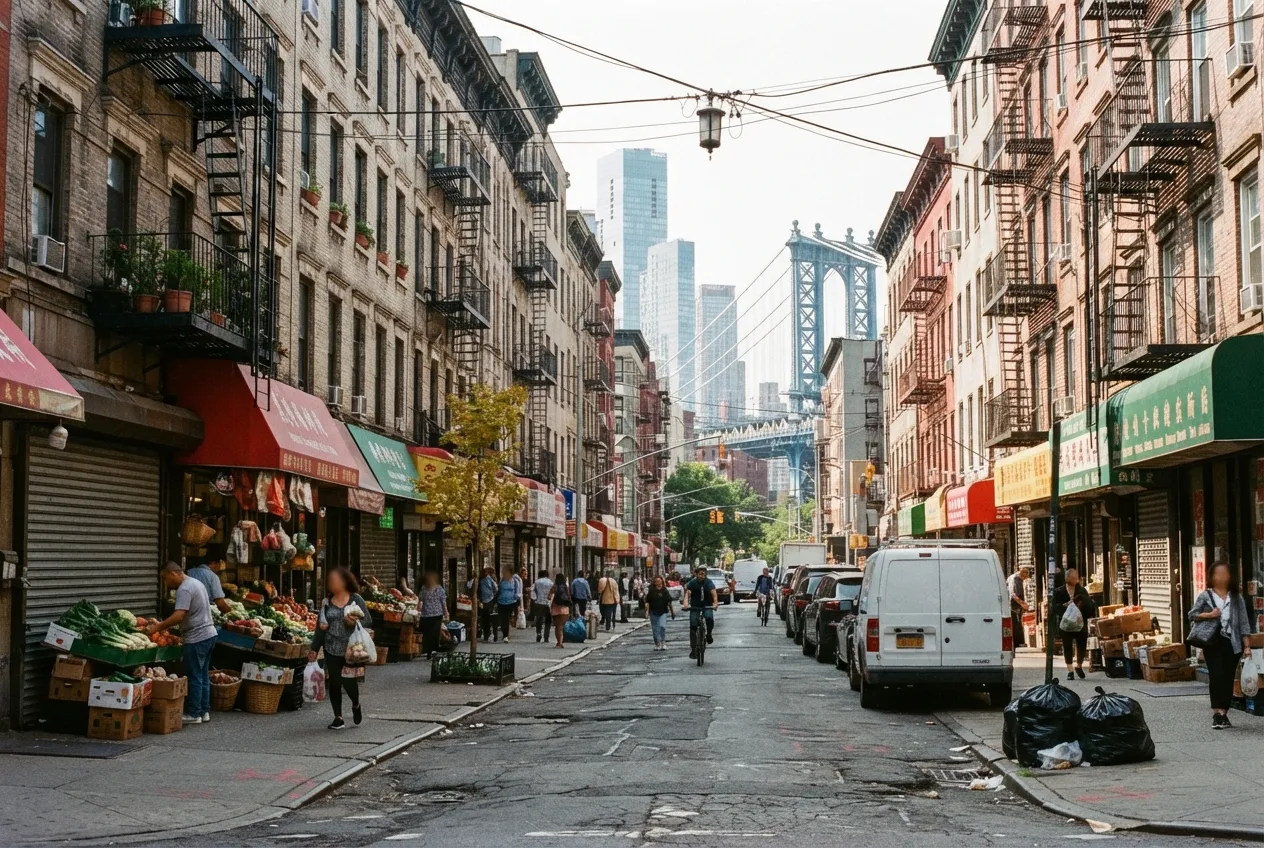
Chinatown's housing is old and tightly packed: tenement-style walk-ups, pre-war apartment buildings, and mixed-use buildings with shops on the ground floor and apartments above. Many of these buildings still send boiler exhaust up a masonry chimney, and some older rowhouses and top-floor units have fireplaces that people still use. FirstChoice Chimney Services sends certified technicians from our Manhattan office, about a mile north of Chinatown, to sweep and inspect these chimneys. This page explains what a sweep involves in this neighborhood, when to schedule one, and what we check in older city flues.
What a Chimney Sweep Includes
A sweep clears the buildup that collects inside a flue. A fireplace leaves creosote, a tar-like residue that can catch fire. A boiler or furnace leaves soot and scale, and gas appliances can leave flaking residue from a deteriorating liner. Any of these can narrow the flue and slow the draft.
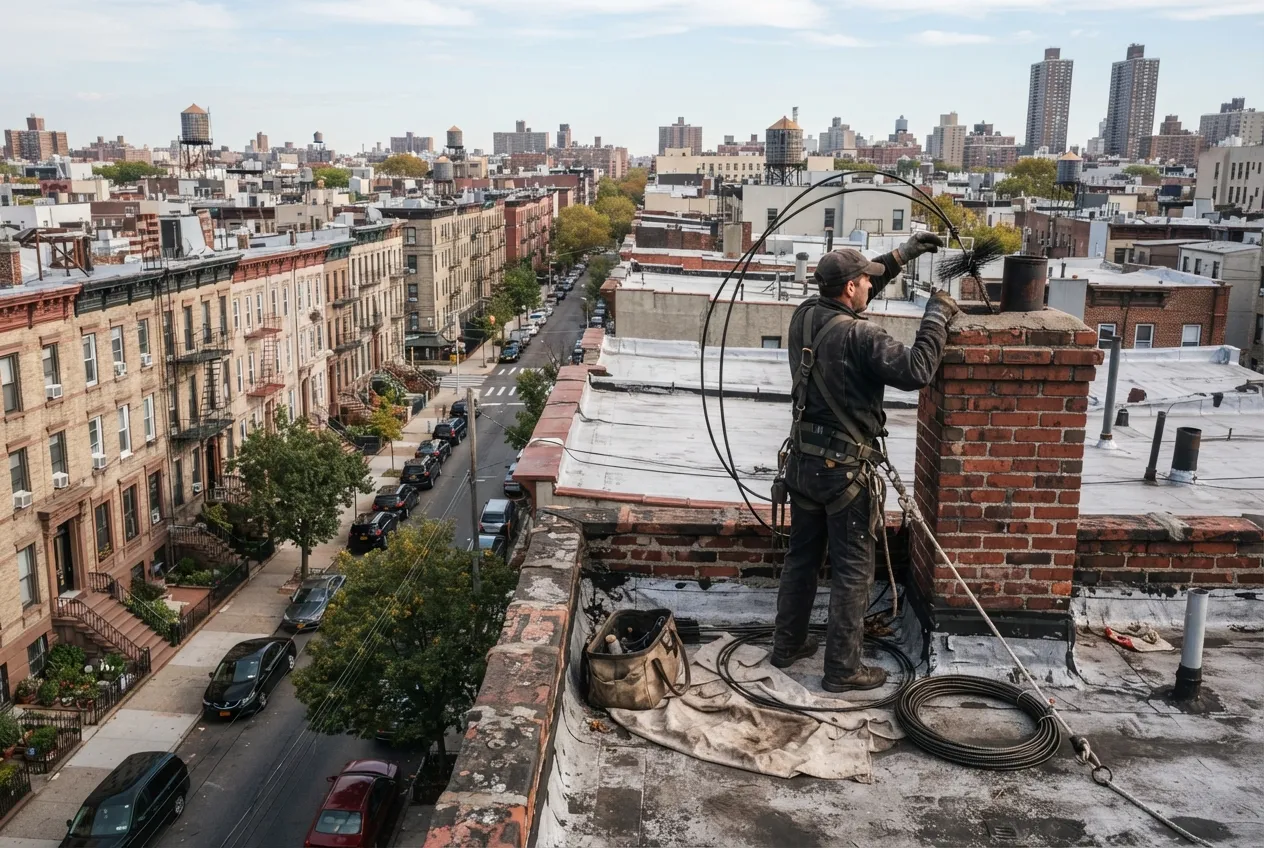
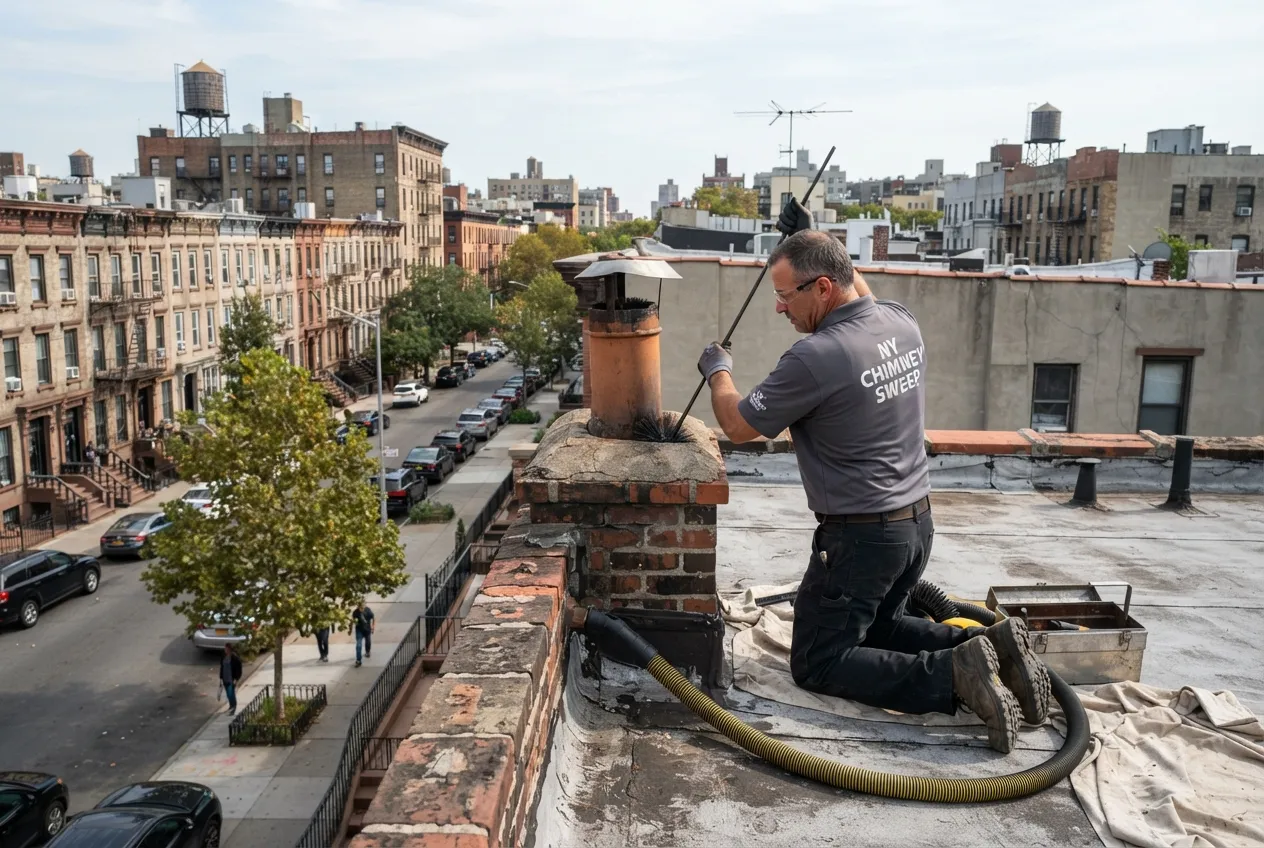
Our technicians protect the area around the opening, then use brushes and rods sized to your flue. The work is done from below, from the roof, or from both, depending on how the chimney is built and how easy it is to reach. We collect the debris instead of leaving it in the cleanout or the firebox.
- Removal of creosote, soot, scale and loose debris from the flue
- A check of the smoke chamber, damper and firebox on fireplaces
- A look at the cleanout and the appliance connection on boiler chimneys
- A check for nests, fallen masonry and other blockages
- A written note of anything that needs repair or a closer inspection
Chimneys in Chinatown's Older Buildings
Many walk-ups and pre-war buildings in Chinatown have tall masonry chimneys that serve a boiler in the basement. Some of these flues were built for coal or oil and now vent gas equipment. In mixed-use buildings, the chimney may run past commercial space on the lower floors before it reaches the roof, so access usually takes coordination with the owner or super.
In older brick flues we often find cracked or missing clay tiles, mortar washed out of the joints, and debris collected at the base. Rowhouses and top-floor apartments with working fireplaces have their own problems: dampers that don't seal, creosote glazed onto the flue walls, and crowns that let water in. A sweep is often the first chance to spot these problems, because the flue has to be cleared before anyone can see the inside.
Timing Your Sweep Around Heat Season
New York City's heat season runs from October 1 through May 31. During those months building owners must keep apartments heated to the city's minimum temperatures, so a boiler chimney that is blocked or damaged turns into an urgent problem quickly.
The NFPA 211 standard calls for chimneys, fireplaces and vents to be inspected once a year. For most Chinatown buildings, late summer or early fall is the practical time to sweep and inspect, because any repairs can be made before the boiler runs every day. Fireplace owners should also schedule before the first fire of the season, or after a winter of heavy use.
Time for your annual chimney check?
Inspection Levels and Boiler Conversions
Chimney professionals use three inspection levels. A Level 1 inspection fits when nothing about the system has changed. A Level 2 inspection is called for when the system changes, for example a new appliance or a switch of fuel, or when the property is sold. A Level 3 inspection is used when a hidden hazard has to be reached by opening part of the chimney or building.
Conversions matter in this neighborhood. When a New York City building converts its boiler from oil to gas, the chimney has to be evaluated as part of the work. A new liner is often needed, because gas exhaust produces acidic condensate that can corrode a masonry flue. If your building has converted, or plans to, a sweep followed by a Level 2 inspection shows whether the existing flue can safely handle the new appliance.
Serving Chinatown and Nearby Neighborhoods
Because our office is in Manhattan, Chinatown is a short trip for our crews. We also sweep chimneys in nearby Two Bridges, the Lower East Side, Tribeca, Civic Center and SoHo, where much of the housing is similar: older masonry buildings with boiler flues, plus some homes with working fireplaces. When you book, tell us what the chimney serves, how to reach the roof, and whether you have noticed smoke, odors, water stains or falling debris. That helps us bring the right equipment and plan the visit.
More services in Chinatown
- Chimney Inspection in ChinatownLocal service & repairs
- Chimney Repair in ChinatownLocal service & repairs
- Air Duct Cleaning in ChinatownLocal service & repairs
- Chimney Liner Installation in ChinatownLocal service & repairs