The short answer
A chimney liner is a protective channel inside the flue that carries smoke and exhaust safely out of the building and shields the masonry from heat and corrosion. West Village homes most often need one when an old clay or unlined flue is damaged, or when a boiler converts from oil to gas.
Many West Village homes still vent fireplaces, boilers and water heaters through masonry chimneys built long before modern appliances existed. When a flue is cracked, unlined, or the wrong size for the equipment connected to it, a new liner is usually the fix. FirstChoice Chimney Services installs chimney liners for rowhouses, brownstones and pre-war apartment buildings in ZIP code 10014. Our office is about a mile southeast, so our certified technicians can get to your building quickly for an evaluation and plan the work around how your home is actually heated.
Why Older West Village Chimneys Often Need Liners
The neighborhood's brownstones, rowhouses and pre-war apartment buildings were built with brick chimneys that were designed for coal or wood. Some have clay tile liners that have cracked over decades of heating cycles. Others have no liner at all, just bare brick and mortar. Gaps in a flue can let heat reach nearby framing, and they can let exhaust gases, including carbon monoxide, leak into living space or a neighbor's wall.
Shared walls make this more important. In attached homes, a chimney may run alongside or between units, so a failing flue can affect more than one household. A properly sized, continuous liner keeps exhaust moving up and out instead of seeping through deteriorated masonry.
Oil-to-Gas Conversions and New Liners
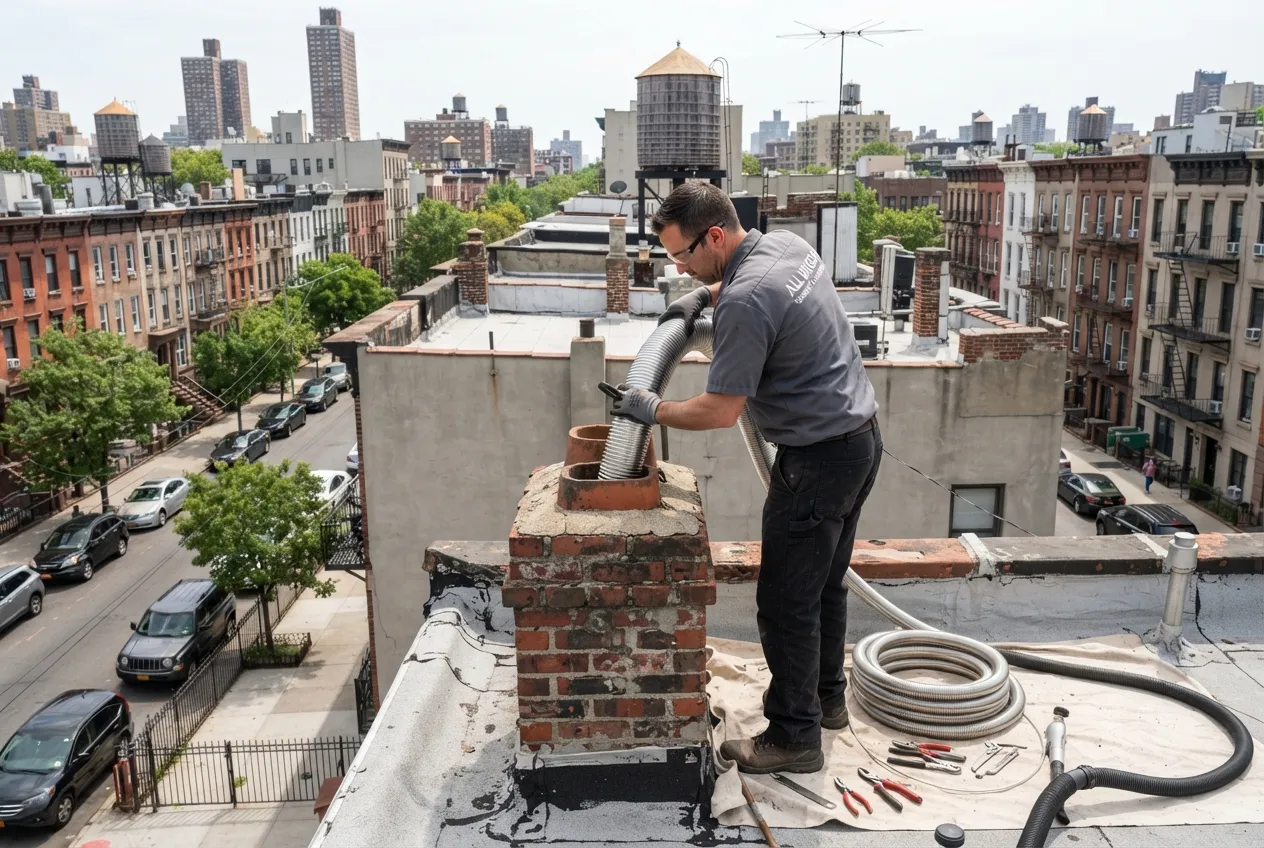
When a New York City building converts its boiler from oil to gas, the chimney has to be evaluated as part of the work. A new liner is often needed because gas exhaust produces acidic condensate that can corrode a masonry flue. A flue that handled oil for years may not hold up once it starts carrying cooler, wetter gas exhaust.
Liner size matters too. Modern gas boilers and water heaters often need a smaller flue than the old oil burner did. An oversized flue can draft poorly and collect more condensation. We match the liner to the appliances being vented so the system works as designed.
What Liner Installation Involves
The NFPA 211 standard describes three inspection levels. A Level 2 inspection is called for when the system changes, such as a new appliance or a switch of fuel, or when a home is sold. That is often where a liner project starts. If a hidden problem has to be reached by opening part of the chimney or building, a Level 3 inspection may be needed.
A typical installation follows these steps:
- Inspect the flue, including a camera inspection of the interior, to document cracks, gaps and blockages
- Confirm which appliances or fireplace the chimney serves and size the liner accordingly
- Clean the flue so the liner goes into a clear passage
- Install a stainless steel liner, with insulation where needed, from the appliance connection to the top of the chimney
- Fit a top plate and cap to keep out rain, debris and animals
- Check draft and connections, then walk you through what was done
Time for your annual chimney check?
Planning Around Heat Season
New York City's heat season runs from October 1 through May 31, when building owners must keep apartments heated to the city's minimum temperatures. If your chimney vents a boiler that heats tenants or other units, timing matters. Scheduling an evaluation in late spring or summer gives you the most room to plan a conversion or relining before heat is required.
If a problem turns up during the heating months, tell us how the building is heated when you call. We will plan the work to keep downtime as short as possible.
Serving West Village and Nearby Neighborhoods
We install chimney liners throughout West Village and in nearby Greenwich Village, SoHo, Little Italy, Hudson Square and Gramercy. Whether you own a single brownstone or manage a pre-war walk-up, we start with an honest look at the flue and explain your options in plain terms before any work begins.
More services in West Village
- Chimney Sweep in West VillageLocal service & repairs
- Chimney Inspection in West VillageLocal service & repairs
- Chimney Repair in West VillageLocal service & repairs
- Air Duct Cleaning in West VillageLocal service & repairs