The short answer
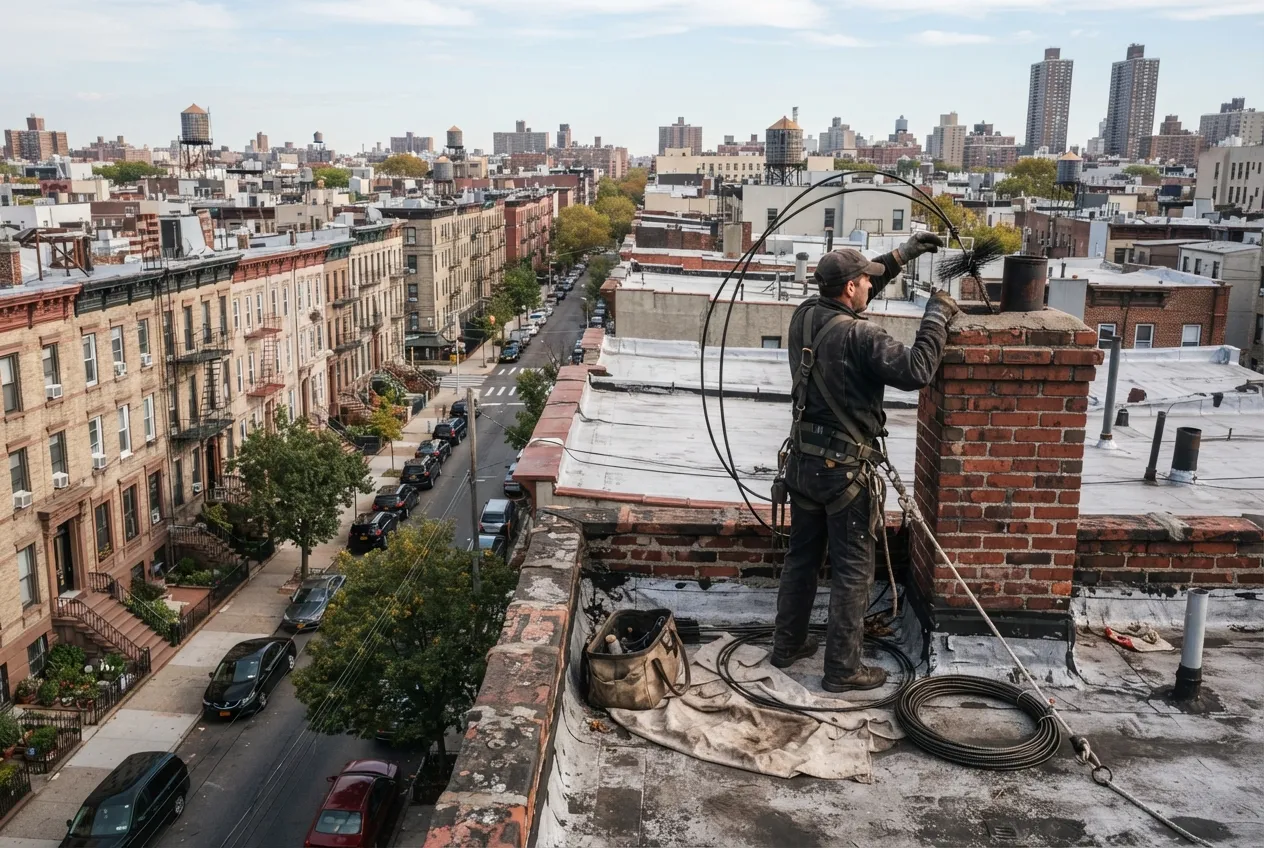
A chimney sweep in the West Village removes soot, creosote and blockages from your flue and checks the parts that keep smoke and gases moving out of your home. The NFPA 211 standard calls for a yearly inspection, and the best time to schedule it is before New York City's heat season starts on October 1.
Homes in the West Village use chimneys in many ways: wood-burning fireplaces in rowhouses and brownstones, shared flues that vent boilers in pre-war apartment buildings, and older masonry chimneys that have been in service for generations. FirstChoice Chimney Services sends certified technicians to the West Village and ZIP code 10014 from our Manhattan office, about a mile to the southeast. A chimney sweep removes the soot and creosote that build up inside a flue and clears anything blocking the way out. It also gives us a close look at the liner, damper and crown, so you know the condition of your chimney before you light a fire.
What a chimney sweep covers in a West Village home
Creosote is the tar-like residue that wood smoke leaves on the inside of a flue. It burns easily, and it builds up faster when a fireplace is used often or the wood is not fully dry. Soot, nesting material and fallen debris can narrow a flue until smoke drifts back into the room instead of rising. A sweep deals with all of these. It also lets us see parts of the chimney you can't check from the hearth.
- Brushing the flue from top to bottom to remove soot and creosote
- Clearing the smoke chamber, smoke shelf and firebox
- Checking that the damper opens, closes and seals
- Looking for cracked or missing liner sections and loose mortar
- Checking the cap and crown for damage that lets in water or animals
- Explaining what we found, with photos when they help
Chimneys in rowhouses, brownstones and pre-war buildings
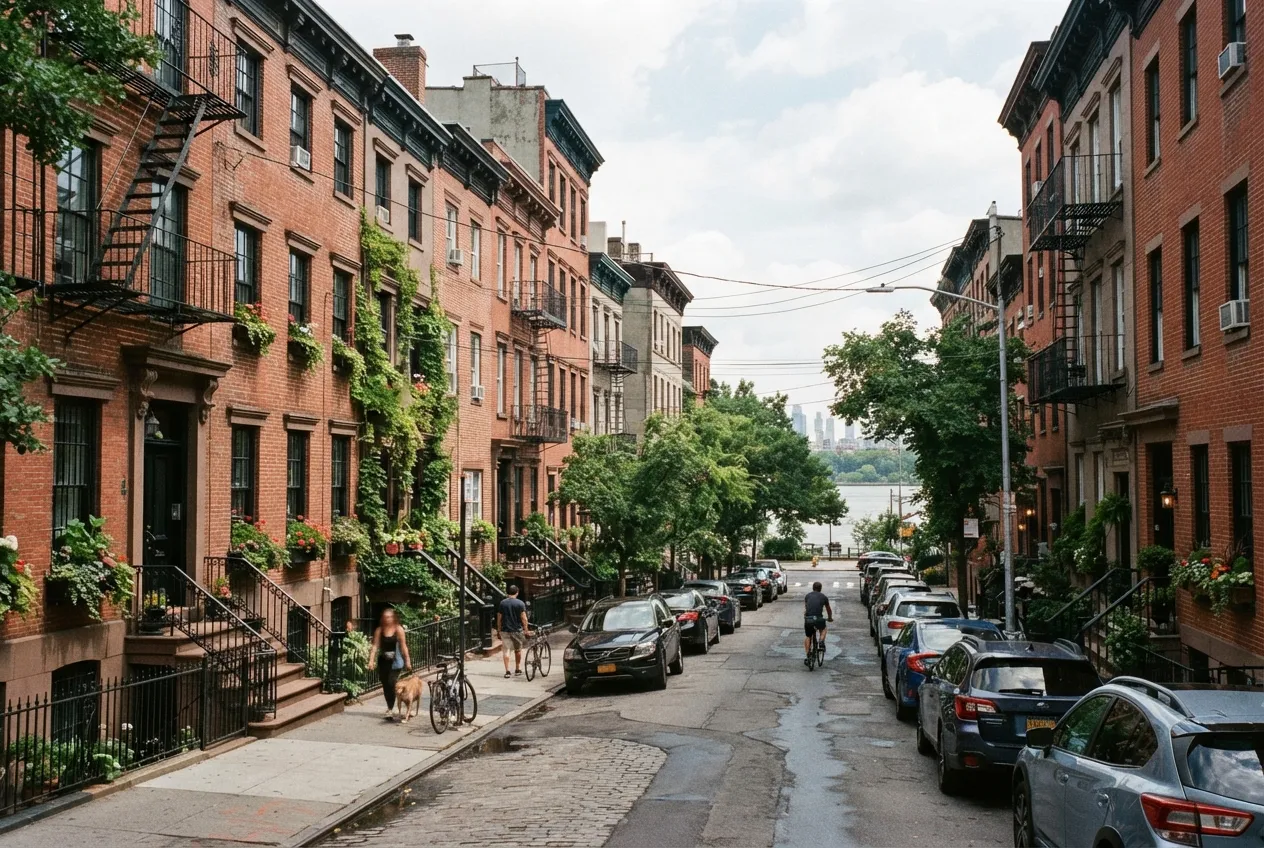
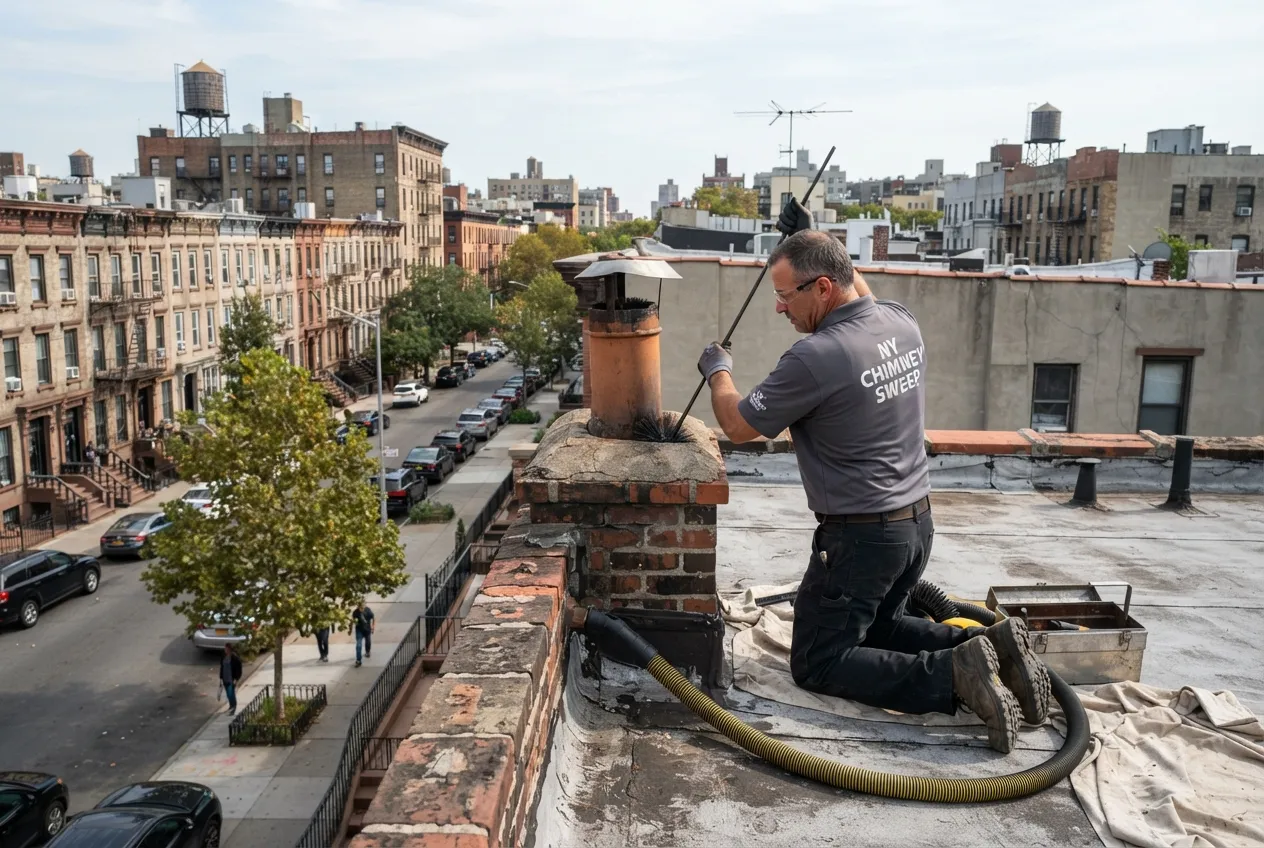
Much of the housing here is older masonry construction. Many homes have more than one fireplace stacked floor over floor, and a single chimney mass may hold several flues. In a rowhouse or brownstone, one flue may serve a working fireplace while the one beside it vents a boiler or water heater. We identify which flue serves which appliance before we sweep, so nothing is missed and nothing is mixed up.
Pre-war apartment buildings bring different questions. A unit fireplace may tie into a flue that runs through several floors, and roof access often has to be arranged with building management. Tell us about access when you book. Then we can plan the visit and work from the roof, the firebox or both.
Timing your sweep around heat season
New York City's heat season runs from October 1 through May 31. During that time, building owners must keep apartments heated to the city's minimum temperatures. That puts boiler flues under steady use for eight months, and it's when most people start using their fireplaces too. A sweep in late summer or early fall means the flue is clean and checked before it's needed every day.
The NFPA 211 standard calls for chimneys, fireplaces and vents to be inspected once a year, whether or not you think there's a problem. If you burn wood often, the buildup we find may mean an extra sweep partway through the season is worth it. We'll tell you plainly if that's the case.
Time for your annual chimney check?
When a sweep turns up more than soot
Chimney professionals use three inspection levels. Level 1 applies when nothing about the system has changed. Level 2 applies when something has changed, such as a new appliance or a switch to a different fuel, or when the home is being sold. Level 3 applies when a suspected hidden hazard can only be reached by opening part of the chimney or the building. Most routine sweeps come with a Level 1 review. If we see signs that call for a closer look, we'll explain why before going further.
A change of fuel matters a lot in this neighborhood. When a New York City building converts its boiler from oil to gas, the chimney has to be evaluated as part of the work. A new liner is often needed, because gas exhaust produces acidic condensate that can corrode a masonry flue. If your building has converted or plans to, let us know so we can check the flue with that in mind.
What to expect on the day
We cover the hearth and nearby floors and set up containment around the fireplace opening. Then we use brushes and vacuum equipment built to keep soot out of your living space. Please don't use the fireplace for at least a day beforehand so the firebox is cool and the ash has settled. Most single-flue sweeps fit within a normal visit. Homes with several flues or difficult roof access take longer, and we'll give you an idea of the time when you schedule.
We serve the rest of the area as well, including Greenwich Village, SoHo, Little Italy, Hudson Square and Gramercy. Neighbors in the same building can often book back-to-back visits.
More services in West Village
- Chimney Inspection in West VillageLocal service & repairs
- Chimney Repair in West VillageLocal service & repairs
- Air Duct Cleaning in West VillageLocal service & repairs
- Chimney Liner Installation in West VillageLocal service & repairs