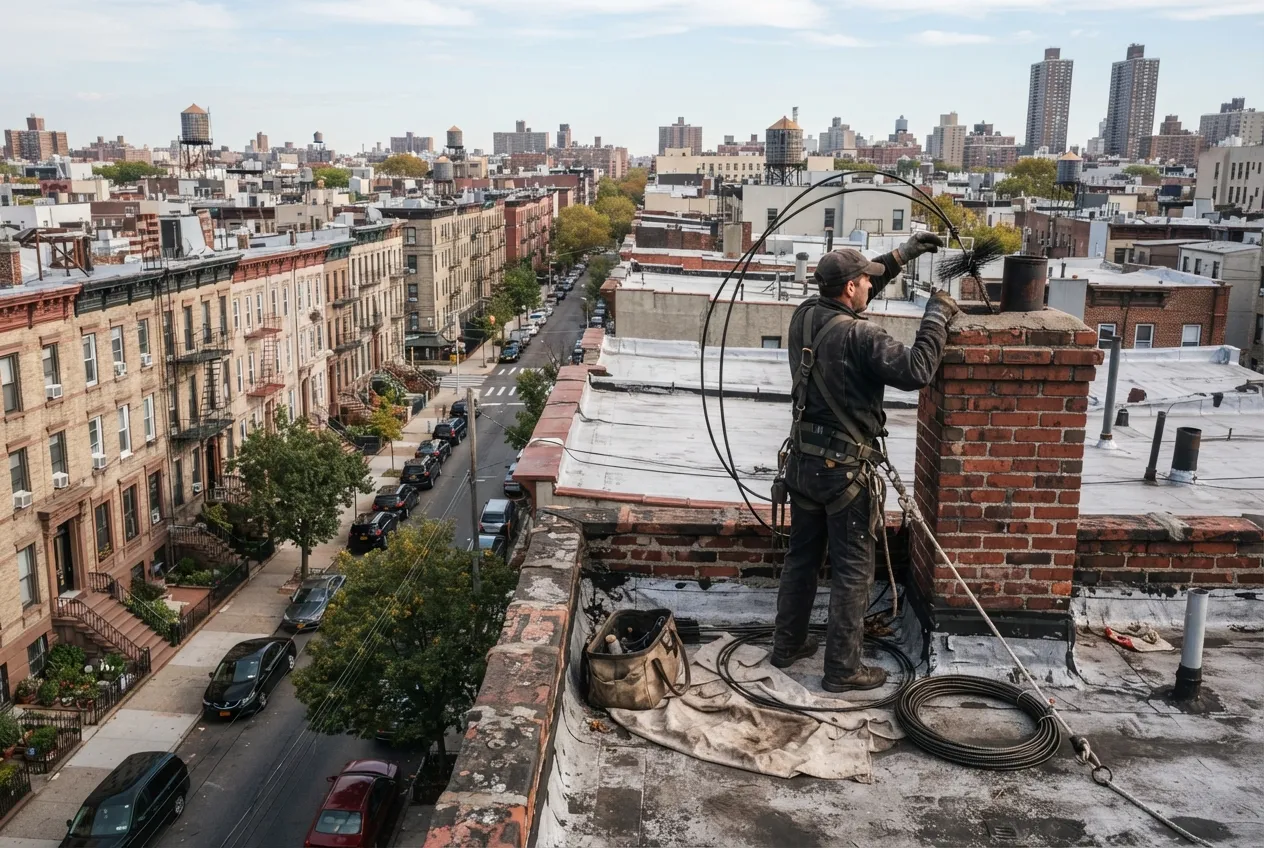
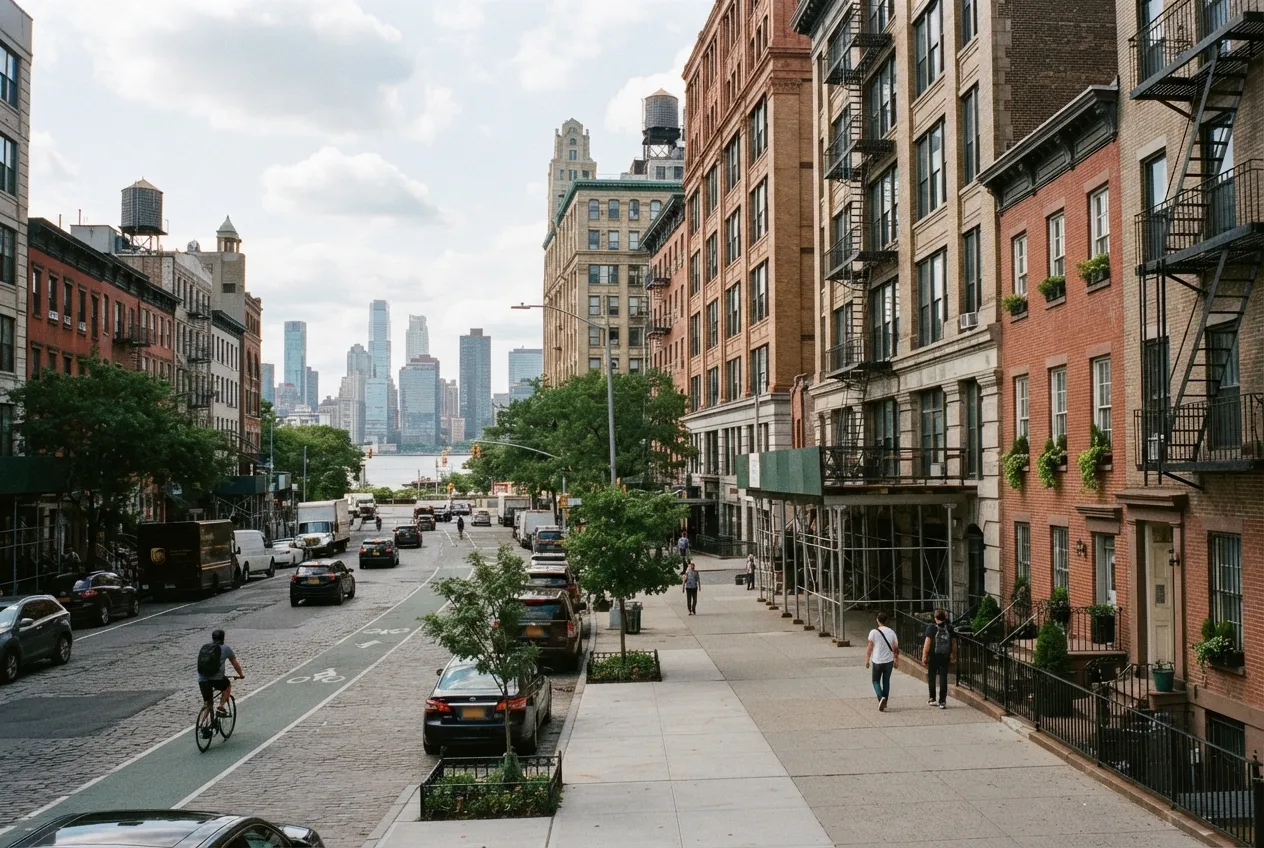
The short answer
Hudson Square homes and buildings often need a new chimney liner when the old flue is cracked or when a boiler converts from oil to gas, because gas exhaust creates acidic condensate that can corrode masonry. FirstChoice Chimney Services inspects the flue first, then installs a liner sized to your appliance.
A chimney liner is the protective channel inside the masonry that carries smoke and exhaust gases out of your home. When it cracks, corrodes or no longer matches the appliance it serves, heat and combustion byproducts can reach the brick, mortar and nearby framing. FirstChoice Chimney Services works out of our office at 90 W Houston St in Hudson Square. Our certified technicians install and replace liners in homes and buildings in 10012 and across nearby Manhattan neighborhoods. Below is how the process works and what to expect.
Why Hudson Square Chimneys Often Need New Liners
Housing around Hudson Square includes pre-war apartment buildings, converted loft buildings and rowhouses. Many of their chimneys were built long before today's heating equipment. Older masonry flues were often lined with clay tile or not lined at all, and decades of use can leave joints open or tiles cracked. A liner that worked for a wood fireplace or an old oil boiler may not be the right size or material for what is connected to it now.
Fuel conversions are a common reason for a new liner. When a New York City building switches its boiler from oil to gas, the chimney has to be evaluated as part of that work, and a new liner is often needed. Gas exhaust produces acidic condensate, and over time that moisture can corrode an unprotected masonry flue from the inside.
- Pieces of tile, flaky mortar or debris collecting at the base of the flue
- Staining, damp spots or white mineral deposits on chimney walls inside the home
- A boiler, furnace or water heater being replaced or converted to another fuel
- Inspection findings that point to cracks, gaps or corrosion in the flue
Inspection Comes First
We don't recommend a liner without looking inside the flue. The NFPA 211 standard calls for chimneys, fireplaces and vents to be inspected once a year, and chimney professionals use three inspection levels. A Level 2 inspection applies when the system changes, such as a new appliance or a fuel switch, or when the home is sold. It usually includes a camera scan of the flue's interior. A Level 3 inspection is used only when a suspected hazard is hidden and part of the chimney or building has to be opened to reach it.
The inspection tells us what condition the existing flue is in and what appliance it serves. It also shows whether a liner is the right fix or whether masonry repair has to happen first.
Liner Options We Install
The right liner depends on the appliance, the fuel, and the shape and size of the flue. We'll explain the options that fit your chimney rather than defaulting to one product.
Liners are sized to the appliance's output. A flue that is too large for a modern, efficient boiler can let exhaust cool too much on the way up, which adds to condensation and weak draft.
- Stainless steel liners: flexible or rigid, commonly used for gas and oil appliances and for wood-burning fireplaces and stoves; flexible types handle flues with offsets
- Aluminum liners: used in some gas applications where the appliance and code allow it
- Cast-in-place liners: a mortar-type material formed inside the chimney that can also add support to older masonry
- Clay tile replacement: an option in some rebuilds where the chimney is being opened or reconstructed
Time for your annual chimney check?
What to Expect on Installation Day
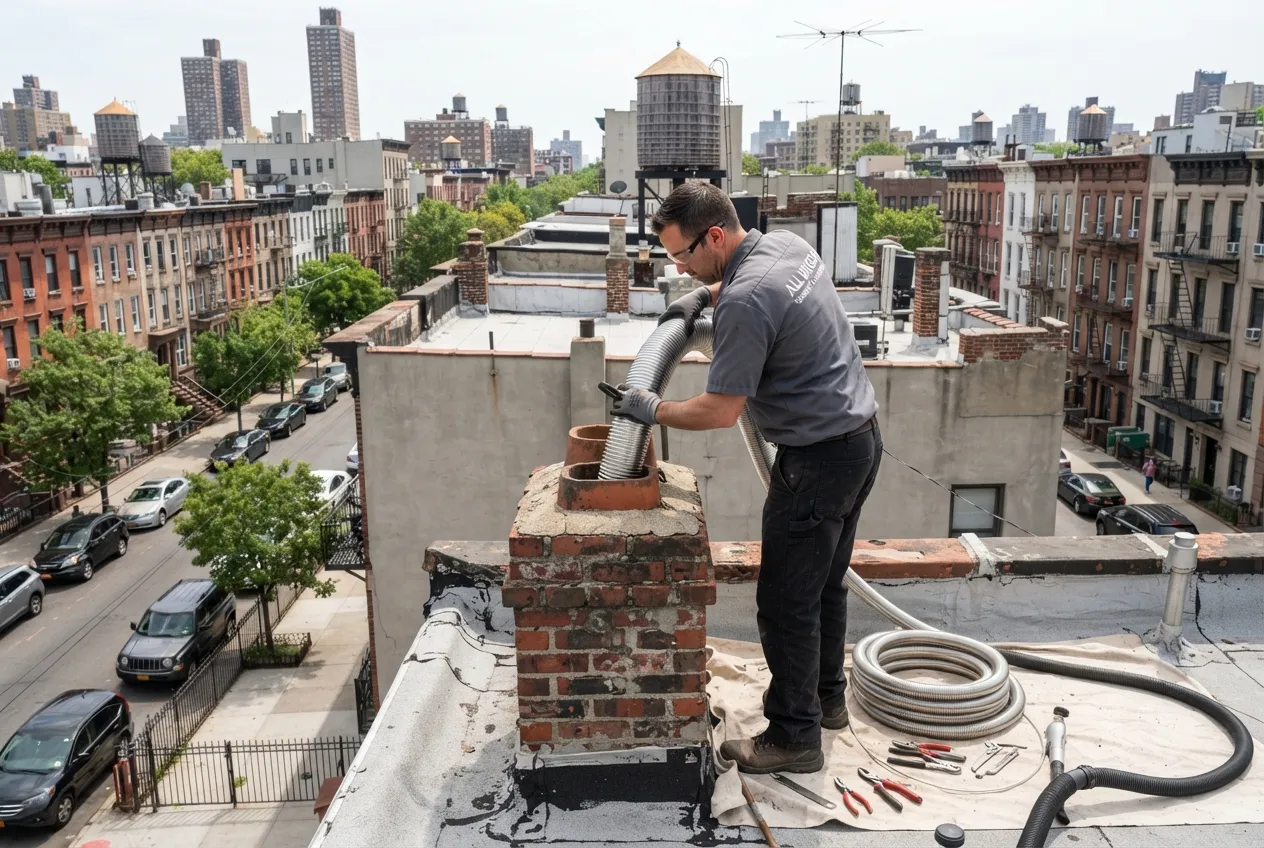
Most liner jobs follow the same sequence. First, the flue is cleaned so the new liner has a clear path, and any damaged tile or obstructions are removed. Next, the liner is lowered from the roof and connected at the bottom to the appliance or thimble. Then a cap is fitted at the top to keep out rain and animals. Where needed, insulation is wrapped around the liner to help exhaust stay warm and draft properly.
Before we leave, we check the connection. We also explain how the system should be maintained going forward, including the yearly inspection.
Liner Work in Manhattan Buildings
Work in dense neighborhoods like Hudson Square takes planning. Many chimneys here run through multiple floors, share walls with neighbors, or are reached from a flat roof through a bulkhead. We plan roof access ahead of time and protect interior spaces near the cleanout and appliance connection. When the work affects a shared system, we coordinate with building management or the super.
Timing matters too. New York City's heat season runs from October 1 through May 31. During that period, building owners must keep apartments heated to the city's minimum temperatures. If a boiler flue needs a new liner, scheduling the job outside heat season helps keep residents comfortable. If the work has to happen during heat season, we plan it carefully around heating needs.
From our Hudson Square office, our certified technicians serve this neighborhood along with SoHo, Little Italy, Tribeca, Civic Center and Greenwich Village.
More services in Hudson Square
- Chimney Sweep in Hudson SquareLocal service & repairs
- Chimney Inspection in Hudson SquareLocal service & repairs
- Chimney Repair in Hudson SquareLocal service & repairs
- Air Duct Cleaning in Hudson SquareLocal service & repairs