The short answer
A chimney sweep in Hudson Square removes creosote, soot, and debris from fireplace and heating flues and checks the chimney for damage while the flue is open. The NFPA 211 standard calls for a yearly inspection, so most Manhattan homeowners pair a sweep with that annual check before heat season begins on October 1.
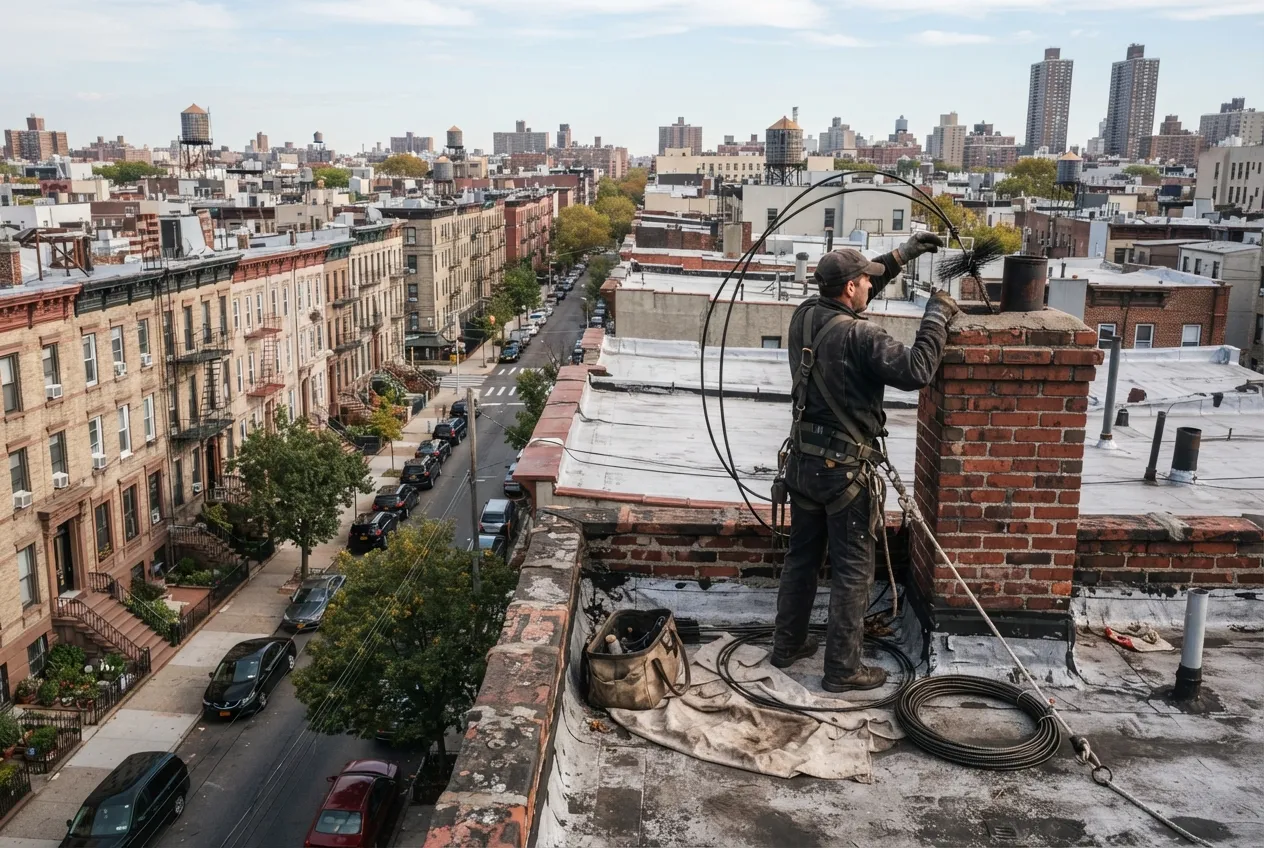
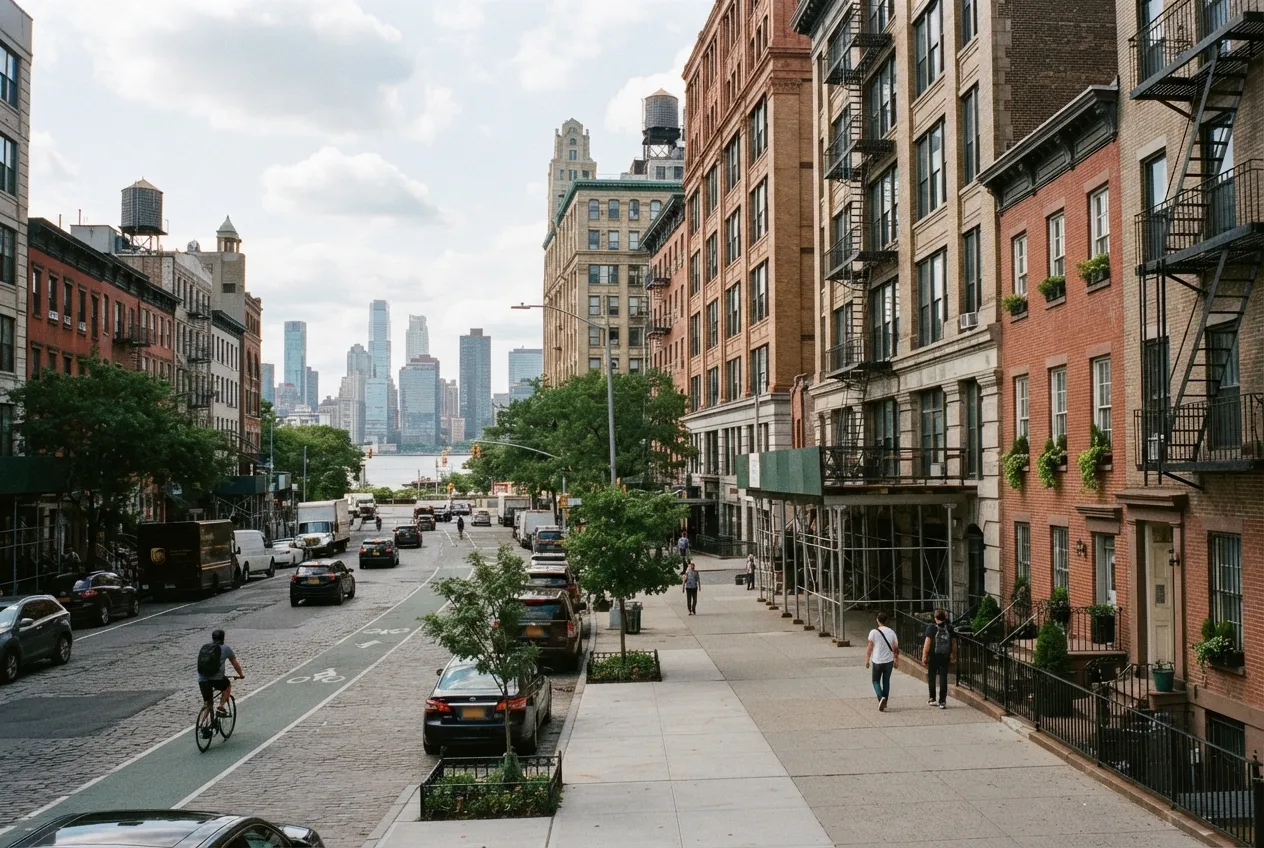
FirstChoice Chimney Services sweeps chimneys in Hudson Square from our office at 90 W Houston St. That puts us a short trip from the fireplaces, flues, and boiler chimneys in ZIP code 10012 and the surrounding blocks. Homes here range from pre-war apartment buildings and converted loft buildings to rowhouses and townhouses. Many have a working fireplace in one unit, a decorative fireplace in another, and a shared flue serving the building's heating plant. A chimney sweep removes the soot and creosote that build up inside these flues. It also gives our certified technicians a close look at the liner, damper, and crown so problems are caught before the next fire or heating cycle.
What a Chimney Sweep Covers in a Hudson Square Home
Every chimney collects residue. Wood fires leave creosote, a tar-like deposit that can ignite inside the flue. Oil and gas heating leave soot, scale, and corrosion byproducts. A sweep clears these out so smoke and exhaust can leave the home the way they should.
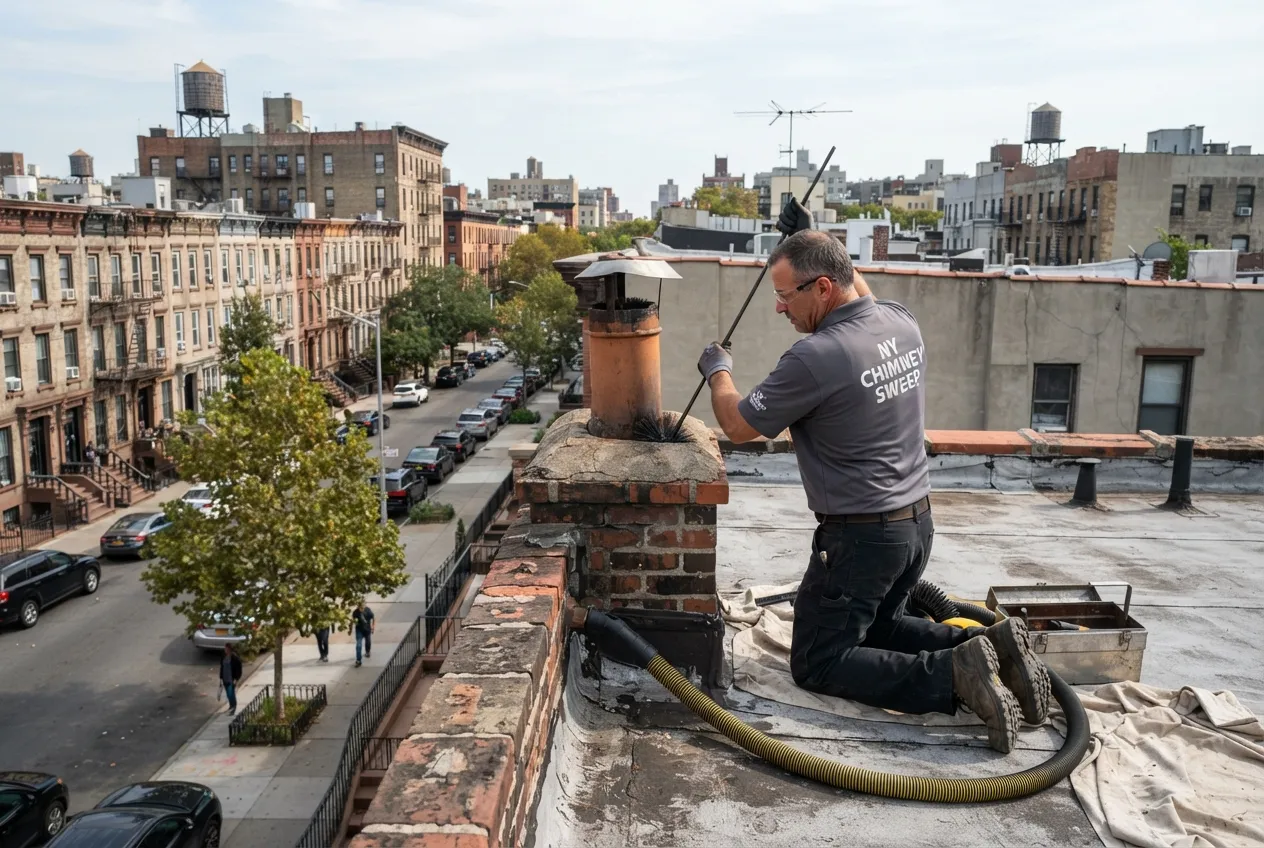
On a typical visit, our technician protects the floor and furniture around the fireplace and seals off the opening to keep dust in the work area. We then brush the flue from top to bottom and vacuum out what comes down. Before we leave, we tell you what we found.
- Creosote and soot removal from the firebox, smoke chamber, and flue
- Clearing nests, leaves, and fallen debris
- Checking that the damper opens, closes, and seals
- Looking for cracked flue tiles, loose mortar, and liner damage
- Noting crown, cap, and flashing problems visible from the roof
Fireplaces and Flues in Older Manhattan Buildings
Much of the housing around Hudson Square was built long before modern liners and caps were common. Older masonry flues often have gaps in the clay tiles or no liner at all. Some fireplaces were sealed off for years and later brought back into use. In converted loft and commercial buildings, a flue may run a long way through several floors before it reaches the roof.
These conditions make a sweep more than routine cleaning. Debris can hide a cracked tile. A long or offset flue can hold creosote in spots that are hard to reach. A fireplace that hasn't been used in years may have a damper rusted shut or a blockage nobody knew about. We take the time to check each section rather than assume the flue is in good shape.
How Often to Schedule a Sweep
The NFPA 211 standard calls for chimneys, fireplaces, and vents to be inspected once a year. Whether the flue also needs sweeping depends on what the inspection finds and how much the fireplace or appliance is used. A fireplace that burns wood every weekend through the winter will need cleaning more often than one lit a few times a season.
Inspections come in three levels. Level 1 applies when nothing about the system has changed. Level 2 applies when something has changed, such as a new appliance or a switch of fuel, or when the home is being sold. Level 3 applies when a hidden hazard can only be reached by opening part of the chimney or the building. Most Hudson Square homeowners who simply want a clean, safe fireplace need a sweep with a Level 1 inspection.
Time for your annual chimney check?
Timing Around New York City's Heat Season
New York City's heat season runs from October 1 through May 31. During those months, building owners must keep apartments heated to the city's minimum temperatures. A boiler chimney that is blocked or badly sooted can interrupt that heat, so late summer and early fall are the most practical times to book a sweep for building heating flues.
For fireplaces, scheduling before your first fire of the season lets you start with a clean flue and a damper you know works. If you only light a fire for the holidays, a fall appointment still gives you room to handle any repairs before then.
When an Oil-to-Gas Conversion Changes the Job
When a New York City building converts its boiler from oil to gas, the chimney has to be evaluated as part of the work. A new liner is often needed because gas exhaust produces acidic condensate that can corrode a masonry flue. Sweeping the old oil soot out of the flue is usually the first step, because the masonry and existing liner can't be properly judged until it's clean.
If your building in Hudson Square, SoHo, Tribeca, or Greenwich Village is planning a conversion, we can sweep the flue and report on its condition so the owner and the heating contractor know what they're working with.
More services in Hudson Square
- Chimney Inspection in Hudson SquareLocal service & repairs
- Chimney Repair in Hudson SquareLocal service & repairs
- Air Duct Cleaning in Hudson SquareLocal service & repairs
- Chimney Liner Installation in Hudson SquareLocal service & repairs