The short answer
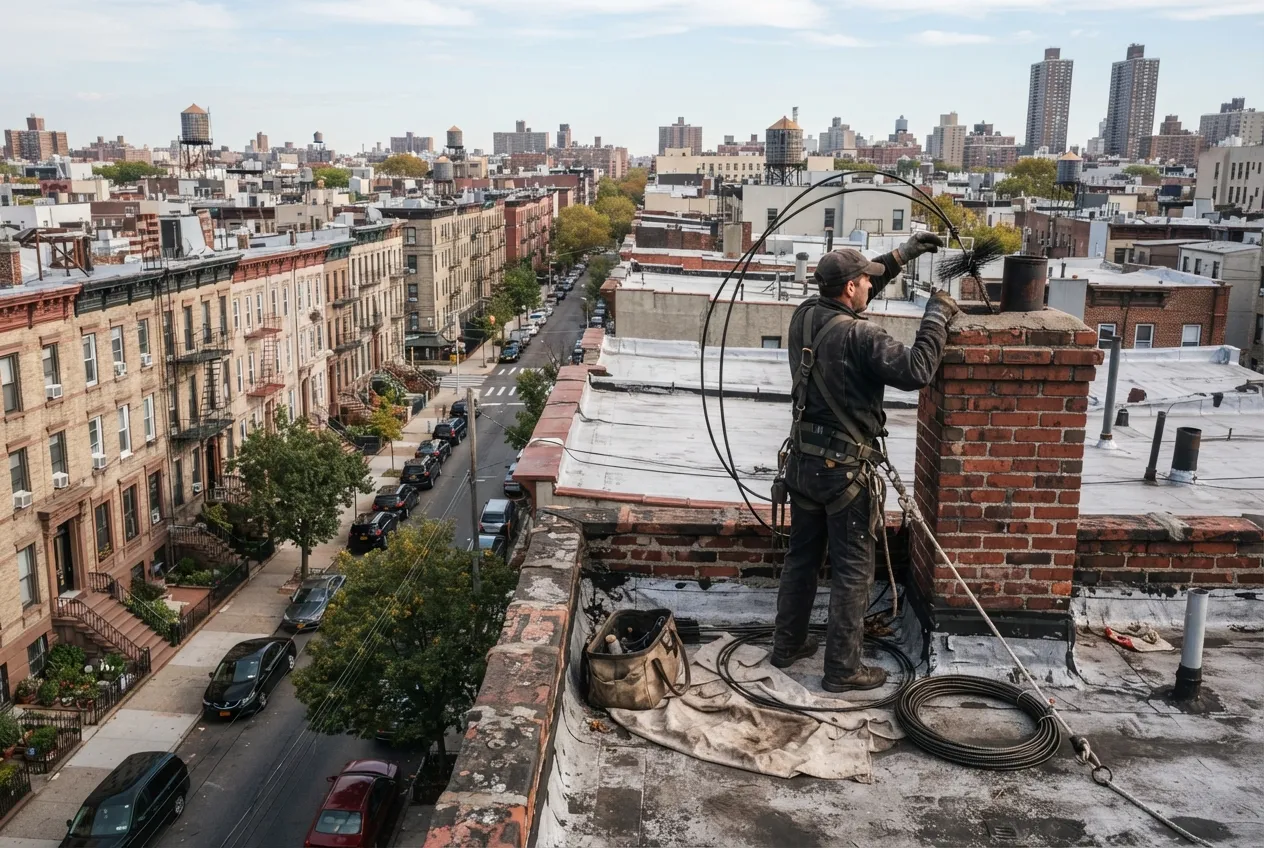
A chimney liner is the inner channel that carries smoke and exhaust safely out of the building. Greenwich Village homes often need a new one when an older liner has cracked, when a flue was never lined, or when a boiler is converted from oil to gas. We inspect the flue, size the liner to the connected appliance, and install it with the right fittings and cap.
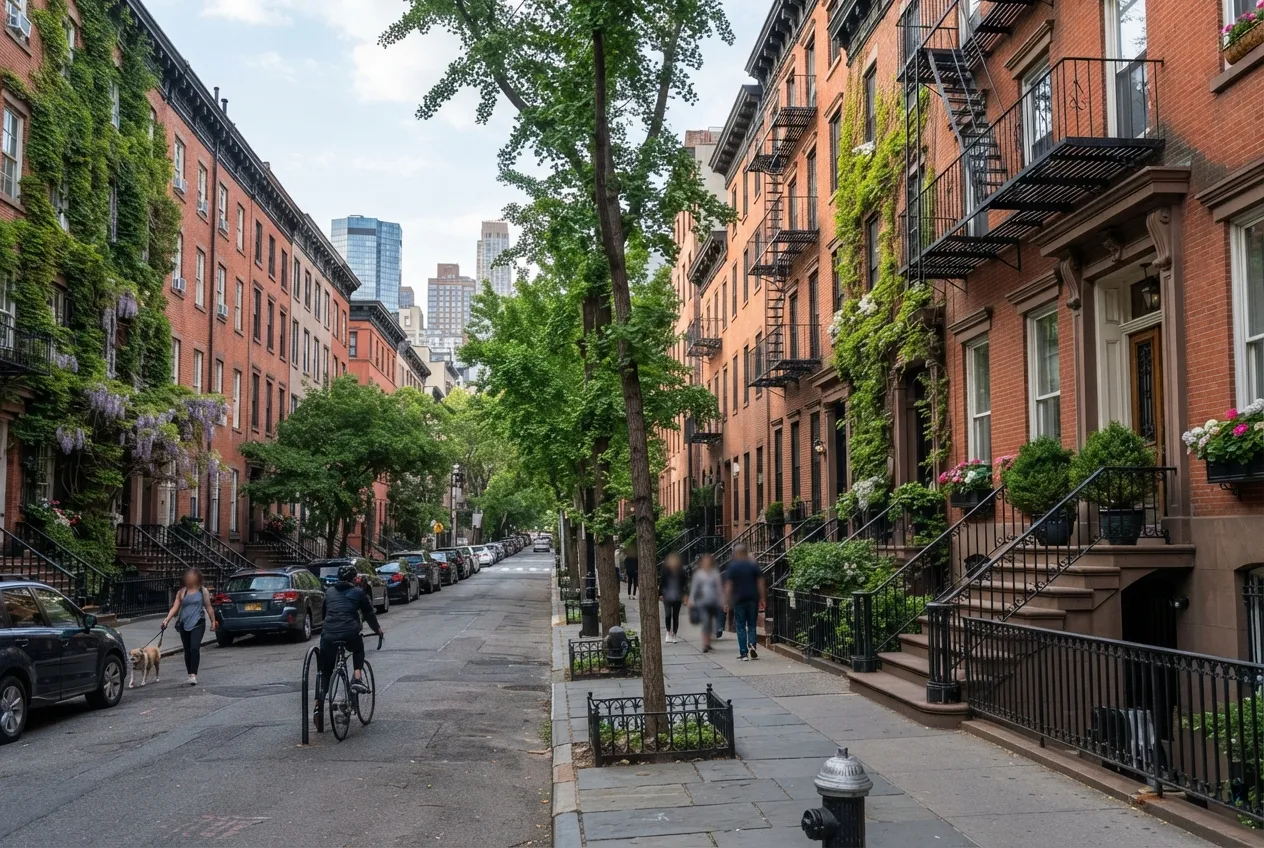
Many chimneys in Greenwich Village were built long before today's boilers, furnaces, and water heaters. Some have old clay tile liners that have cracked or shifted. Others have no liner at all, so exhaust runs directly against brick and mortar. FirstChoice Chimney Services installs chimney liners for brownstones, rowhouses, and pre-war apartment buildings across the neighborhood, and our office is right here on West Houston Street. Our certified technicians size each liner to the appliance it serves, so the flue draws properly and the masonry is protected from heat and corrosive exhaust.
Why Older Village Chimneys Often Need a New Liner
Brownstones, rowhouses, and pre-war apartment buildings in Greenwich Village commonly have tall masonry chimneys that have been in service for a long time. Over the years, clay tiles crack from heat cycles, mortar joints wear away, and settling can leave gaps between flue sections. Once that happens, heat and combustion gases can reach the brick, and in some cases nearby wood framing.
A liner also controls the size of the flue. A flue that is too large for the appliance can draft poorly and cool the exhaust too quickly. That leads to condensation inside the chimney and, with wood fires, more creosote buildup. A properly sized liner keeps exhaust moving up and out.
- Cracked, missing, or displaced clay flue tiles
- Unlined masonry flues serving a boiler, furnace, or water heater
- Flue size that no longer matches the connected appliance
- Signs of moisture, staining, or crumbling mortar inside the chimney
- Smoke or exhaust smells inside the home
Oil-to-Gas Boiler Conversions
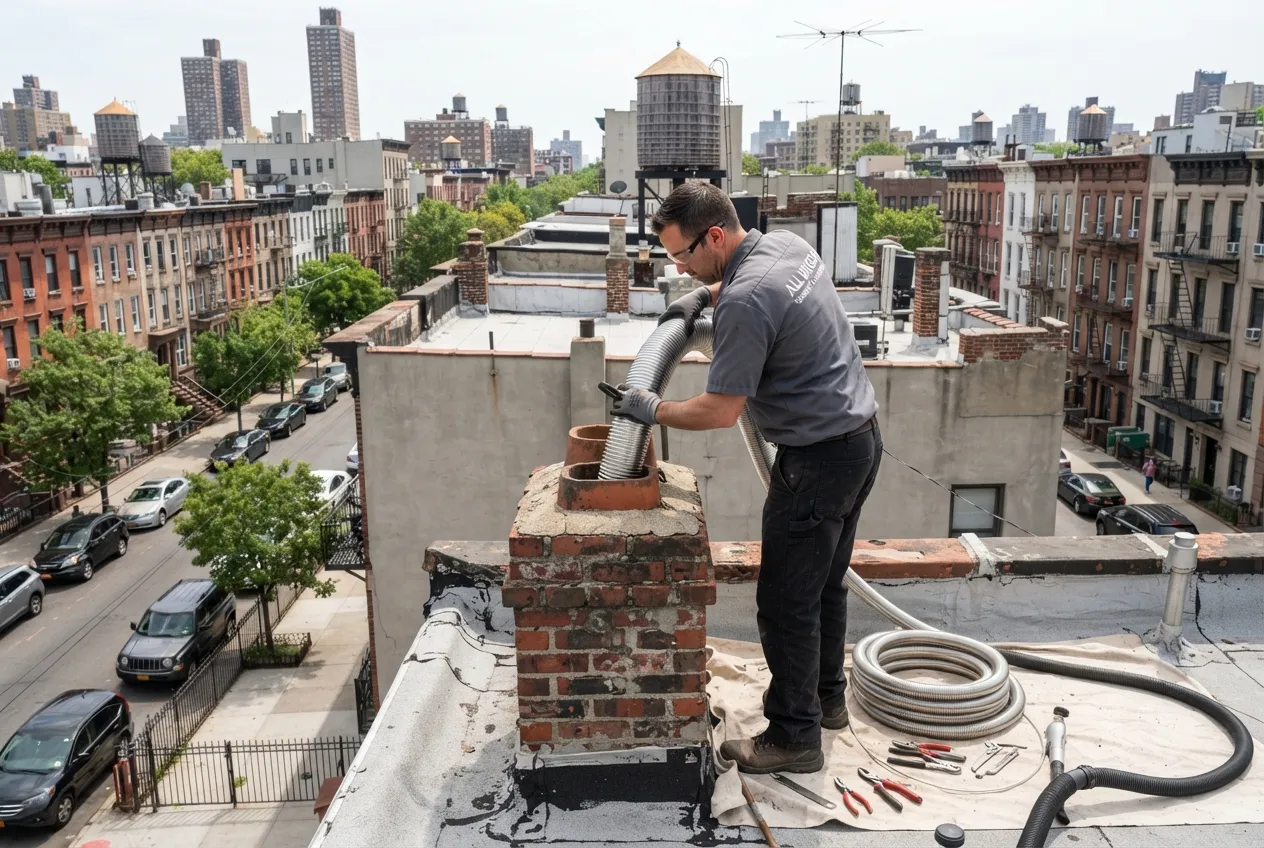
When a New York City building converts its boiler from oil to gas, the chimney has to be evaluated as part of the work. A new liner is often needed because gas exhaust produces acidic condensate, and that condensate can corrode a masonry flue that handled oil exhaust without trouble for years.
If you own a rowhouse or manage a small building in the Village and are planning a conversion, we can inspect the chimney early in the process. That way, any liner work can be coordinated with the boiler installation instead of holding it up at the end.
How Liner Installation Works
The NFPA 211 standard calls for chimneys, fireplaces, and vents to be inspected once a year. It also describes a Level 2 inspection for times when the system changes, such as a new appliance or a switch of fuel, and when a home is sold. A Level 2 inspection is usually where liner work begins. If a hidden hazard has to be reached by opening part of the chimney or building, a Level 3 inspection may be needed.
After the inspection, we measure the flue and confirm what each appliance requires. Then we install the liner, connect it at the appliance end, and finish the top with a proper termination and cap.
- Inspect the chimney, including a camera view of the flue interior
- Measure the flue height, the turns, and the opening size
- Match the liner type and diameter to the appliance and fuel
- Clean the flue and clear any obstructions before installation
- Install the liner, connections, insulation where called for, and a cap
- Check draft and walk you through what was done
Time for your annual chimney check?
Planning Around Heat Season
New York City's heat season runs from October 1 through May 31. During those months, building owners must keep apartments heated to the city's minimum temperatures. For a building whose boiler vents through the chimney being relined, timing matters.
Spring and summer are the easiest times to schedule liner work on a heating flue. If a problem turns up during heat season, we will talk with you about how to keep the work as short as possible and what the boiler contractor needs from us.
Serving Greenwich Village and Nearby Neighborhoods
Because our office is at 90 W Houston St, Greenwich Village is our home neighborhood. We also install chimney liners in SoHo, Little Italy, Hudson Square, the West Village, and Gramercy, as well as elsewhere in Manhattan. Whether you have a single-family brownstone or a multi-unit pre-war building, we can look at your chimney and explain your options plainly.
More services in Greenwich Village
- Chimney Sweep in Greenwich VillageLocal service & repairs
- Chimney Inspection in Greenwich VillageLocal service & repairs
- Chimney Repair in Greenwich VillageLocal service & repairs
- Air Duct Cleaning in Greenwich VillageLocal service & repairs