The short answer
Tribeca homes in older masonry buildings often have cracked, missing or wrongly sized clay liners, and an oil-to-gas boiler conversion often requires a new liner. FirstChoice Chimney Services inspects the flue, sizes a liner to your appliance, and installs it while coordinating with your building.
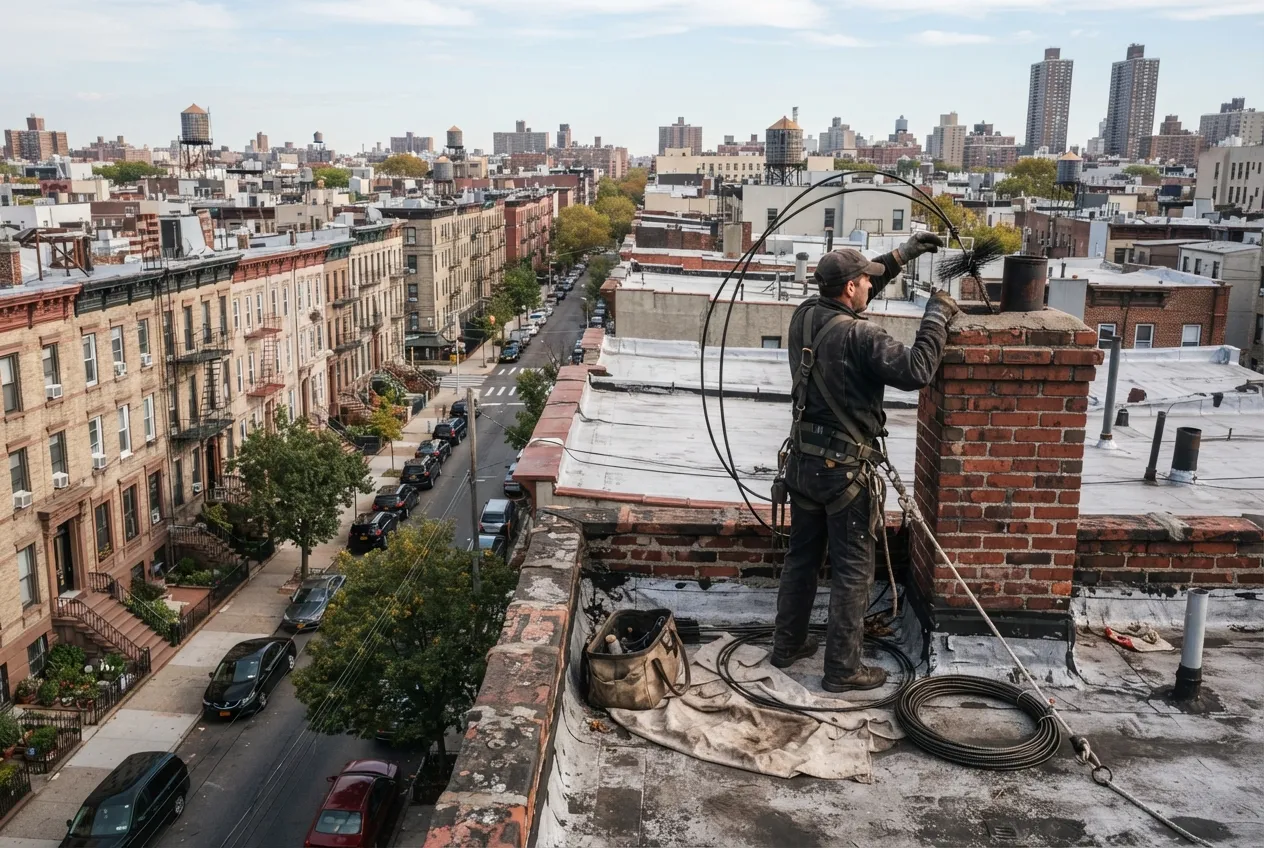
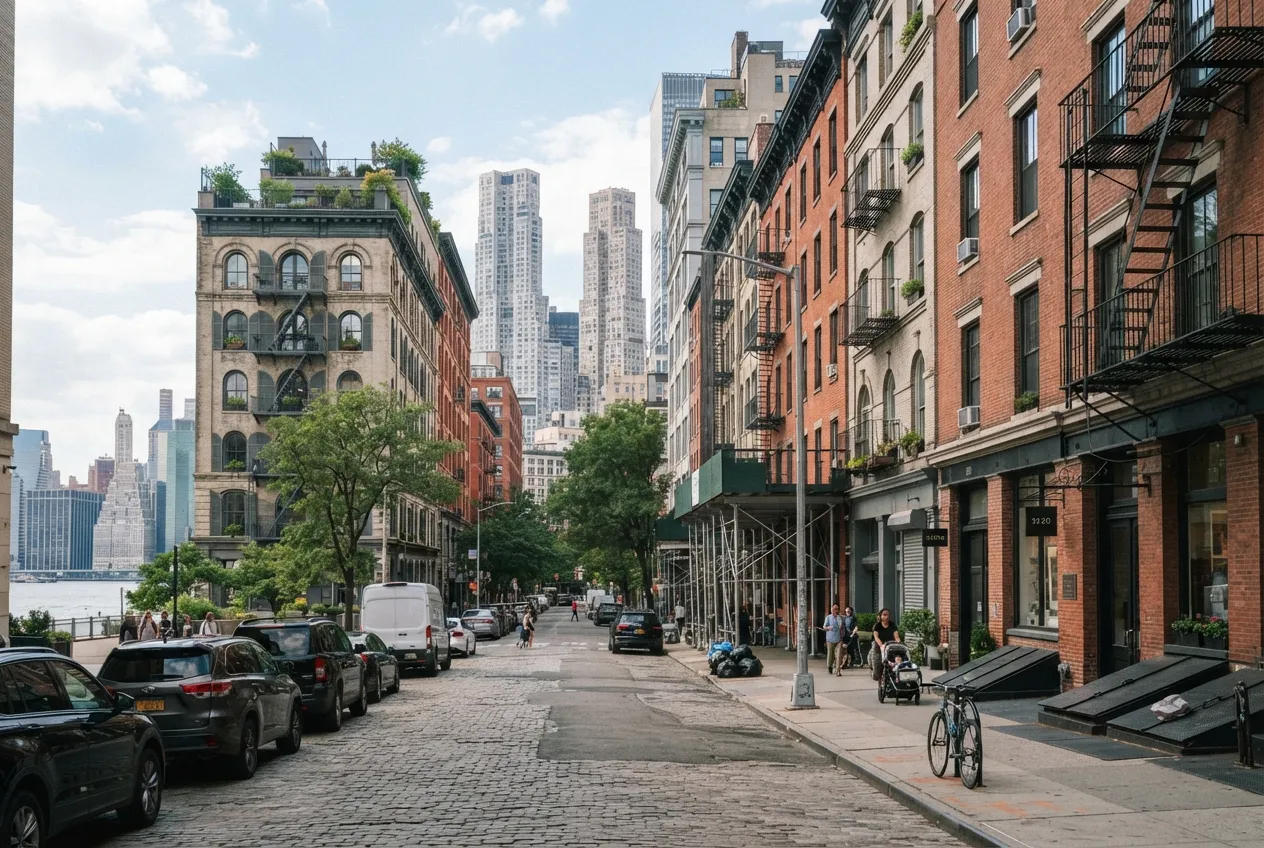
A chimney liner is the protective channel inside your flue that carries smoke and exhaust gases up and out of the building. Many Tribeca homes sit in older masonry structures, including converted loft buildings, pre-war apartment buildings and townhouses. In these buildings, original clay tile liners are often cracked, missing in sections, or the wrong size for the heating equipment in use today. FirstChoice Chimney Services installs new chimney liners for homes and buildings throughout Tribeca from our Manhattan office about a mile away. Our certified technicians size the liner to your appliance, install it, and show you what was done.
Why Older Tribeca Chimneys Need Attention
Much of Tribeca's housing was built long before modern boilers, water heaters and gas fireplaces existed. Flues in these buildings were often designed for coal or wood. Many were lined with clay tile, and some were not lined at all. Over decades, freeze-thaw cycles, settling and heat stress can crack tiles and erode mortar joints. A damaged liner can let heat reach nearby framing and allow exhaust gases, including carbon monoxide, to seep into living spaces. It can also speed up deterioration of the brick itself.
In converted loft buildings, flues may also have been reworked over the years as units were divided and mechanical systems changed. That makes a careful look at the full length of the flue important before choosing a liner.
Oil-to-Gas Conversions and New Liners
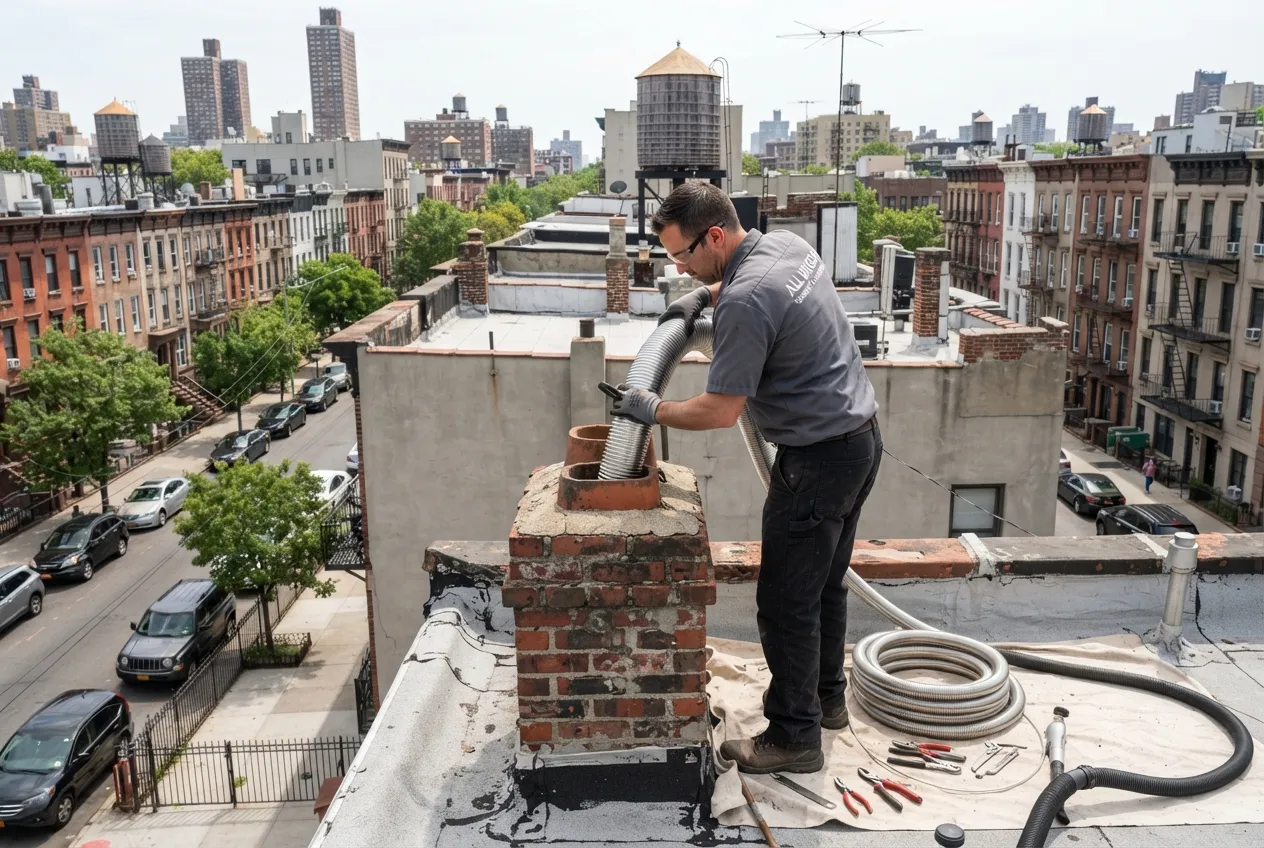
When a New York City building converts its boiler from oil to gas, the chimney has to be evaluated as part of the work. A new liner is often needed because gas exhaust produces acidic condensate that can corrode a masonry flue. An unlined or oversized flue also lets that exhaust cool before it exits, which makes condensation worse.
If your building is planning a conversion, we can evaluate the chimney early so the liner work fits into the project schedule instead of holding it up.
- We check the flue's size against the new appliance's venting needs
- We look for damage left by years of oil use, such as heavy soot buildup and spalled brick
- We recommend a liner material suited to gas exhaust and condensate
Signs Your Flue May Need a New Liner
You can see some problems from inside the home. Others only show up on a camera inspection. Common warning signs include:
No single sign proves the liner has failed. Each one is a reason to have the flue inspected before the next heating season.
- Pieces of clay tile or flaky masonry falling into the fireplace or cleanout
- Water stains, white staining or crumbling brick near the chimney
- Smoke or odors drifting into the room when the fireplace or boiler runs
- A new heating appliance or a switch from oil to gas
- Damage found during an inspection after a chimney fire
Time for your annual chimney check?
How We Install a Chimney Liner
Every job starts with an inspection. The NFPA 211 standard calls for a Level 2 inspection when the system changes, such as a new appliance or a switch of fuel, or when a home is sold. We use a camera to view the flue from top to bottom. Then we measure it and confirm the venting requirements for your appliance. From there, the work typically follows these steps:
In Manhattan, roof access, building rules and permitted work hours affect how a job is scheduled. We coordinate with building managers and supers so the work fits each building's requirements.
- Clean the flue so the liner can be installed and inspected properly
- Choose the liner type: commonly stainless steel for gas and oil appliances, or a cast-in-place lining when the masonry needs reinforcement
- Install and connect the liner, adding insulation where the flue calls for it
- Fit a cap to keep out rain, debris and animals
- Run a final check and walk you through photos of the finished work
Planning Around NYC Heat Season
New York City's heat season runs from October 1 through May 31. During that time, building owners must keep apartments heated to the city's minimum temperatures. For buildings that rely on a central boiler, liner work that takes heat offline is easier to schedule outside that window. If a problem turns up mid-season, we'll talk through options for keeping the system running safely while repairs are planned.
We serve all of Tribeca, including ZIP codes 10007, 10013, 10278 and 10279. We also work in nearby Civic Center, SoHo, Little Italy, Hudson Square and Chinatown.
More services in Tribeca
- Chimney Sweep in TribecaLocal service & repairs
- Chimney Inspection in TribecaLocal service & repairs
- Chimney Repair in TribecaLocal service & repairs
- Air Duct Cleaning in TribecaLocal service & repairs