The short answer
Most chimney repairs in Tribeca involve worn mortar joints, cracked crowns, failed flashing or damaged flue liners in older masonry buildings. FirstChoice Chimney Services inspects the chimney first, explains what we found, and then repairs the actual cause rather than only the visible symptom.
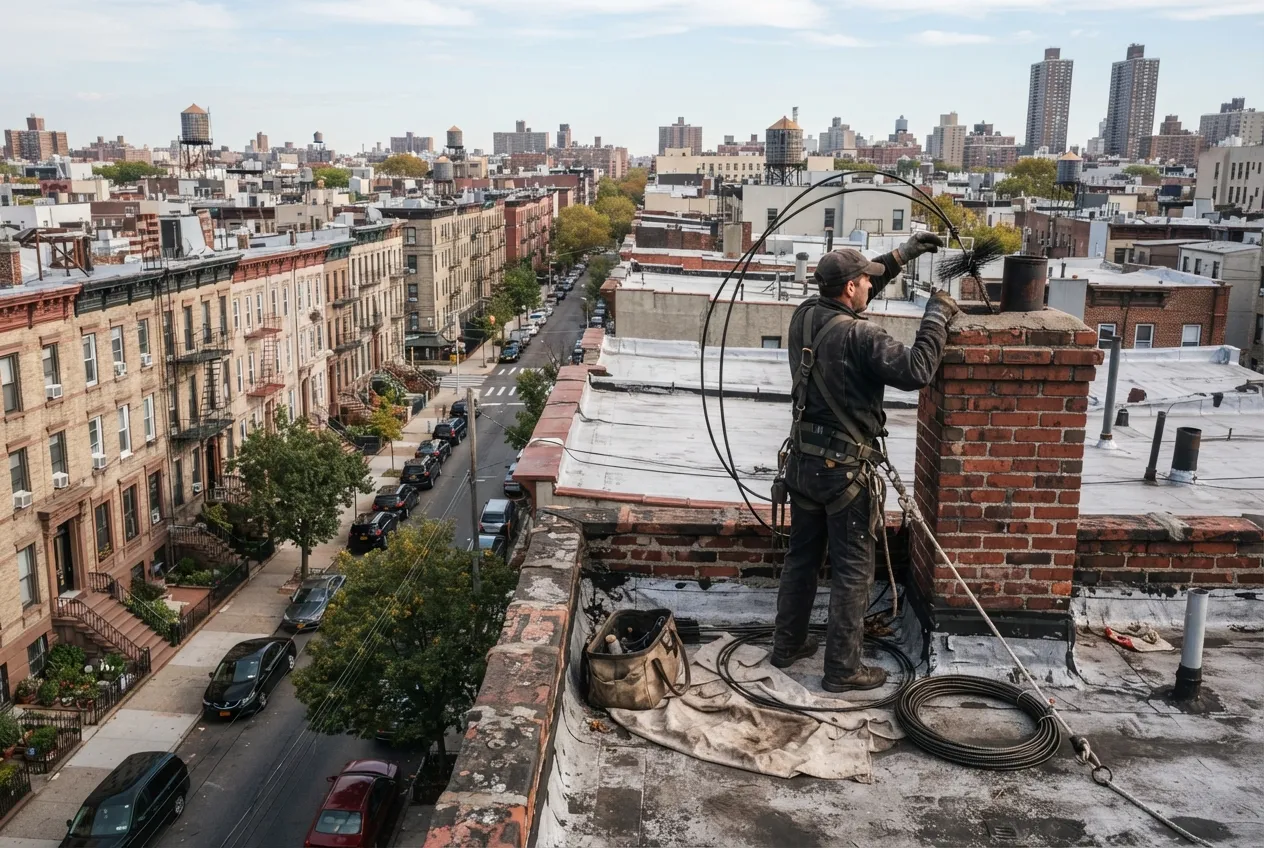
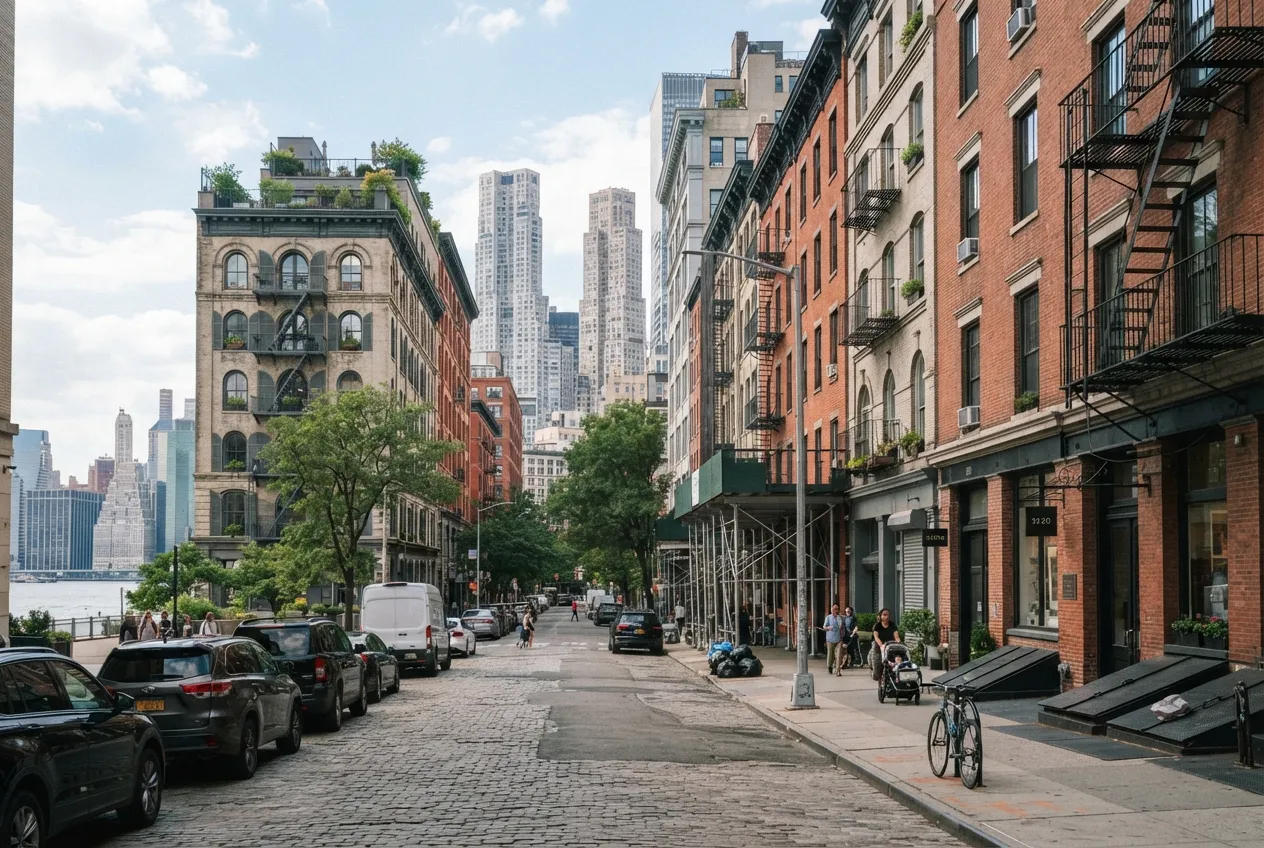
Chimney repair in Tribeca usually means working on masonry that has stood through decades of rain, wind, freeze-thaw cycles and hot flue gases. Many homes here are in converted loft buildings, pre-war apartment buildings and older rowhouses, where one chimney may serve a wood-burning fireplace, a boiler, or both. FirstChoice Chimney Services sends certified technicians from our Manhattan office, about a mile away, to find out why a chimney is failing and repair it so it vents safely and keeps water out of the building. We serve all of Tribeca, including ZIP codes 10007, 10013, 10278 and 10279.
Common Chimney Problems in Tribeca Buildings
Tribeca's housing is mostly older masonry. Brick chimneys on loft and pre-war buildings often rise well above the roofline, so they take the full force of wind-driven rain and winter freezing. Over time, water gets into the brick and mortar, freezes, expands and pushes the masonry apart. On rowhouses, chimneys are often shared or closely spaced, which makes careful work at the roof especially important.
These are the repairs we handle most often in the neighborhood:
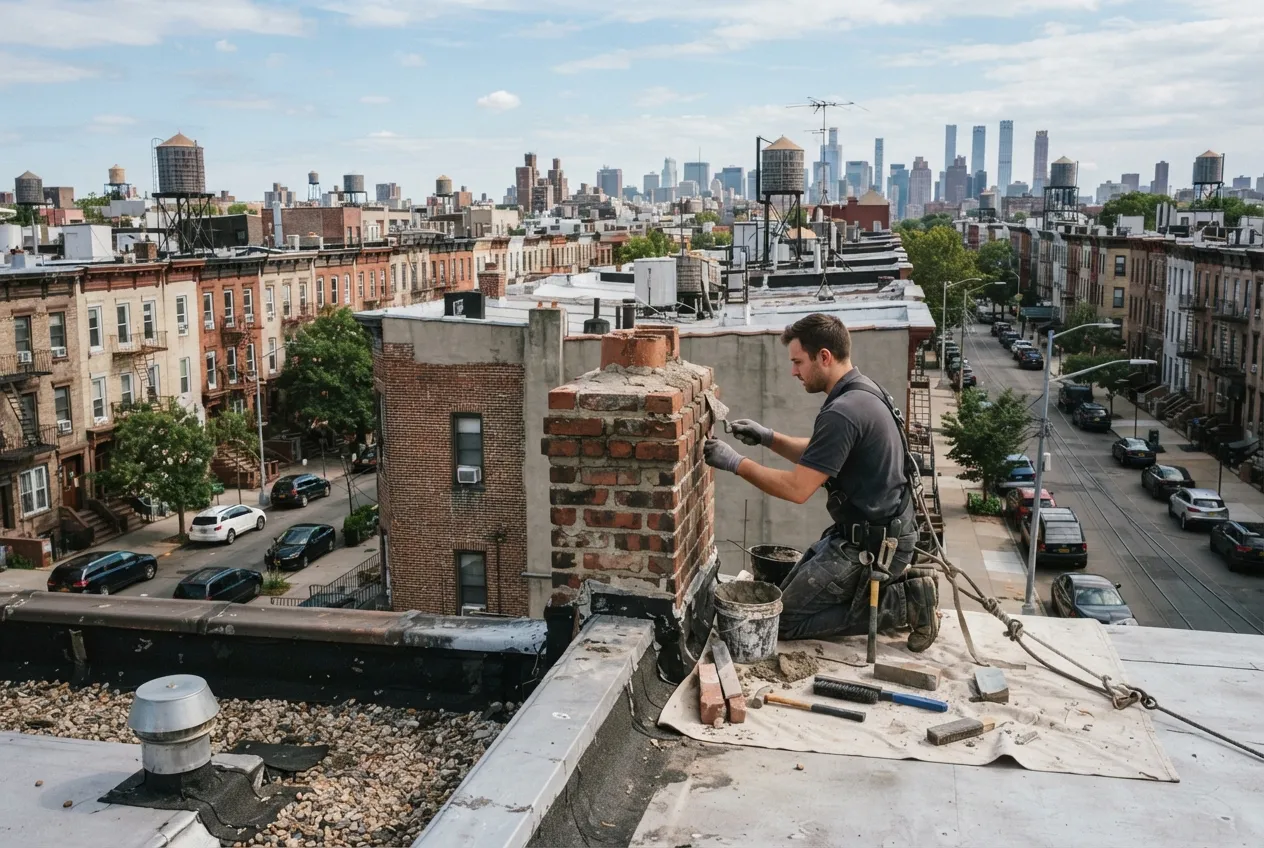
- Repointing: removing crumbling mortar joints and replacing them with mortar suited to the existing brick
- Rebuilding the top of a chimney when bricks are loose, spalled or leaning
- Repairing or replacing cracked chimney crowns that let water into the masonry
- Resealing or replacing flashing where the chimney meets the roof
- Installing or replacing chimney caps to keep out rain, debris and animals
- Repairing damaged firebox brick and smoke chamber surfaces in fireplaces
- Relining flues that are cracked, deteriorated or the wrong size for the appliance
How We Diagnose a Chimney Before Repairing It
A water stain on a ceiling or a few loose bricks can have more than one cause, so we start with an inspection. The NFPA 211 standard calls for chimneys, fireplaces and vents to be inspected once a year, and it describes three levels. A Level 1 inspection fits when nothing about the system has changed. A Level 2 inspection is used when the system changes, such as a new appliance or a switch of fuel, or when the home is being sold. A Level 3 inspection is reserved for cases where a hidden hazard can only be reached by opening part of the chimney or building.
After the inspection, we explain what we found in plain terms, show you photos where possible, and lay out which repairs are needed now and which can be planned for later. In apartment and co-op buildings, we can share that information with your building manager or board so the work can be approved and scheduled.
Flue Liners and Oil-to-Gas Conversions
Many Tribeca buildings were originally heated with oil, and a number of them have converted or are planning to convert to gas. When a New York City building converts its boiler from oil to gas, the chimney has to be evaluated as part of that work. A new liner is often needed, because gas exhaust produces acidic condensate that can corrode an unlined or older masonry flue.
If your building is planning a conversion, it helps to have the chimney looked at early so the liner work can be coordinated with the boiler installation. We also reline flues for fireplaces and other appliances when the existing liner is cracked, collapsed or missing.
Time for your annual chimney check?
Timing Repairs Around the Heating Season
New York City's heat season runs from October 1 through May 31, and building owners must keep apartments heated to the city's minimum temperatures during that time. A chimney problem that takes a boiler offline in January is more disruptive than one found and fixed in late summer. For that reason, we encourage Tribeca owners and building managers to schedule inspections and major repairs before October whenever possible.
That said, chimney damage does not wait for good weather. If you notice smoke or fumes indoors, falling brick or debris in the fireplace, or water coming in around the chimney, call us and we will help you decide what needs attention right away.
Chimney Repair Near Tribeca
Along with Tribeca, our technicians regularly repair chimneys in nearby Civic Center, SoHo, Little Italy, Hudson Square and Chinatown. These neighborhoods share many of the same building types, from loft conversions to pre-war apartment buildings and older rowhouses, so the problems and repair methods are often similar.
More services in Tribeca
- Chimney Sweep in TribecaLocal service & repairs
- Chimney Inspection in TribecaLocal service & repairs
- Air Duct Cleaning in TribecaLocal service & repairs
- Chimney Liner Installation in TribecaLocal service & repairs