The short answer
A chimney liner is needed when the existing flue is cracked, unlined, or no longer matches the appliance it serves, which is common after an oil-to-gas boiler conversion in New York City. Our certified technicians inspect the chimney, size a liner to your equipment, and install it so exhaust vents safely and the masonry is protected.
Many Gramercy homes still rely on masonry chimneys. Brownstones, rowhouses and pre-war apartment buildings around the 10010 ZIP code often have flues that serve a boiler, a water heater, a fireplace, or all three. The liner inside that flue protects the brick from heat and corrosive exhaust and keeps gases moving up and out of the building. When a liner is cracked, missing, or the wrong size for the equipment it serves, it needs to be replaced. FirstChoice Chimney Services installs chimney liners throughout Gramercy, about a mile northeast of our Manhattan office.
Why Gramercy Chimneys Often Need a New Liner
Older buildings in Gramercy were typically built with clay tile flue liners, and some chimneys were built with no liner at all. Over decades, heat cycling, settling and moisture can crack clay tiles or open gaps at the joints. Once that happens, exhaust can reach the surrounding brick and mortar, and the flue may not draft the way it should.
Fuel changes are another common reason. When a New York City building converts its boiler from oil to gas, the chimney has to be evaluated as part of the work, and a new liner is often needed. Gas exhaust produces acidic condensate that can corrode a masonry flue, so a flue that handled oil for years may not be suitable for a gas appliance without a proper liner.
When a Liner Replacement Comes Up
The NFPA 211 standard calls for chimneys, fireplaces and vents to be inspected once a year. A Level 1 inspection is used when nothing has changed. A Level 2 inspection applies when the system changes, such as a new appliance or a switch of fuel, or when the home is sold. A Level 3 inspection is used when a hidden hazard has to be reached by opening part of the chimney or building. Liner problems are often found during one of these inspections.
Signs that your liner may need attention include:
- Cracked, shifted or missing flue tiles seen during a camera inspection
- Flakes of tile or crumbling mortar collecting at the base of the chimney
- White staining, damp spots or peeling paint on walls next to the chimney
- A boiler or water heater being replaced or converted to a different fuel
- Smoke or odors coming back into the room when a fireplace is used
Liner Options for Boilers and Fireplaces
The right liner depends on what the chimney serves. Stainless steel liners are widely used for gas and oil appliances because they resist corrosion and can be sized to match the appliance's venting needs. A flue that is too large for a modern, more efficient boiler can let exhaust cool and condense before it leaves the chimney, which is one reason sizing matters.
Wood-burning fireplaces need a liner rated for the higher temperatures of an open fire. In some chimneys, a single flue serves more than one appliance, and that arrangement has to be reviewed before choosing a liner. We explain the options that fit your chimney and equipment before any work begins.
Time for your annual chimney check?
How Installation Works in a Gramercy Building
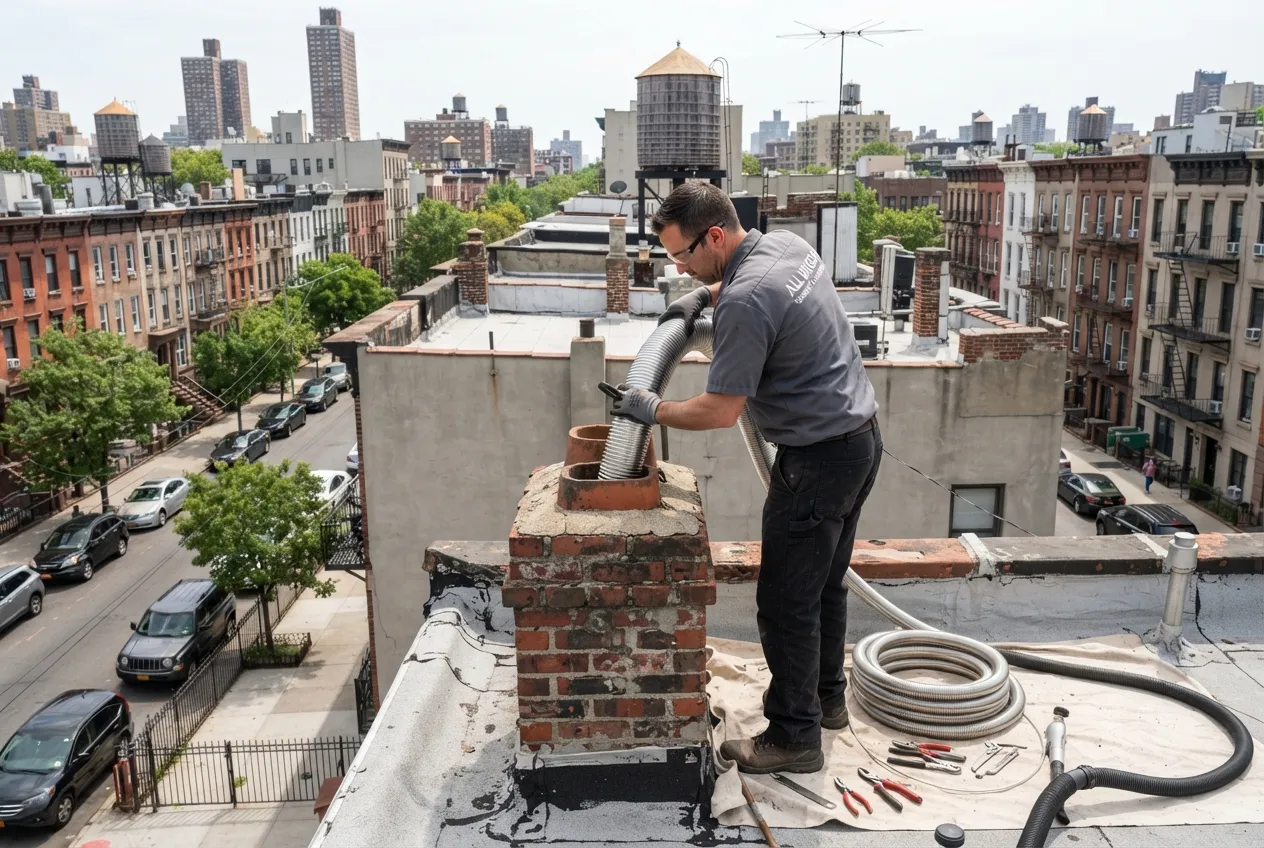
Most liner work in Gramercy is done from the roof, so we plan access ahead of time with owners, co-op boards or building managers. For attached rowhouses and brownstones, we work carefully around shared walls and neighboring roofs. Inside, we protect floors and furnishings near the appliance or fireplace.
Timing matters in a building with a central boiler. New York City's heat season runs from October 1 through May 31, when building owners must keep apartments heated to the city's minimum temperatures. Many owners schedule liner work outside that window, and when work has to happen during heat season, we plan it to keep the boiler offline for as short a time as practical.
A typical job includes:
- Inspecting the existing flue, often with a camera
- Measuring the flue and reviewing the appliance's venting requirements
- Cleaning the chimney and removing damaged tile where needed
- Installing the liner with the proper connections, cap and termination
- Checking draft once the appliance is running again
After the Liner Is In
A new liner still needs routine care. Plan on a yearly inspection to confirm the liner, cap and connections are in good shape. Beyond Gramercy, we also install chimney liners in Greenwich Village, the East Village, the West Village, SoHo and Little Italy.
More services in Gramercy
- Chimney Sweep in GramercyLocal service & repairs
- Chimney Inspection in GramercyLocal service & repairs
- Chimney Repair in GramercyLocal service & repairs
- Air Duct Cleaning in GramercyLocal service & repairs