The short answer
Little Italy homes with fireplaces or boiler chimneys should be swept as creosote and debris build up, and inspected once a year as the NFPA 211 standard calls for. Book before the city's heat season starts on October 1. If your building converts its boiler from oil to gas, have the chimney evaluated.
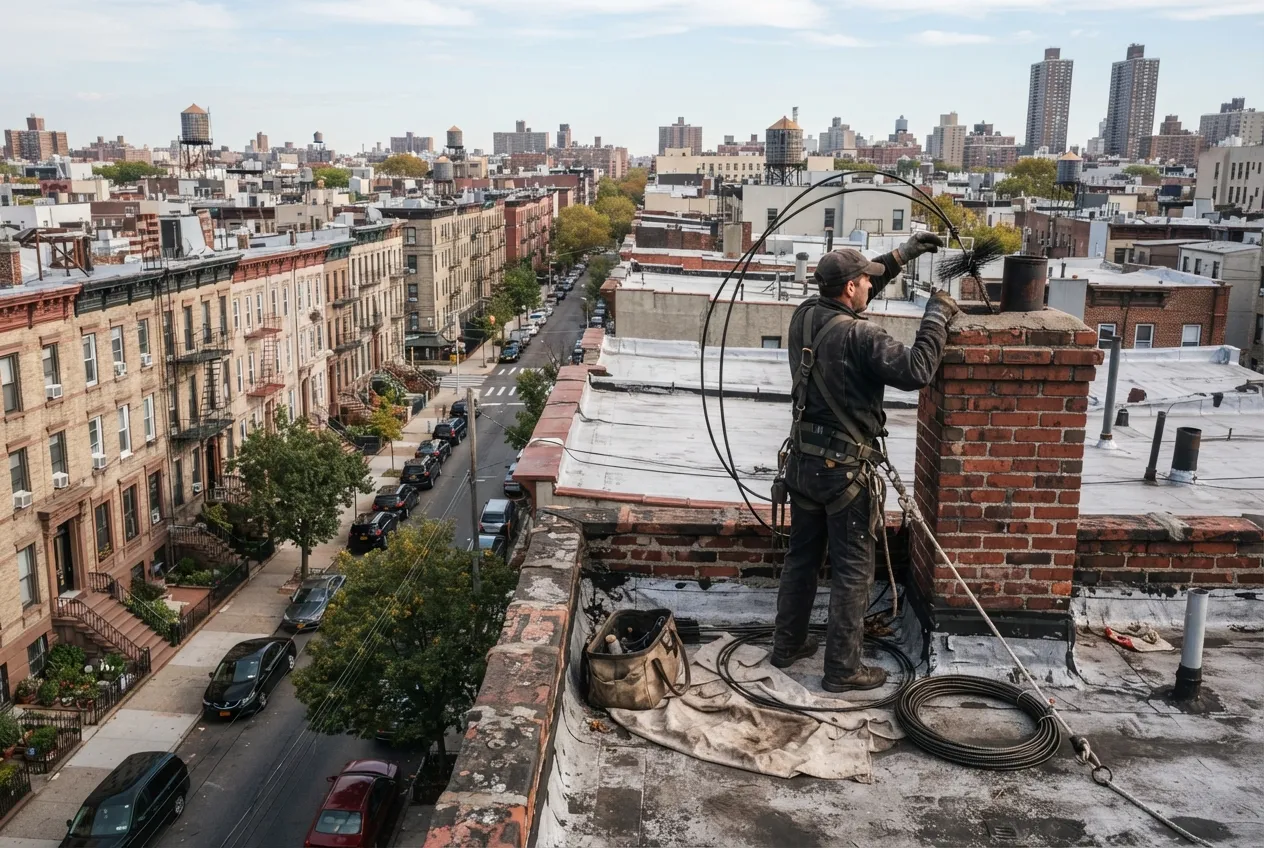
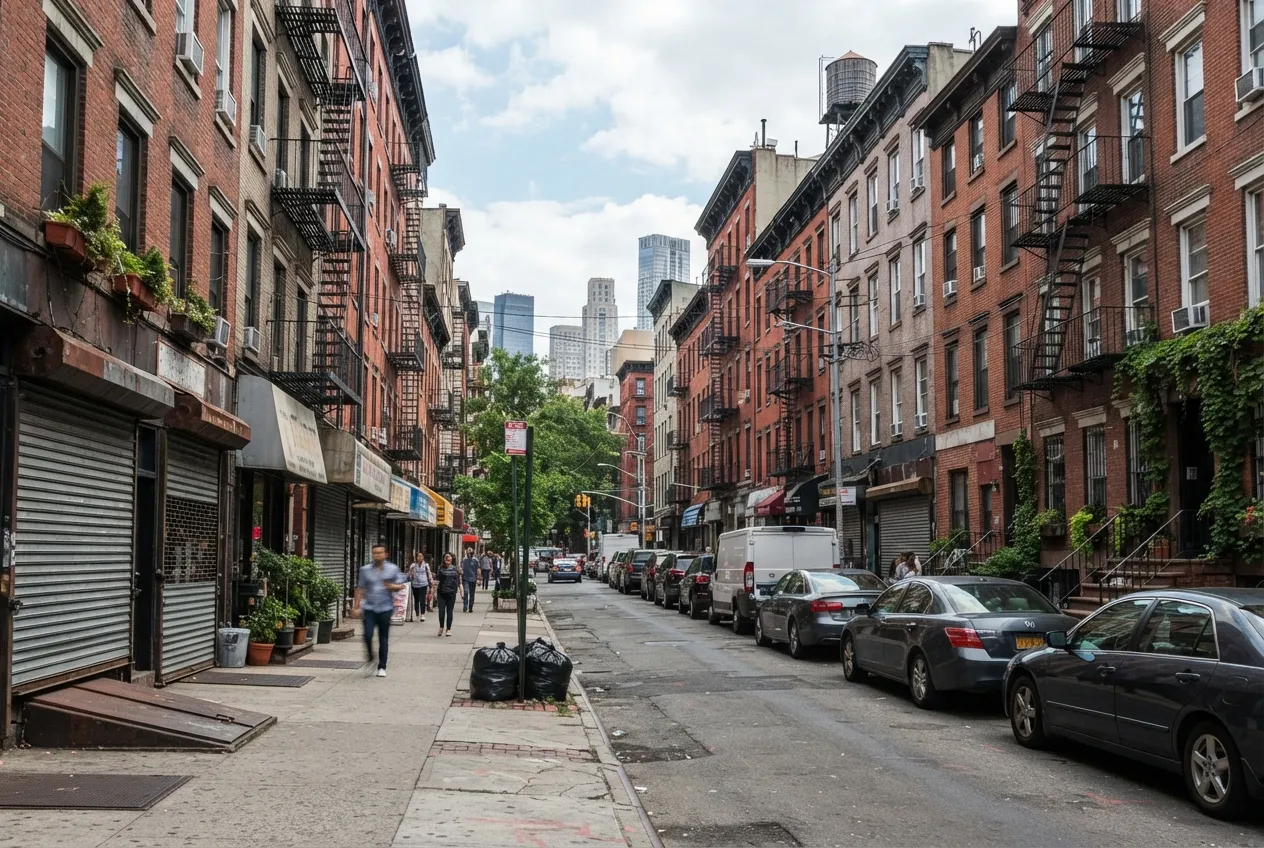
Chimney sweeping in Little Italy mostly means working in older buildings. The neighborhood is largely pre-war apartment buildings, walk-ups and rowhouses. Many have masonry chimneys serving a wood-burning fireplace, a gas fireplace insert, or a building boiler. FirstChoice Chimney Services has an office at 90 W Houston St, so homes and buildings in the 10012 ZIP code are close by. Our certified technicians clean the flue, check what they can see along the way, and tell you plainly what they found.
What a chimney sweep includes for Little Italy homes
A sweep removes soot and creosote from the flue, smoke chamber and firebox so smoke and exhaust leave the home the way they should. Creosote is the tarry residue that wood smoke leaves behind. It builds up in layers and can ignite. In older Manhattan buildings, a sweep is also a chance to look at the condition of the flue before the next burning season.
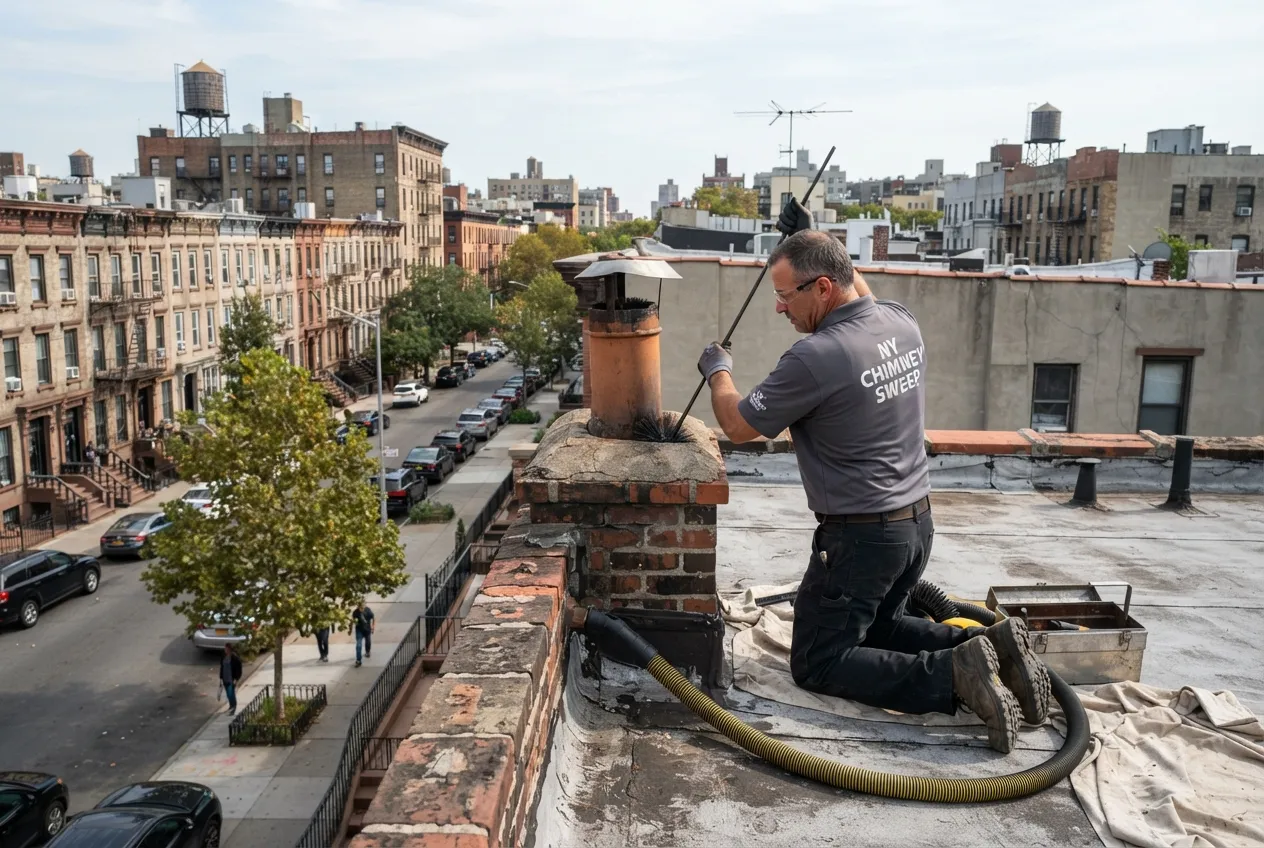
- Brushing the flue and smoke chamber from the firebox, the roof, or both, depending on access
- Removing creosote, soot and debris such as nesting material or loose mortar
- Checking the damper, firebox and visible flue surfaces
- Containing dust with drop cloths and a vacuum so the room stays clean
- A plain-language report of what we saw and anything that needs follow-up
Timing your sweep around the heat season
New York City's heat season runs from October 1 through May 31. During that period, building owners must keep apartments heated to the city's minimum temperatures. Many buildings rely on a boiler that vents through a masonry chimney, and the flue works hardest during those months. That is a poor time to discover a blockage. Late summer and early fall are the practical time to book a sweep and inspection.
The NFPA 211 standard calls for chimneys, fireplaces and vents to be inspected once a year. If you use a fireplace regularly, pair the annual inspection with a sweep so creosote doesn't build up between seasons. If you rarely light a fire, the inspection still matters. Animals, debris and moisture damage don't depend on how often the fireplace is used.
Inspection levels and when they apply
Chimney professionals use three inspection levels. The right one depends on what has changed in your home or building.
Most routine sweeps in Little Italy are paired with a Level 1 inspection. If you are buying or selling an apartment or rowhouse, a Level 2 is the usual step.
- Level 1: nothing about the system has changed, and you are maintaining a chimney that is already in regular use
- Level 2: the system changes, such as a new appliance or a switch of fuel, or the home is being sold
- Level 3: a hidden hazard has to be reached by opening part of the chimney or the building
Time for your annual chimney check?
Oil-to-gas conversions and older masonry flues
Many older Manhattan buildings were built around oil-fired boilers. When a New York City building converts its boiler from oil to gas, the chimney has to be evaluated as part of the work. A new liner is often needed. Gas exhaust produces acidic condensate that can corrode a masonry flue that was never designed for it.
Your building may be planning a conversion, or it may have converted without anyone checking the chimney since. Either way, a sweep and inspection is a reasonable first step. We can tell you what condition the flue is in and whether lining work should be part of the discussion with your boiler contractor.
Signs you should schedule a sweep now
Any of the following is worth a call before you light another fire or start the heating season.
- A strong smoky or campfire smell in the room, especially on humid days
- Smoke spilling into the room instead of drawing up the flue
- Black, flaky or glazed deposits visible above the damper
- Bits of masonry, tile or mortar collecting in the firebox
- Sounds of birds or other animals in the chimney
- Water stains on walls or ceilings near the chimney
Serving Little Italy and nearby neighborhoods
Our office is on W Houston St, so Little Italy is close to home for us. We also sweep chimneys in SoHo, Hudson Square, Tribeca, Civic Center and Greenwich Village. The housing there is similar: pre-war apartment buildings, rowhouses and brownstones with fireplaces and boiler flues that have been in service for a long time.
More services in Little Italy
- Chimney Inspection in Little ItalyLocal service & repairs
- Chimney Repair in Little ItalyLocal service & repairs
- Air Duct Cleaning in Little ItalyLocal service & repairs
- Chimney Liner Installation in Little ItalyLocal service & repairs