The short answer
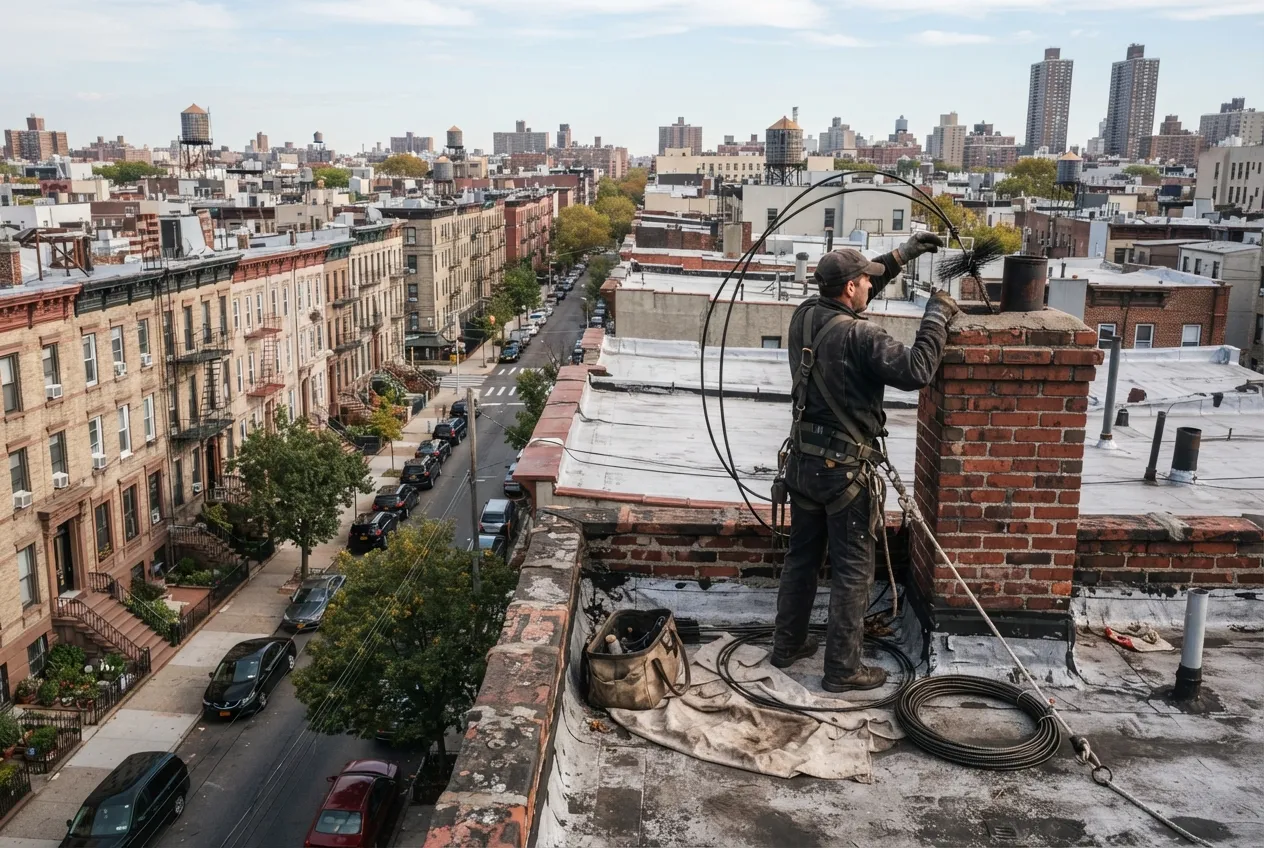
Chimney repair in Little Italy usually means fixing worn mortar, cracked crowns, leaking flashing, or damaged flue liners on older masonry rowhouses and pre-war buildings. FirstChoice Chimney Services works from an office at 90 W Houston St. We inspect first, explain what we find, and repair the problem before it spreads into the walls or the venting system.
Chimneys in Little Italy work hard. Many serve older masonry rowhouses and pre-war apartment buildings, and they take years of winter freeze-thaw cycles, rain, and heating exhaust. FirstChoice Chimney Services has its office at 90 W Houston St, so homeowners and building owners in the 10012 area can reach a local crew. Our certified technicians find out why a chimney is failing, explain what they see, and repair the masonry, crown, flashing, damper, or flue liner so the system can vent safely through the heating months.
Why Chimneys in Little Italy Need Repair
Most chimneys in this part of Manhattan are brick and mortar, and many have been in service for generations. Water causes most of the damage. Rain soaks into brick and mortar. In winter that water freezes and expands, and over many seasons it opens cracks, loosens joints, and flakes off the faces of bricks.
Chimneys on rowhouses and walk-up buildings often stand on shared or exposed rooflines. That exposure can make wind-driven rain and snow worse. Inside the flue, heating exhaust adds wear of its own, especially in buildings that have changed fuels or replaced an older boiler.
- Damp or stained walls and ceilings near the chimney
- Crumbling mortar or loose bricks at the roofline
- Flakes of brick or tile collecting in the firebox or cleanout
- A damper that sticks, will not seal, or has rusted
- Smoke or odors coming back into the room
Chimney Repairs We Handle
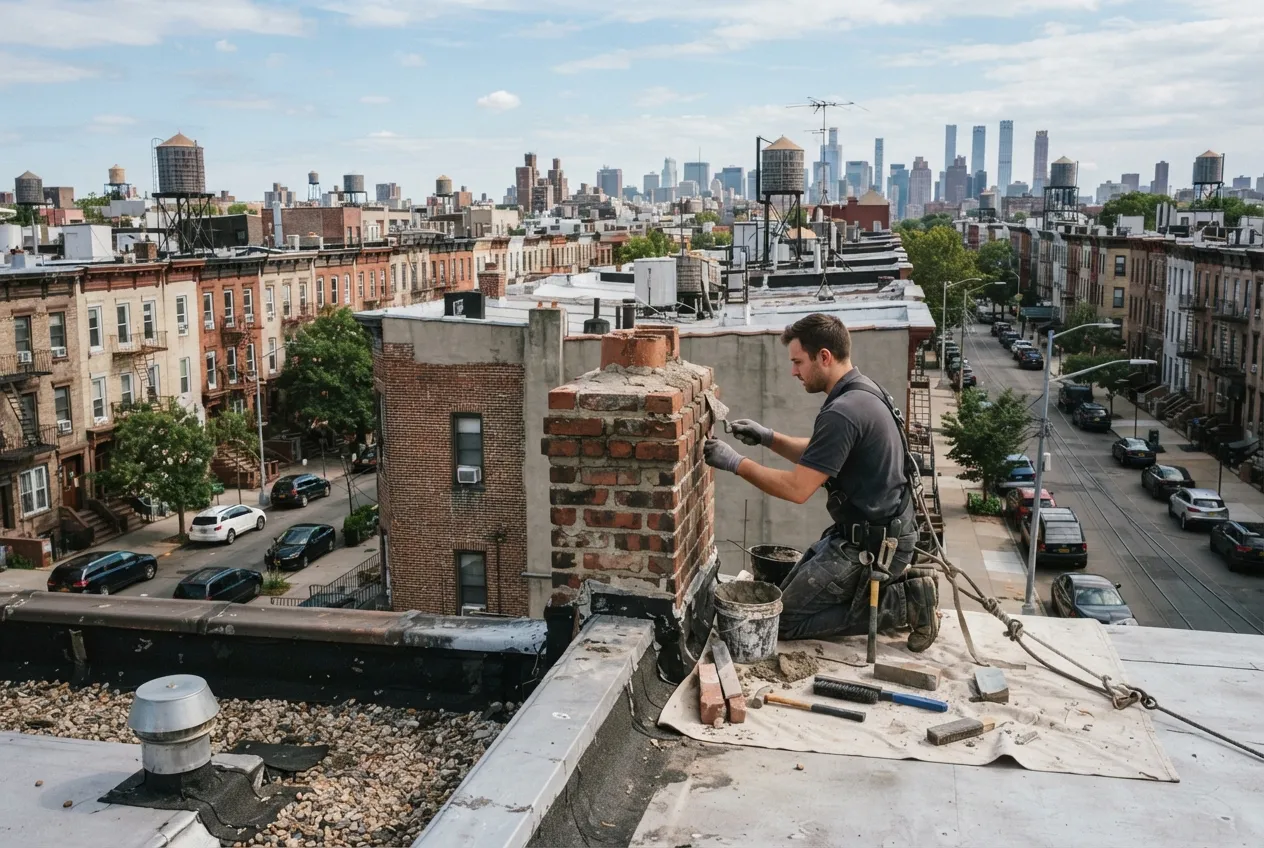
We match the repair to the cause of the damage. If water is getting in at the flashing, repointing the brick below will not fix it, so we track the leak to its source before recommending work.
- Repointing: removing failed mortar and packing new mortar into the joints
- Replacing spalled or broken bricks
- Rebuilding or resealing cracked chimney crowns
- Repairing or replacing flashing where the chimney meets the roof
- Installing or replacing chimney caps to keep out rain and animals
- Repairing or replacing dampers, including top-sealing dampers
- Repairing damaged flue tiles or installing a new flue liner
Oil-to-Gas Conversions and Flue Liners
Many Manhattan buildings have switched their boilers from oil to gas. In New York City, the chimney has to be evaluated as part of that work. A new liner is often needed because gas exhaust produces acidic condensate that can corrode a masonry flue that was built for oil.
If your building is planning a conversion, or has already converted and you are seeing damp patches, crumbling material at the base of the flue, or venting problems, we can inspect the flue and tell you whether it needs relining. A liner sized for the appliance helps exhaust leave the building and protects the masonry around it.
Time for your annual chimney check?
Timing Repairs Around the Heating Season
New York City's heat season runs from October 1 through May 31. During those months, building owners must keep apartments heated to the city's minimum temperatures. A chimney problem found in the middle of winter can force hard choices about shutting down a boiler or fireplace, so late spring and summer are usually the easiest times for larger masonry or relining work.
The NFPA 211 standard calls for chimneys, fireplaces, and vents to be inspected once a year. A Level 1 inspection fits when nothing has changed. A Level 2 inspection is used when the system changes, such as a new appliance or a switch of fuel, or when the home is sold. A Level 3 inspection is used when a hidden hazard can only be reached by opening part of the chimney or building. A yearly inspection often catches small repairs before they become large ones.
Serving Little Italy and Nearby Neighborhoods
Our office is at 90 W Houston St, close to the homes we serve in Little Italy and the 10012 ZIP code. We also handle chimney repair in SoHo, Hudson Square, Tribeca, Civic Center, and Greenwich Village. These neighborhoods have the same kinds of older masonry buildings and the same weather wear, so our crews see these problems often.
On a repair visit, we inspect the chimney, show you photos of what we find, and explain your options in plain terms before any work begins.
More services in Little Italy
- Chimney Sweep in Little ItalyLocal service & repairs
- Chimney Inspection in Little ItalyLocal service & repairs
- Air Duct Cleaning in Little ItalyLocal service & repairs
- Chimney Liner Installation in Little ItalyLocal service & repairs