The short answer
Chimney repair in the Lower East Side usually involves worn masonry, damaged crowns and caps, leaks, and deteriorated flue liners, which are common in older rowhouses and pre-war buildings. FirstChoice Chimney Services inspects the chimney first, explains what we find, and then repairs the parts that are actually failing.
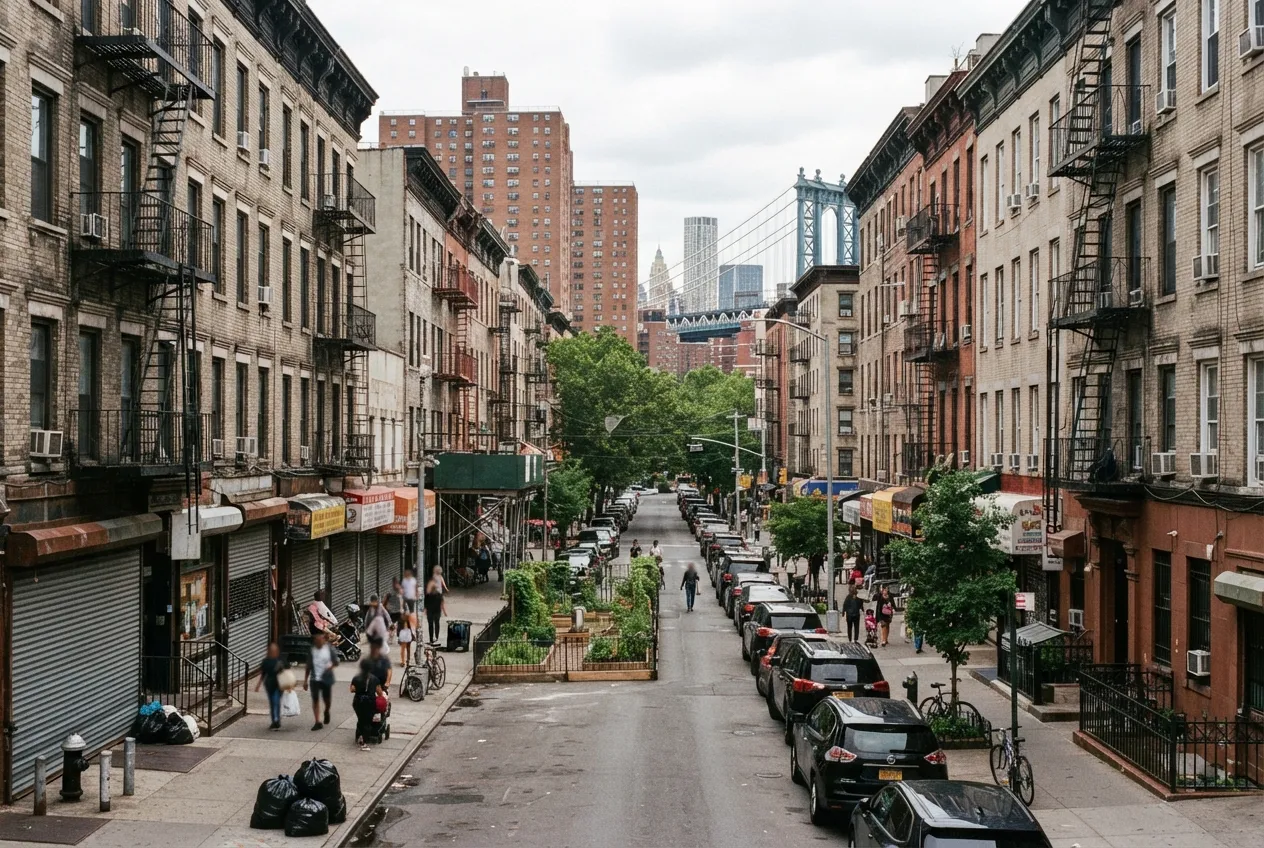
The Lower East Side has a dense mix of old tenement-style walk-ups, rowhouses, and pre-war apartment buildings, and many still rely on masonry chimneys that have been venting boilers and fireplaces for generations. Brick, mortar, and flue liners wear down with age, weather, and acidic exhaust, and small problems can grow quietly inside a chimney you rarely see. FirstChoice Chimney Services is about a mile from the neighborhood, so our certified technicians can reach homes and buildings in the 10002 ZIP code quickly to find out what's wrong and repair it properly.
Common Chimney Problems in Lower East Side Buildings
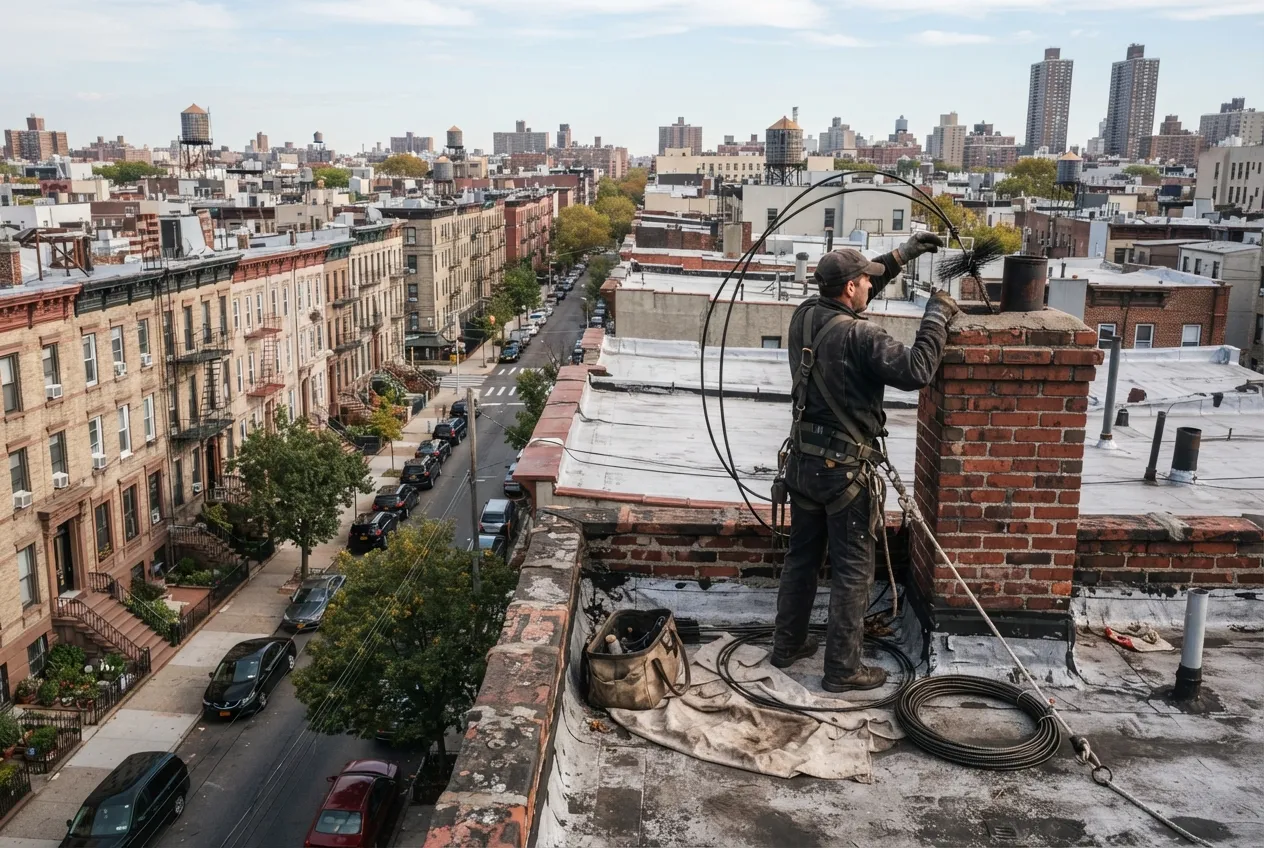
Most chimneys in the neighborhood are brick and run up through several floors before ending on a flat roof, where they take the full force of wind, rain, and freeze-thaw cycles. Over time, water works into the joints, mortar crumbles, and bricks begin to spall or shift. Inside the chimney, years of exhaust can break down clay tile liners or leave gaps that let heat and gases reach the surrounding masonry.
The repairs we handle most often in older Manhattan buildings include:
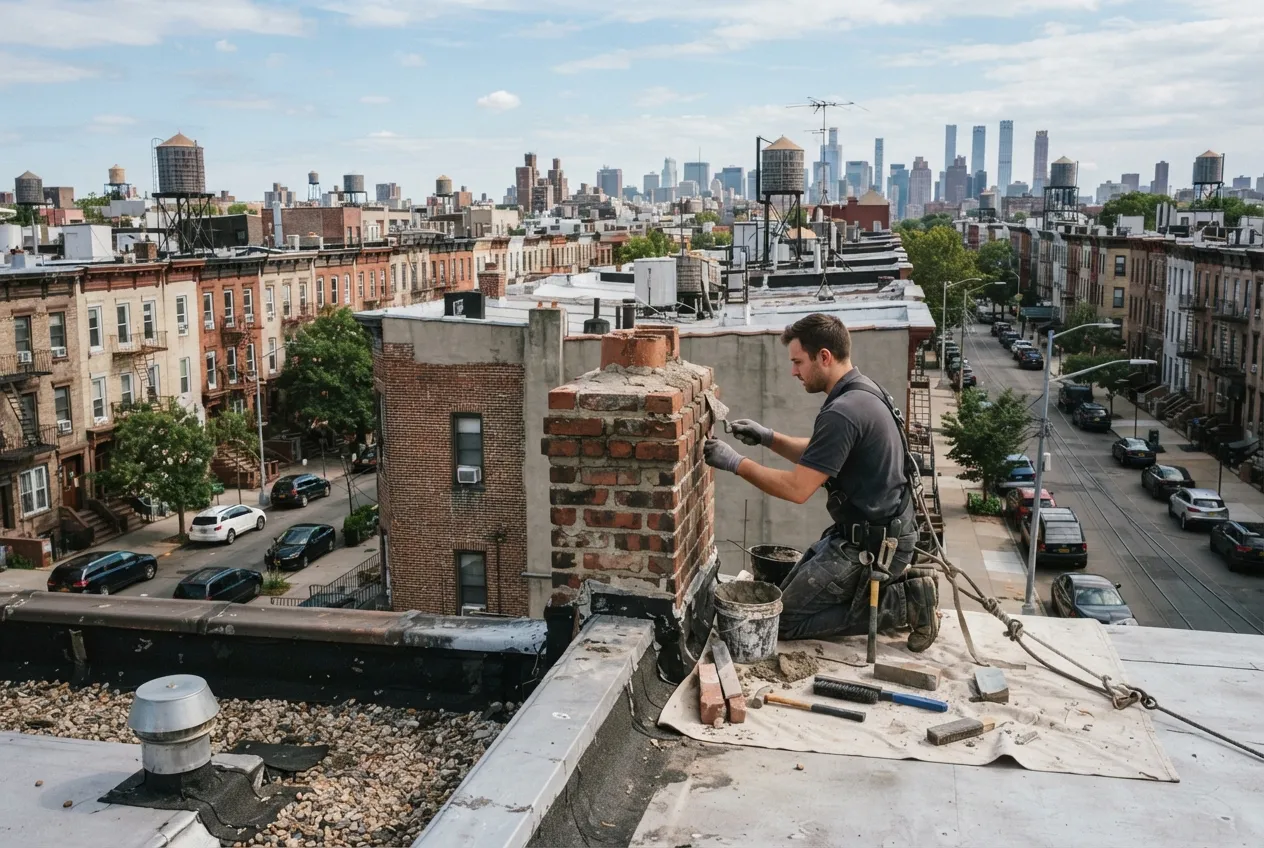
- Repointing loose or missing mortar joints
- Replacing cracked or spalled bricks
- Rebuilding or resealing cracked chimney crowns
- Installing or replacing chimney caps to keep out rain, debris, and animals
- Repairing or replacing flashing where the chimney meets the roof
- Relining damaged or deteriorated flues
- Fixing damper and smoke chamber damage in fireplaces
Signs Your Chimney Needs Repair
Chimney damage is easy to miss because most of it happens on the roof or inside the flue. If you own a rowhouse or manage a building, watch for these warning signs and call for an inspection if you notice any of them:
- Water stains on walls or ceilings near the chimney
- Pieces of brick, mortar, or tile in the fireplace or at the base of the flue
- White staining on exterior brick, a sign of moisture moving through the masonry
- A chimney that leans or has visible cracks
- Smoke or odors coming back into the room
- Rust on the damper, firebox, or cap
Oil-to-Gas Conversions and Flue Liners
Many Lower East Side buildings have converted their boilers from oil to gas or are planning to. In New York City, the chimney has to be evaluated as part of that work, and a new liner is often needed. Gas exhaust produces acidic condensate that can corrode a masonry flue that was built for oil, and that damage often stays hidden until it becomes serious.
If your building is converting, or converted recently without a close look at the chimney, we can evaluate the flue and recommend a liner that matches the new appliance. Getting this right protects the masonry and helps the boiler vent safely.
Time for your annual chimney check?
How We Approach a Chimney Repair
Every repair starts with an inspection. The NFPA 211 standard calls for chimneys, fireplaces, and vents to be inspected once a year, and it uses three levels. A Level 1 inspection covers a system that hasn't changed. A Level 2 inspection applies when the system changes, such as a new appliance or a switch of fuel, or when the home is sold. A Level 3 inspection is used when a hidden hazard can only be reached by opening part of the chimney or building.
After the inspection, we walk you through what we found, show you the damage, and explain which repairs are needed now and which can be planned for later. We don't recommend work the chimney doesn't need. When the repair is finished, we check that the system drafts and seals properly before we leave.
Planning Repairs Around Heat Season
New York City's heat season runs from October 1 through May 31, and building owners must keep apartments heated to the city's minimum temperatures during that time. A chimney problem that shuts down a boiler in January can become urgent fast. For that reason, late spring and summer are good times to schedule inspections and larger repairs like relining or rebuilding a crown.
If a problem shows up mid-winter, contact us anyway. We'll assess the situation and help you figure out the safest way to keep the heat running while the repair gets done. Besides the Lower East Side, we also serve nearby Chinatown, Two Bridges, East Village, SoHo, and Little Italy.
More services in Lower East Side
- Chimney Sweep in Lower East SideLocal service & repairs
- Chimney Inspection in Lower East SideLocal service & repairs
- Air Duct Cleaning in Lower East SideLocal service & repairs
- Chimney Liner Installation in Lower East SideLocal service & repairs