The short answer
Yes, FirstChoice Chimney Services serves Brooklyn Heights, about 2 miles south of our Manhattan office. Our certified technicians sweep, inspect, repair and reline chimneys and clean dryer vents and air ducts in the neighborhood's brownstones, rowhouses and pre-war buildings.
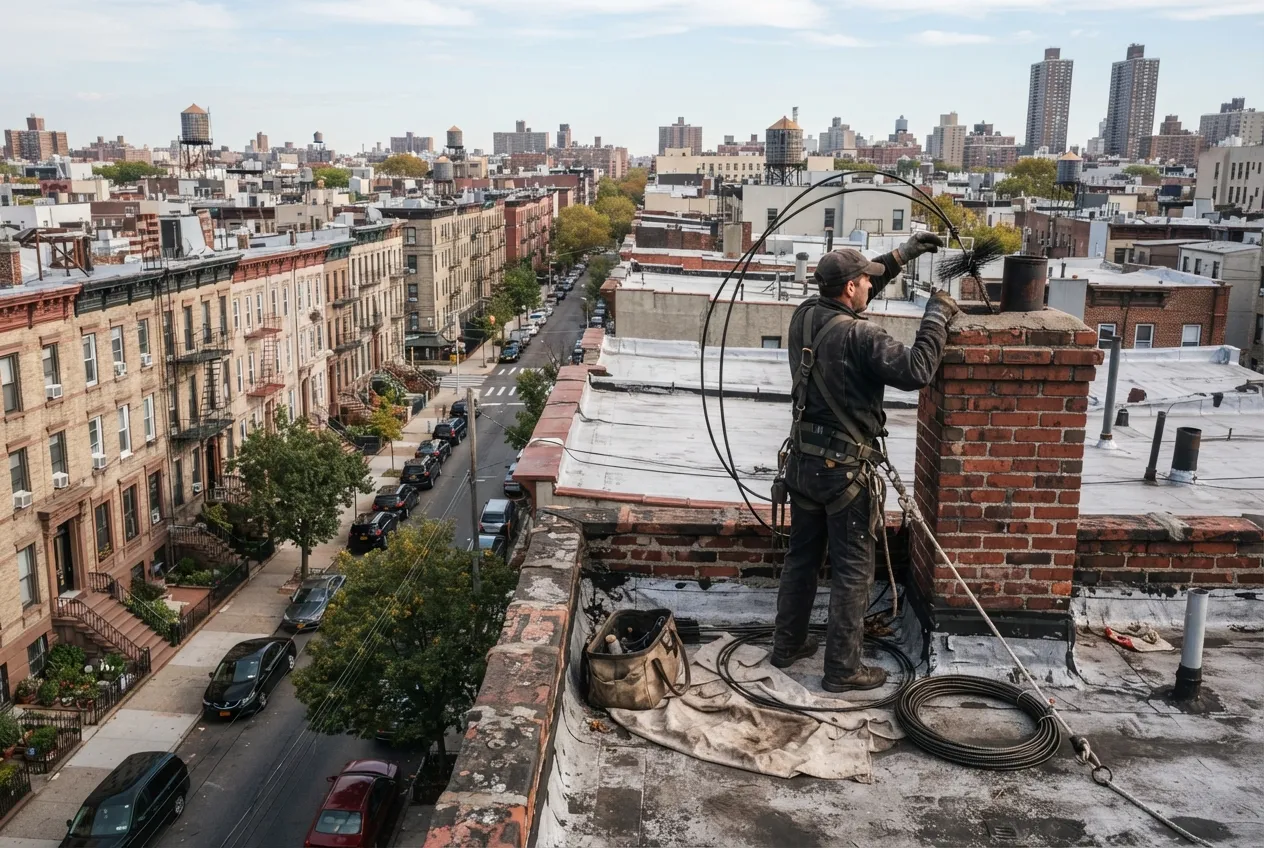
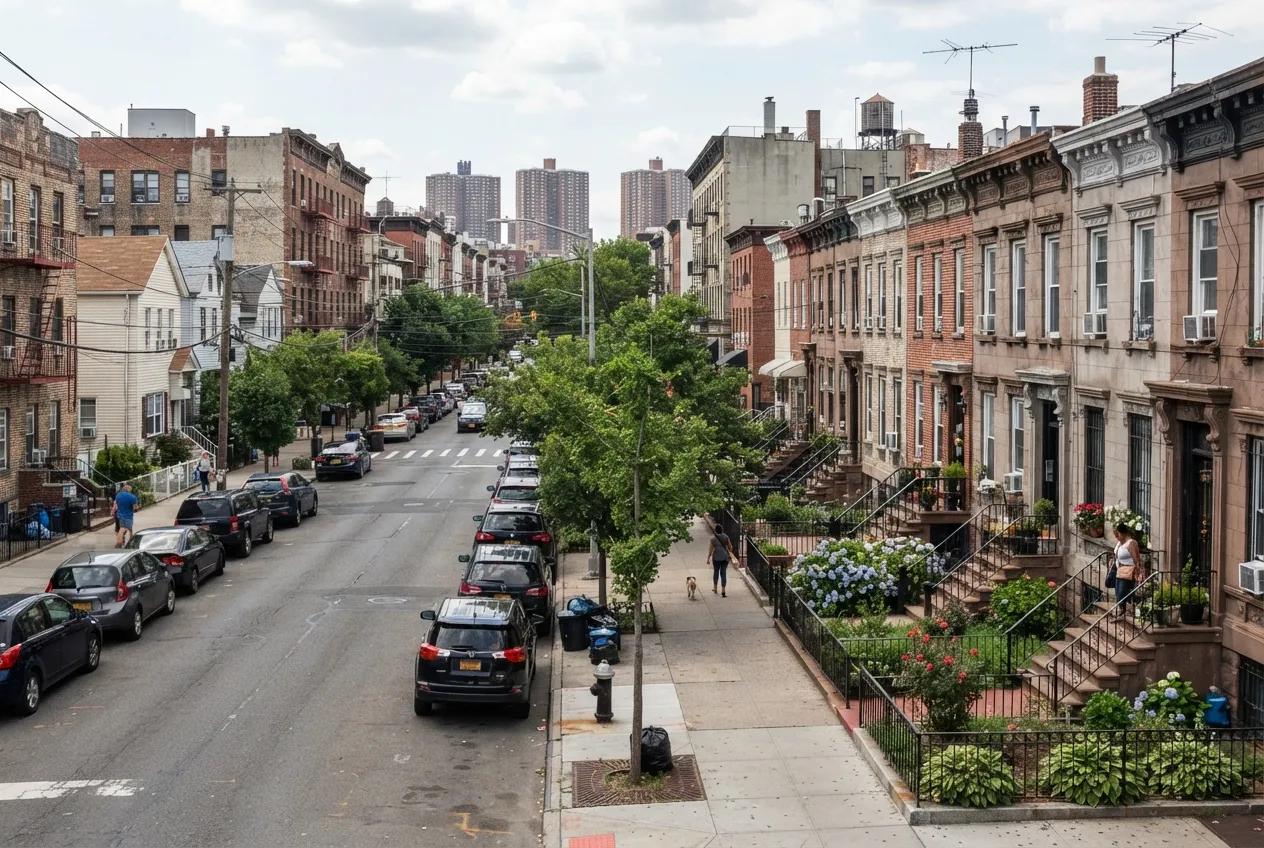
Brooklyn Heights is about 2 miles south of our office in Manhattan, so it's a short trip for FirstChoice Chimney Services technicians. Most of the neighborhood's housing is older masonry: brownstones, rowhouses and pre-war apartment buildings. Many of their chimneys were built for coal or wood and later adapted to serve oil or gas boilers. Those flues get heavy use during New York City's heat season, which runs from October 1 through May 31. They also have to stand up to freezing winters, humid summers and wind-driven rain from coastal storms. We clean, inspect and repair chimneys, fireplaces, dryer vents and air ducts for homeowners and building owners throughout the area.
Chimney and Fireplace Services in Brooklyn Heights
You might have a wood-burning fireplace in a brownstone parlor or a boiler flue that runs up the back of a rowhouse. Either way, the goal is the same: a clean, sound chimney that vents safely. Our certified technicians handle the full range of work, from routine sweeping to rebuilding a deteriorated stack.
- Chimney sweep: removing soot, creosote and debris from flues and smoke chambers
- Chimney inspection: Level 1, 2 or 3, depending on what has changed
- Chimney repair: repointing mortar joints, fixing crowns and replacing damaged brick
- Chimney liner installation for oil-to-gas conversions and damaged clay tile flues
- Chimney cap and chase cover installation to keep out rain, debris and animals
- Chimney waterproofing for exposed masonry
- Fireplace and damper repair, including stuck or rusted dampers
- Chimney rebuilding when the masonry above the roofline is too far gone to repair
Yearly Inspections and What Each Level Means
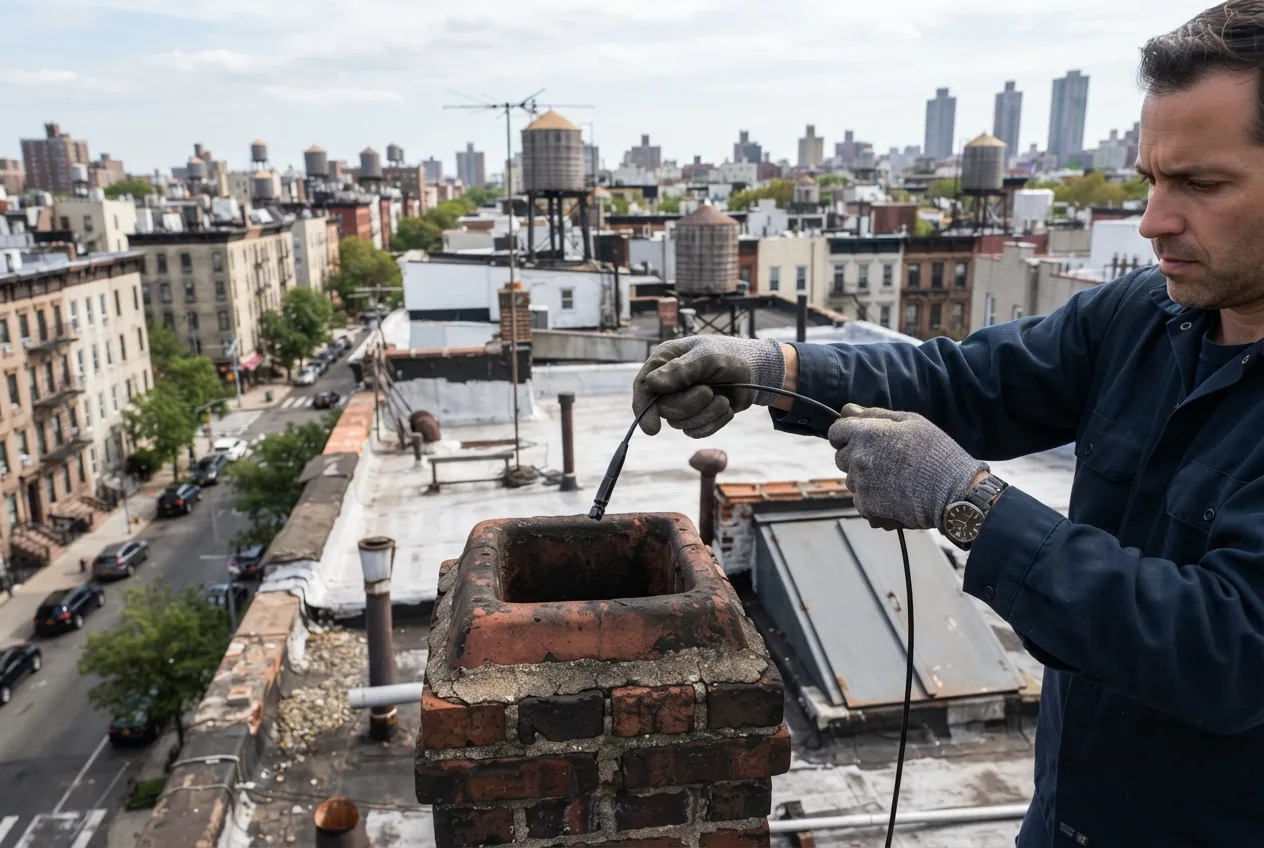
The NFPA 211 standard calls for chimneys, fireplaces and vents to be inspected once a year. That yearly check matters in an older neighborhood because problems like cracked flue tiles or eroded mortar develop slowly and out of sight.
Chimney professionals use three inspection levels:
Booking your inspection before October 1 gives time to finish any repairs before the boiler or fireplace is in steady use.
- Level 1: when nothing about the system has changed.
- Level 2: when the system changes, such as a new appliance or a switch of fuel, or when the home is sold. This is the right choice when you're buying or selling a brownstone or co-op unit.
- Level 3: when a hidden hazard has to be reached by opening part of the chimney or the building.
Oil-to-Gas Conversions and Chimney Liners
If your building is switching its boiler from oil to gas, New York City requires the chimney to be evaluated as part of the work. A new liner is often needed because gas exhaust produces acidic condensate that can corrode a masonry flue.
We inspect the existing flue and confirm whether it can safely carry the new appliance's exhaust. When a liner is needed, we install one sized for the new equipment. We coordinate timing with your heating contractor so the conversion isn't held up waiting on the chimney.
Time for your annual chimney check?
Protecting Old Masonry From New York Weather
New York winters bring repeated freezing and thawing. Water that soaks into brick, mortar or a cracked crown expands when it freezes. Over a few seasons, that opens joints, chips the faces off bricks and loosens the top courses of a chimney. Summer humidity and heavy rain add their own wear, and moisture inside a chimney can rust dampers and stain interior walls.
A cap and chase cover keep rain and debris out of the flue. A breathable waterproofing treatment helps masonry shed water while still letting it dry. When damage is already done, we repoint, rebuild crowns, or rebuild the chimney from the roofline up, matching the existing brick as closely as we can.
Dryer Vent and Air Duct Cleaning
According to the U.S. Fire Administration, failure to clean is the leading factor contributing to clothes dryer fires in homes. In rowhouses and apartments, dryer vents often run long distances or through tight spaces, so lint builds up faster than people expect. Warning signs include clothes that need more than one cycle to dry and a laundry area that gets unusually hot.
For air ducts, we follow the U.S. EPA's guidance. Cleaning makes sense when there is substantial visible mold growth, vermin, or excessive dust and debris. The EPA notes that duct cleaning has not been shown to prevent health problems. It also advises researching the process before responding to very cheap advertised offers and being careful with chemical treatments. We'll tell you plainly whether your ducts need cleaning.
Serving Brooklyn Heights and Nearby Neighborhoods
Our crews serve Brooklyn Heights as well as Chinatown, Two Bridges, the Lower East Side, Tribeca and Civic Center. We plan each visit around building access, shared stairwells and roof hatches, which are common in multi-unit buildings. Tell us what kind of building you have and what you're noticing, and we'll recommend the right service.